
Custom Self Adhesive Rubber Strips China Manufacturer and Wholesale Supplier
Seashore Rubber manufactures custom self adhesive rubber strips for sealing, insulation, vibration control, and weatherproofing applications. Our EPDM, silicone, and sponge rubber strips feature strong adhesive backing, reliable compression recovery, and long service life in indoor and outdoor environments. Available in multiple profiles, sizes, and densities, they are widely used for doors, windows, automotive sealing, HVAC systems, machinery, and industrial equipment. We support OEM customization, low tooling costs, stable bulk supply, and fast production for b2b buyers.
What Are Self Adhesive Rubber Strips?
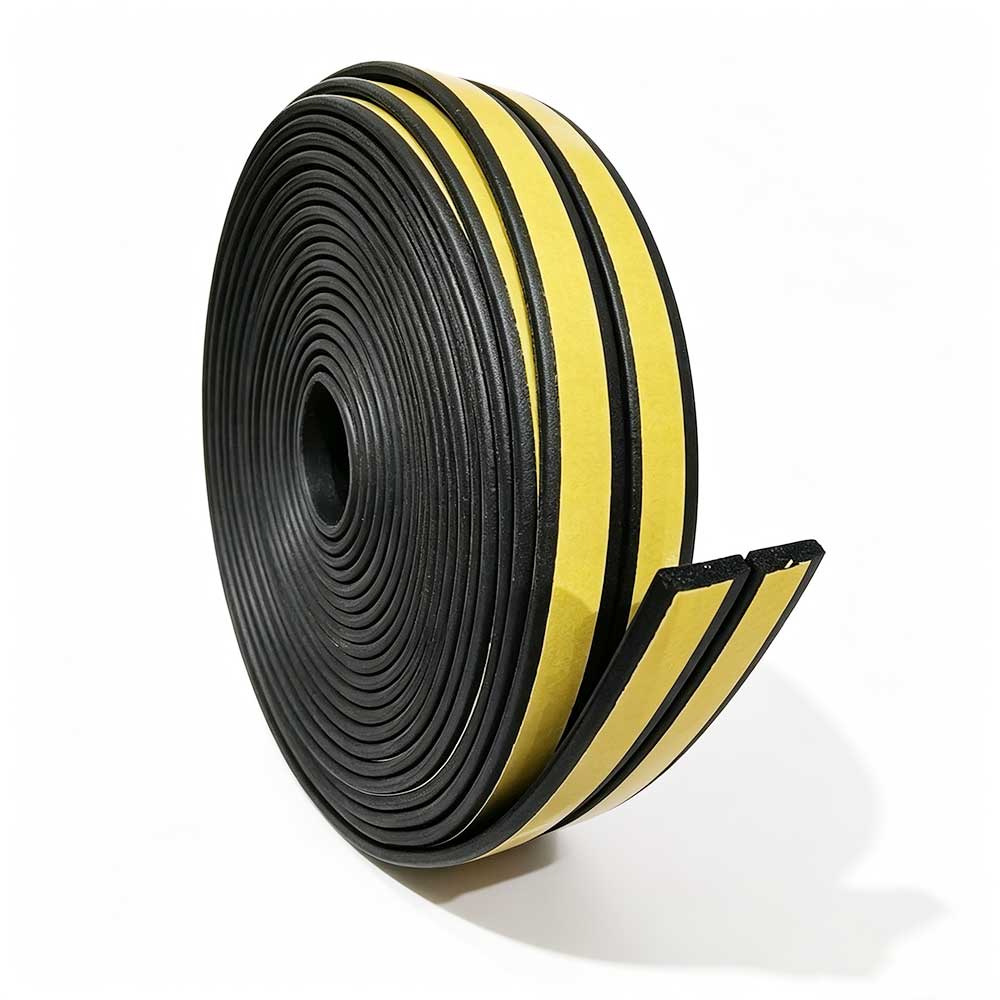
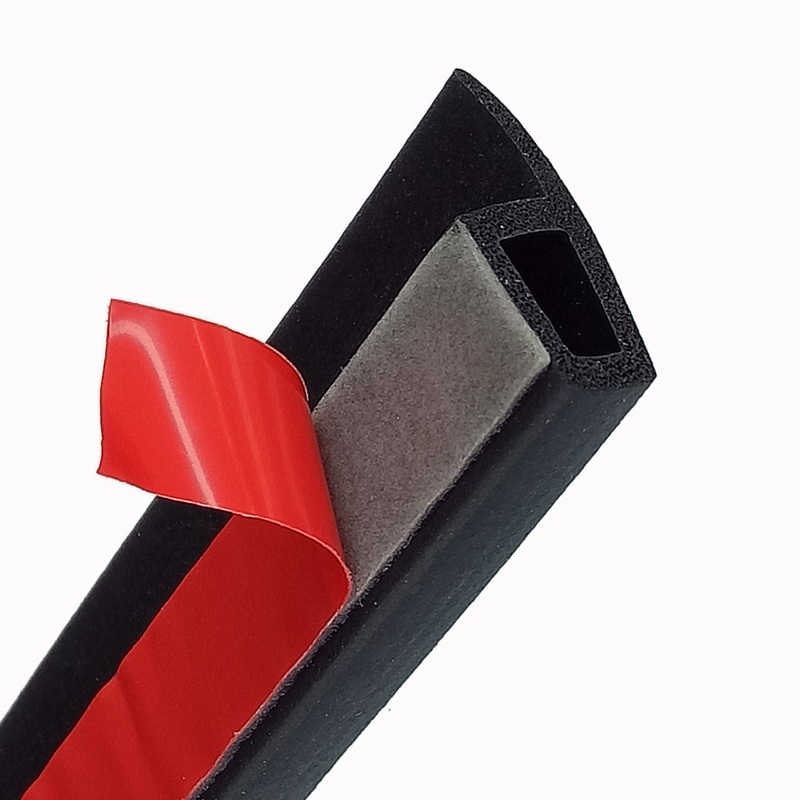
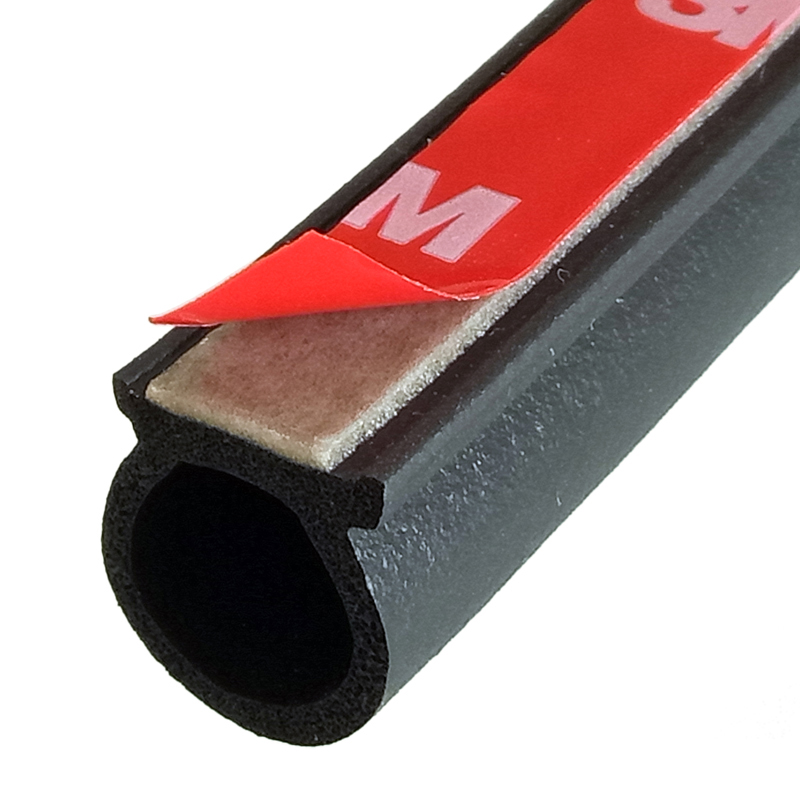
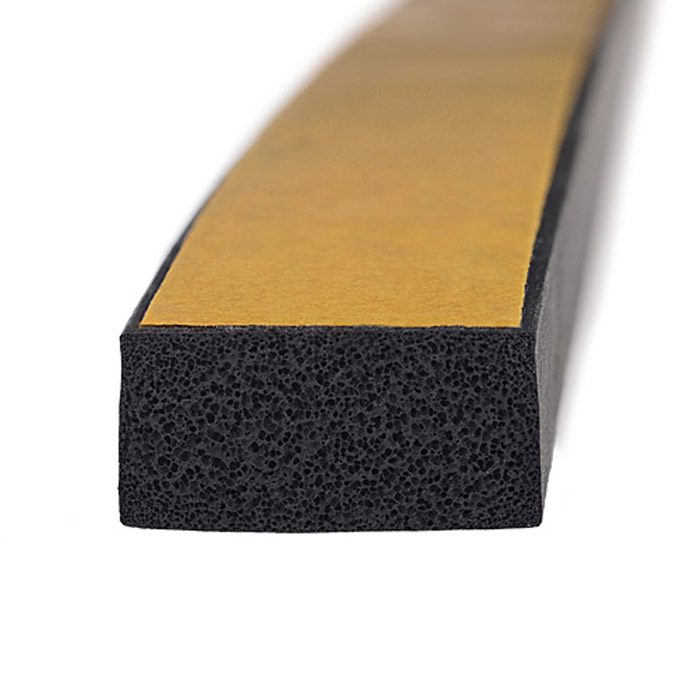
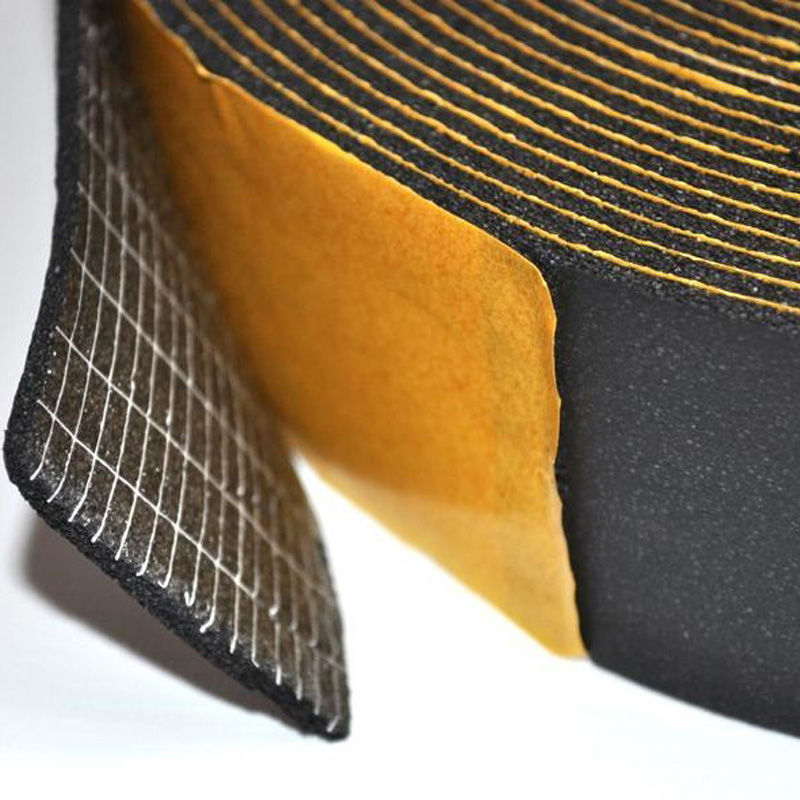
Self adhesive rubber strips, also known as adhesive-backed rubber seals, self-adhesive weather stripping, or foam rubber tape, are flexible sealing materials made from high-quality rubber, EPDM, silicone, or foam compounds. They come with a strong pressure-sensitive adhesive on the back, protected by a release liner that you simply peel and stick.
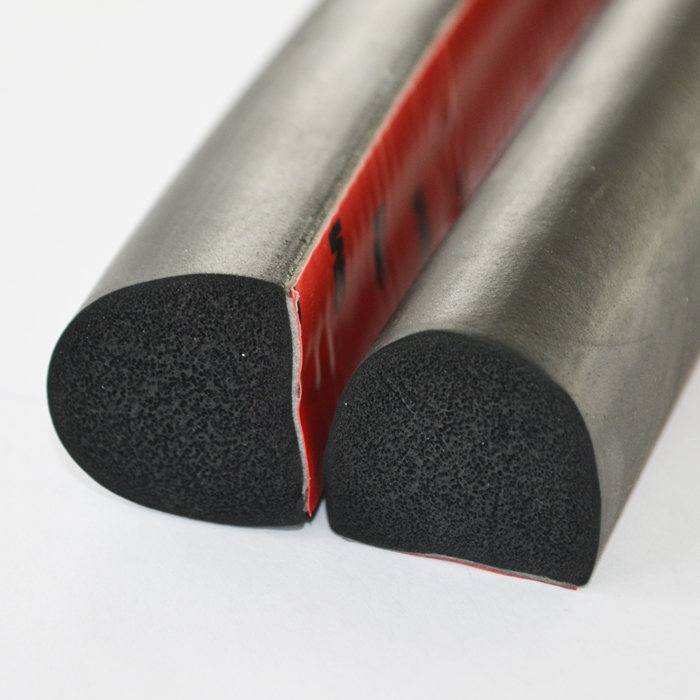
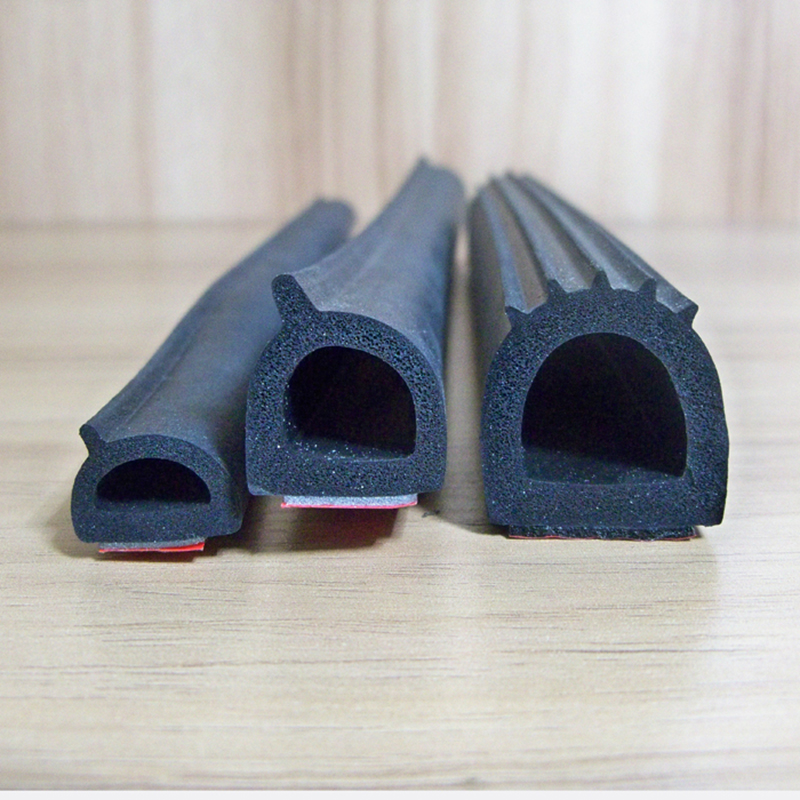
These strips create airtight and watertight seals while remaining flexible enough to handle temperature changes, expansion, and daily use. They are available in various thicknesses, widths, shapes (D-profile, P-profile, rectangular, bulb seal), and lengths to suit almost any gap or surface.
Top Applications for Self Adhesive Rubber Strips
Door and Window Weatherproofing
One of the most searched uses for self adhesive rubber strips is weatherstripping doors and windows. A properly installed foam or EPDM rubber strip creates an airtight seal that prevents drafts, moisture, dust, and insects from entering your home or building. This directly reduces heating and cooling costs, making it one of the highest-ROI home improvements you can make.
Soundproofing and Acoustic Sealing
Sound travels through gaps. Installing a self adhesive rubber seal strip around door frames, window edges, and utility penetrations significantly reduces airborne noise transmission. This is widely used in recording studios, home theaters, apartment buildings, and offices.
Vibration and Impact Damping
In industrial and commercial settings, rubber strips are used to reduce vibration between metal surfaces, protect equipment from impact, and dampen noise from machinery. Neoprene and EPDM self adhesive rubber strips are especially effective for this purpose.
Cabinet and Furniture Protection
Foam rubber adhesive strips applied to cabinet door edges and drawer frames prevent slamming, protect finishes, and extend the lifespan of furniture. This is a simple DIY fix that can be completed in minutes.
Automotive Sealing and Trim
Self adhesive rubber strips are used extensively in the automotive industry to seal door frames, trunk lids, hoods, and sunroofs. DIY auto enthusiasts use them to replace worn weather seals, reduce road noise, and prevent water leaks.
Flooring and Stair Applications
Anti-slip rubber strips with adhesive backing are applied to stair nosings, thresholds, and floor transitions to improve safety and reduce trip hazards. These are commonly used in schools, hospitals, warehouses, and retail environments.
HVAC and Ductwork
Self adhesive neoprene and EPDM rubber strips are used to seal joints and connections in HVAC systems, preventing air leakage and improving system efficiency.
Why Quality Matters in Self Adhesive Rubber Strips
Budget rubber strips may seem attractive, but they often use low-grade adhesives that fail within months, and inferior rubber compounds that crack, harden, or shrink. A quality self adhesive rubber strip will:
- Maintain flexibility across a wide temperature range
- Hold its bond without peeling or curling
- Compress and recover consistently over thousands of cycles
- Resist UV, ozone, moisture, and common chemicals
Investing in a reputable product means fewer replacements, better performance, and lower long-term costs.
Custom Rubber Strips for Different Sealing Needs
Why Choose Custom Rubber Strips?
Standard rubber strips may not always match the actual sealing gap, installation surface, or working environment. If the strip is too soft, too hard, too thick, or made from the wrong material, it may cause poor sealing, difficult installation, early aging, or higher replacement costs.
Custom rubber strips help solve these problems by matching the product to your real application needs. Buyers can choose the right size, profile, hardness, material, and adhesive option to improve sealing performance, reduce leakage, control vibration, and extend service life.
What Can Be Customized?
Custom rubber strips can be adjusted in many details according to drawings, samples, or application requirements.
Material Selection
Different materials can be selected based on the working environment. EPDM is suitable for outdoor, weather, ozone, and water resistance. NBR is better for oil, grease, and fuel resistance. Silicone is suitable for high or low temperature applications. Neoprene offers balanced performance for general industrial sealing.
Size and Dimensions
The width, thickness, length, and tolerance of rubber strips can be customized to fit different gaps, channels, panels, doors, windows, machines, and equipment structures.
Profile Shape
Custom rubber strips can be made into flat strips, square strips, D-shaped profiles, P-shaped profiles, U-channel strips, sponge strips, solid strips, or other special extrusion profiles.
Hardness and Flexibility
Rubber hardness can be adjusted according to compression needs. Softer strips are better for uneven surfaces and light sealing pressure, while harder strips provide stronger support, wear resistance, and structural stability.
Solid or Sponge Structure
Solid rubber strips are suitable for wear resistance, impact protection, and stronger support. Sponge rubber strips are better for compression sealing, cushioning, dust blocking, and lightweight applications.
Adhesive Backing and Surface Treatment
Rubber strips can be supplied with adhesive backing for easier installation. Surface finish, color, cutting length, packaging, and special processing can also be customized for OEM and bulk orders.
How to Decide the Right Custom Rubber Strip?
Before choosing a custom rubber strip, buyers should first confirm the real working conditions. This helps avoid using the wrong material, shape, or hardness.
Start by checking where the rubber strip will be installed and what it needs to resist. For outdoor use, weather resistance is important. For machinery or automotive parts, oil resistance, vibration control, or abrasion resistance may matter more. For doors, windows, cabinets, and enclosures, compression performance and gap size are usually the key factors.
It is also important to confirm the installation method. Some rubber strips need adhesive backing, while others fit into channels, grooves, or metal frames. If you already have drawings or samples, customization becomes more accurate and easier to confirm.
Key Information to Provide Before Customization
To get a more accurate custom rubber strip solution, buyers can provide the following details:
- Application or industry
- Working environment
- Required material, if known
- Width, thickness, and length
- Profile drawing or sample photo
- Hardness requirement
- Solid or sponge structure
- Adhesive backing requirement
- Order quantity
- Packaging or OEM requirements
Frequently Asked Questions
Can self adhesive rubber strips be used outdoors?
Yes — EPDM and silicone rubber strips are specifically designed for outdoor use and offer excellent resistance to UV radiation, ozone, and weather extremes.
How long does a self adhesive rubber strip last?
High-quality EPDM and silicone strips typically last 10–20 years in normal conditions. Foam rubber strips may need replacement every 3–7 years depending on use.
Can I remove a self adhesive rubber strip without damaging the surface?
Most rubber strips can be peeled off carefully. Any residual adhesive can be removed with a citrus-based solvent or isopropyl alcohol.
What width and thickness should I choose?
This depends on the gap you’re sealing. For door frames, a 9–12mm width and 3–4mm thickness is common. For machinery, you may need wider or thicker profiles. Measure your gap at its widest point.


