
Custom Sponge Rubber Extrusions China Manfuacturer and Wholesale Supplier
Seashore Rubber is a leading manufacturer and supplier specializing in rubber&plastic extrusion profiles. We produce precision-engineered rubber and plastic extruded sealing strips and seals, including door and window seals, automotive rubber seals, and marine hatch seals, serving global buyers across the automotive, construction, HVAC, marine, electronics, and industrial sectors.We offer a wide range of materials, including EPDM, NBR,neoprene,PVC, Silicone, TPE and TPV etc, and provide OEM and customized solutions to meet diverse application requirements.Seashore Rubber delivers consistent quality from raw compound through to finished, cut-to-length product — with full traceability at every stage.
Why Choose SEASHORE RUBBER
- A direct manufacturer with no middlemen and full production traceability.
- Custom profiles engineered from your drawing or sample((size, color, material, structure, performance).
- We are certified by IATF 16949, ISO9001, and ISO14001:2015, ensuring reliable product quality.
- Competitive pricing with consistent quality across every production run.
- Reliable global export to 50+ countries with complete shipping documentation
- Advanced rubber extrusion production lines and processing equipment, high precision.
- Professional sales and technical team providing optimal sealing strip solutions.
What is Sponge Rubber Extrusion
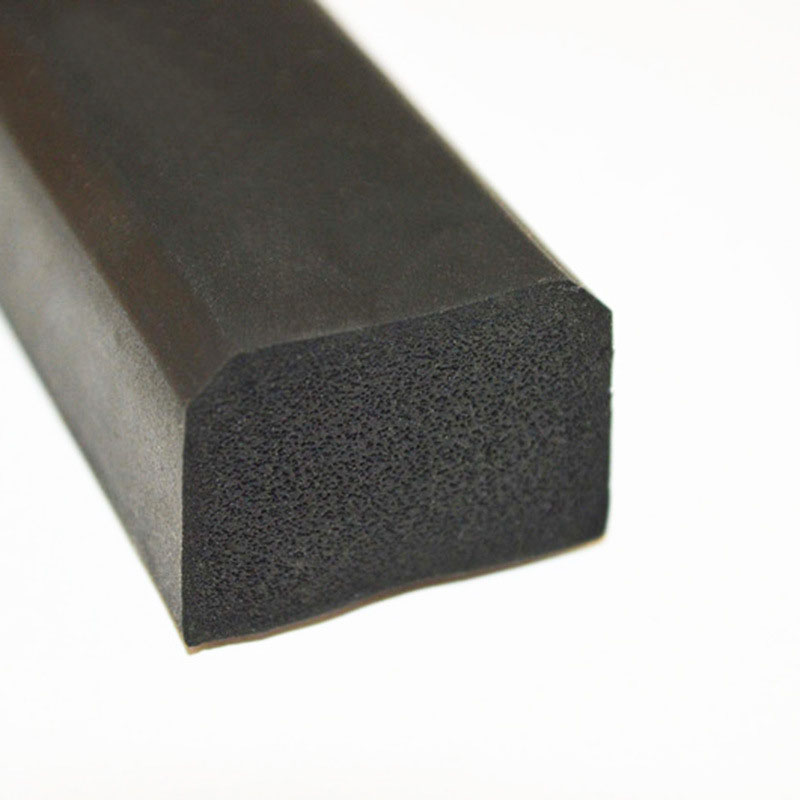
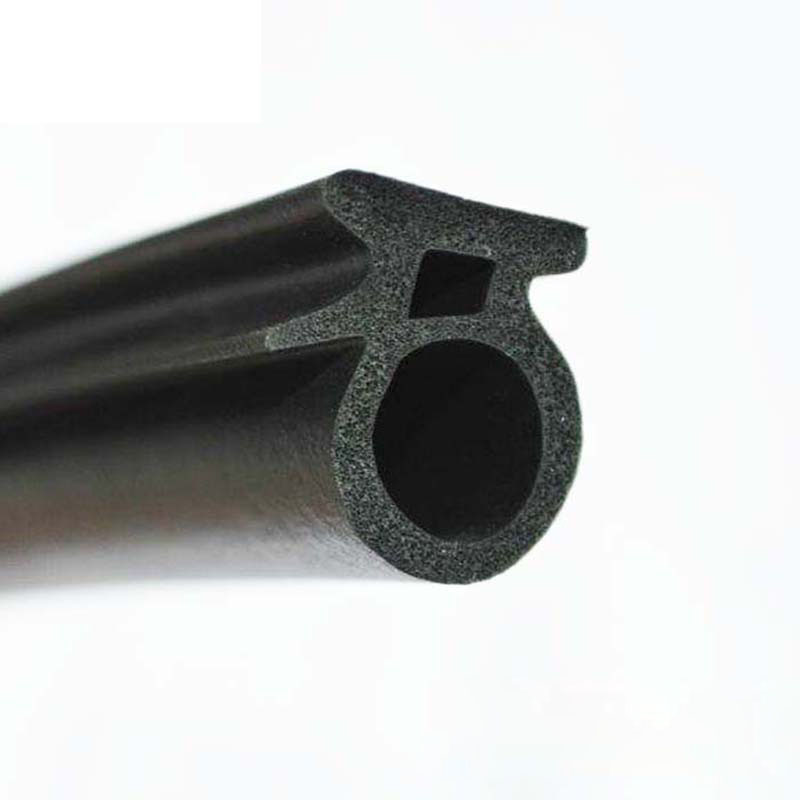
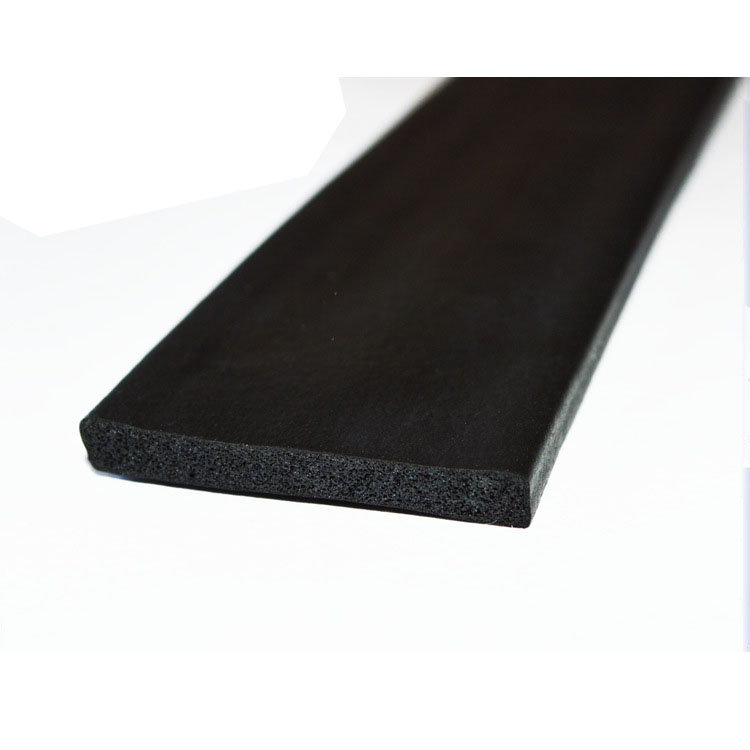
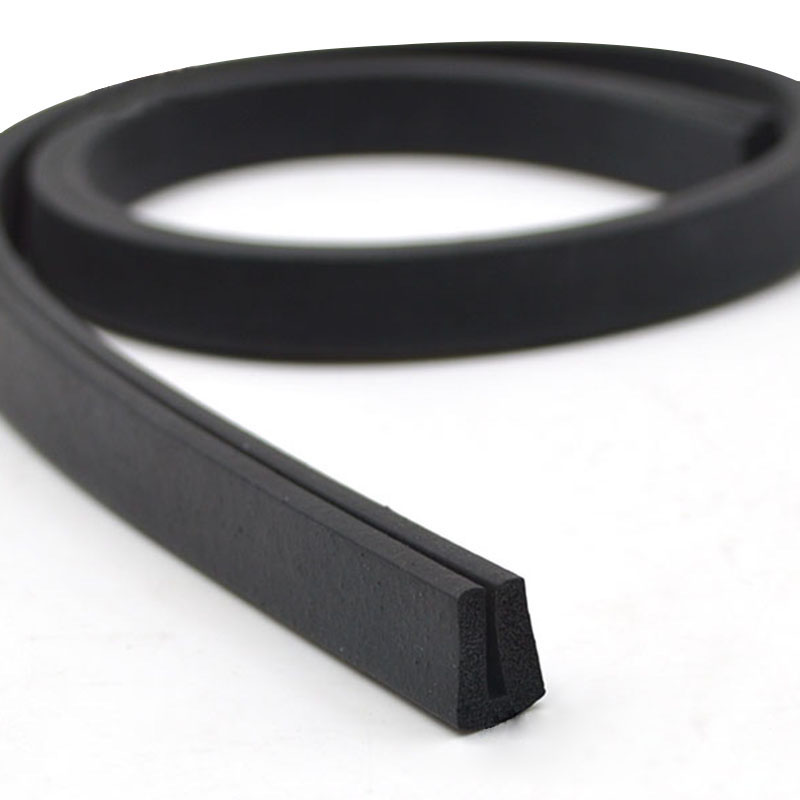
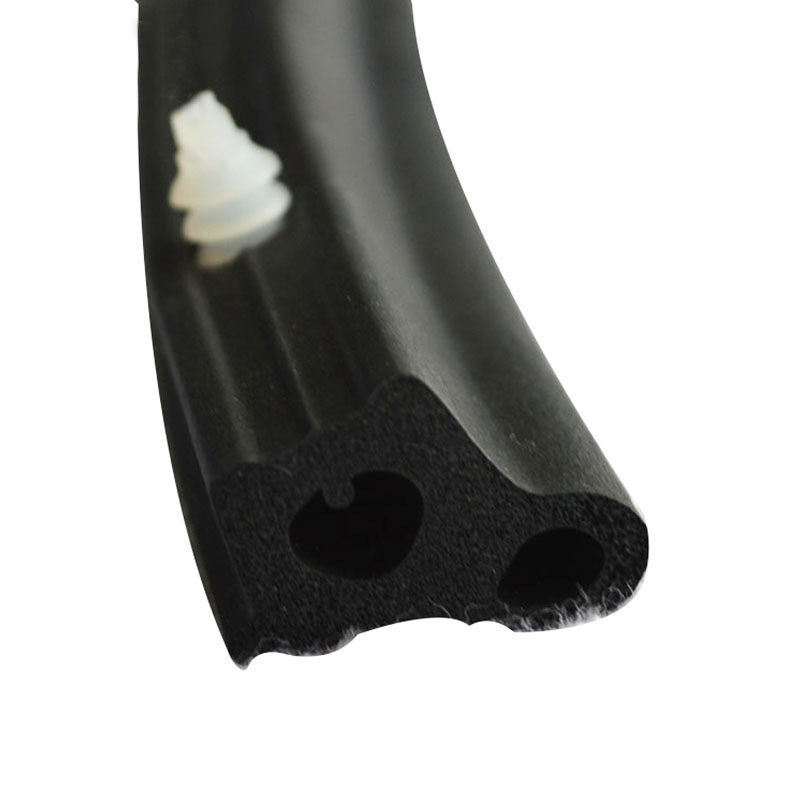
Sponge rubber extrusion is the industrial process of forcing a blended, foamable rubber compound through a shaped die to produce continuous flexible profiles with a cellular (sponge-like) internal structure. The result is a lightweight, compressible, resilient strip or tube used as seals, gaskets, weatherstripping, vibration dampers, and acoustic insulators across dozens of industries.
Unlike solid rubber extrusion, the compound contains chemical blowing agents that decompose under heat and release gas, creating millions of tiny air cells within the cross-section. This is what gives sponge rubber its characteristic softness, compressibility, and low-density feel.
Continuous ProductionIconBox Title
Profiles are extruded in long runs — metres or kilometres — then cut to length, offering low per-unit cost at scale.
Custom Cross-Sections
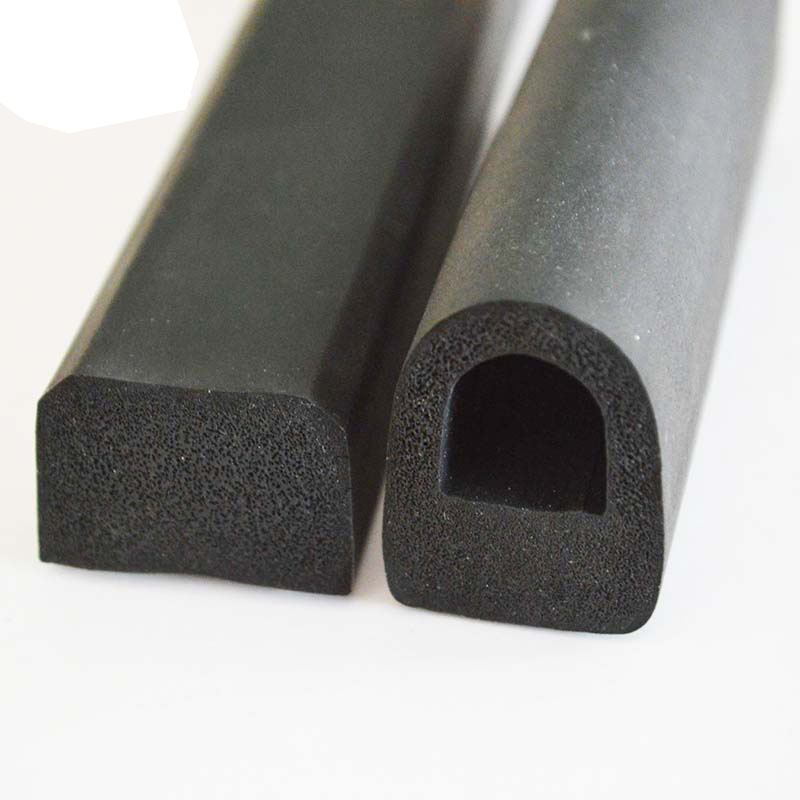
Any 2D shape can be achieved: D-sections, P-sections, E-sections, tubes, bulb seals, tongue-and-groove, and fully custom profiles.
Light & Compressible
Cellular structure gives 30–80% lower density than solid rubber while maintaining excellent sealing force under compression.
Wide Temperature Range
Depending on material, service from –60 °C to +250 °C is achievable — suitable for arctic seals to oven gaskets.
How is it made? The extrusion process
Production follows six key stages from raw polymer to finished product. Understanding this helps buyers assess supplier capabilities and quality controls.
Vulcanisation method matters: hot-air ovens (HAV) produce consistent density; salt-bath (LCM) lines are faster for tight-tolerance profiles; microwave vulcanisation is used for thick cross-sections. Ask your supplier which method they use.
Rubber Material Types & Comparison
The base polymer determines chemical resistance, temperature range, UV stability, and cost. Matching material to environment is the single most important buying decision.
| Material | Temp Range | Key Strengths | Common Uses | Grade |
|---|---|---|---|---|
| EPDM Ethylene Propylene Diene Monomer |
–40 °C to +130 °C | Excellent UV, ozone, weathering, steam resistance | Automotive seals, doors/windows, roofing | Most Popular |
| Neoprene (CR) Chloroprene Rubber |
–35 °C to +100 °C | Oil, flame, ozone, and weather resistant; good mechanical | Marine gaskets, HVAC, refrigeration | All-Rounder |
| Silicone (VMQ) Vinyl-Methyl Silicone |
–60 °C to +250 °C | Extreme temp range, food-safe, non-toxic, compression set resistance | Ovens, medical, aerospace, food processing | Premium |
| NBR / Nitrile Acrylonitrile Butadiene |
–30 °C to +100 °C | Superior oil and fuel resistance | Automotive fuel systems, hydraulics, oil seals | Oil-Duty |
| Natural Rubber (NR) | –50 °C to +80 °C | High resilience, tensile strength, abrasion resistance | Vibration isolators, sporting goods, general seals | Economy |
| SBR Styrene Butadiene |
–40 °C to +90 °C | Cost-effective, good abrasion resistance | General-purpose seals, packaging | Budget |
Applications by Industry
Automotive
Door seals, trunk seals, hood buffers, window run channels, noise/vibration insulation, battery pack seals (EV)
Construction & Building
Window glazing seals, curtain wall gaskets, expansion joint fillers, fire door intumescent strips
HVAC & Refrigeration
Duct sealing, pipe insulation, condenser gaskets, cold-room door seals, AC panel trim
Marine & Offshore
Hatch seals, porthole gaskets, cable run seals, hull vibration dampers, buoyancy foam
Electronics & Enclosures
IP-rated EMI/RFI gaskets, cabinet door seals, panel air filtration, anti-vibration mounts
Medical & Food
FDA-compliant silicone gaskets, autoclave-safe seals, cleanroom equipment, food processing line seals
Aerospace & Defence
Cockpit window seals, access panel gaskets, EMI shielding, acoustic insulation panels
Rail & Transit
Train door seals, passenger saloon seals, undercarriage vibration pads, HVAC duct seals
Buyer’s Checklist — What to Specify
Profile & Dimensions
☑ Cross-section drawing (DXF or PDF)
☑ Width, height, wall thickness
☑ Tolerances required (DIN class)
☑ Length (cut length or coil)
☑ Spliced or straight?
Material & Grade
☑ Polymer type (EPDM/Silicone/etc.)
☑ Open or closed-cell
☑ Hardness (Shore A or CLD)
☑ Colour
☑ Regulatory compliance needed
Operating Environment
☑ Min/max temperature
☑ UV/ozone exposure
☑ Chemical contact (oil, fuel, acids)
☑ Dynamic or static sealing?
☑ Flame/smoke requirements
Commercial Info
☑ Annual volume (metres)
☑ Delivery lead time required
☑ Self-adhesive backing? (PSA)
☑ Packaging preference
☑ Certifications needed (IATF, ISO)
Frequently Asked Questions
1. What is the difference between sponge rubber and foam rubber?
The terms are often used interchangeably, but technically: sponge rubber is based on vulcanised rubber compounds (EPDM, Neoprene, Silicone) with superior temperature resistance, compression set, and longevity. Foam rubber typically refers to polyurethane (PU) foam — lighter and cheaper but with less chemical and temperature resistance. For outdoor or industrial sealing, always specify rubber-based sponge.
2. Can sponge rubber extrusions be joined into rings or frames?
Yes. Sponge rubber strips can be vulcanisation-bonded or adhesive-spliced into closed-loop gaskets, door frames, or rectangular seals. Vulcanisation splicing creates a seamless join with strength near the base material. Adhesive joins are cheaper but less durable. Ask your supplier for splice options and testing data.
3. Is EPDM sponge rubber suitable for drinking water or food contact?
Standard EPDM is not food-safe — its compound contains process oils and cure agents not approved for food contact. For potable water or food applications, you need a specifically formulated WRAS-approved EPDM or FDA-compliant silicone sponge. Always request the relevant compliance certificate (FDA 21 CFR, EU 10/2011, WRAS).
4. How do I attach sponge rubber extrusions?
Common methods: (1) PSA self-adhesive backing — peel-and-stick, fast, suitable for indoor/protected applications; (2) contact adhesive — brush-on, stronger bond for outdoor use; (3) channel clips — profile engineered to snap into a metal or plastic channel; (4) mechanical fastening — holes punched in the sponge for bolts. Specify the attachment method at the design stage so the profile can be optimised for it.


