
Silicone Rubber Extrusions: How Complex Can Designs Get?
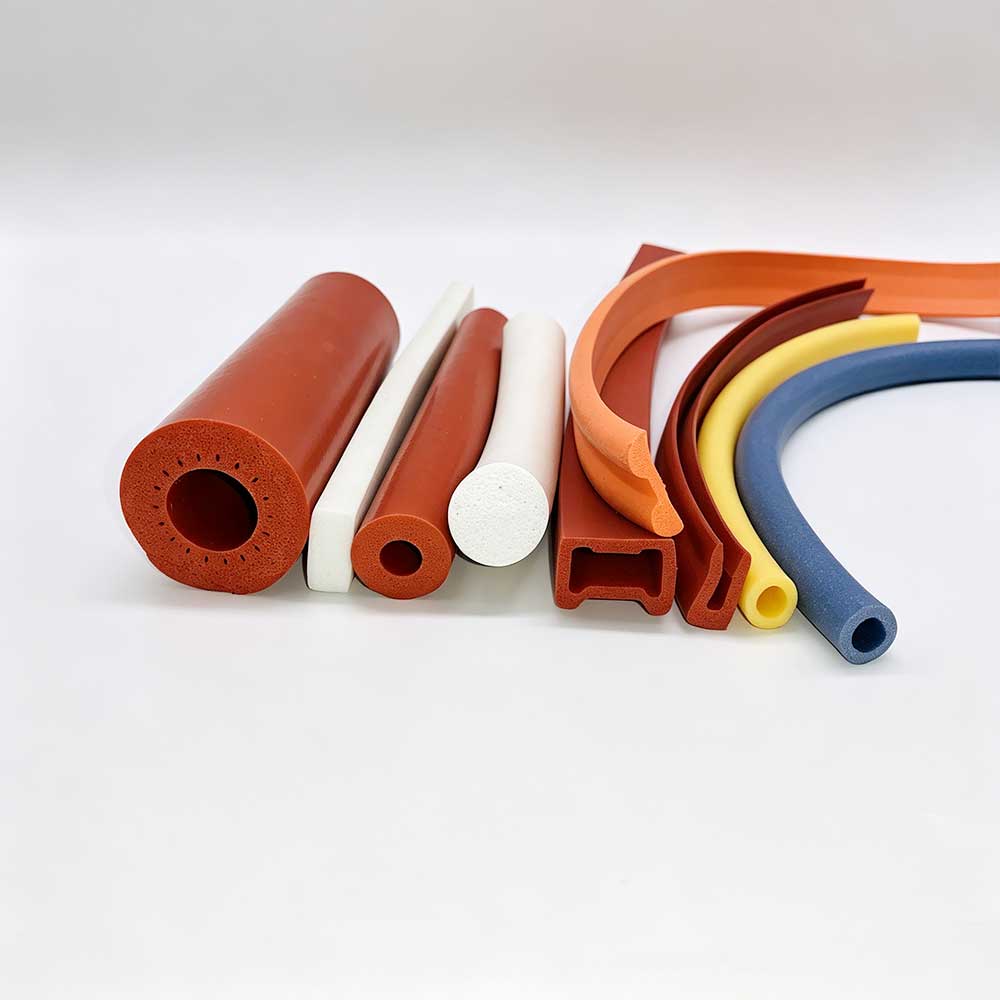
Silicone rubber extrusions can be much more complex than simple tubes, cords, or rectangular strips. A custom profile may combine hollow chambers, sealing lips, mounting channels, ribs, grooves, compression bulbs, and locating features within a single continuous cross-section.
The practical limit, however, is not determined by how complicated the CAD drawing looks. A profile must be able to pass through the extrusion die, maintain sufficiently uniform material flow, retain its shape before curing, accommodate die swell, and repeatedly meet the dimensions that matter to the application.
For this reason, the real question is not simply how complex silicone rubber extrusions can be, but whether the required geometry can be manufactured consistently.
How Complex Can Silicone Rubber Extrusions Be?
Complex silicone rubber extrusions can integrate several functions into one profile.
For example, one extrusion may contain:
- A U-shaped mounting channel
- One or more flexible sealing lips
- A hollow compression bulb
- Retaining ribs
- Positioning grooves
- Internal cavities or supporting webs
These features do not necessarily need to be produced as separate parts.
A door or enclosure seal, for example, can use one section of the profile to grip an edge while another section compresses against a mating surface. Multi-lip designs can create several sealing contact points within the same extrusion.
The main requirement is that the cross-sectional geometry remains continuous along the extrusion direction.
Complexity becomes difficult when the individual features interfere with stable material flow or cannot retain their intended geometry after leaving the die.
What Makes a Silicone Extrusion Design Complex?
The number of features alone does not determine whether a silicone extrusion is difficult to produce.
A profile containing several relatively thick, balanced sections may be easier to extrude than a simpler profile combining one heavy section with a very thin unsupported lip.
Important factors include:
- Differences in wall thickness
- Hollow or unsupported areas
- Narrow grooves
- Long flexible lips
- Sharp internal corners
- Asymmetric cross-sections
- Tight dimensional tolerances
- Large differences between adjacent features
During extrusion, silicone rubber is forced continuously through a die before being vulcanized. The die creates the cross-sectional shape, but the material must reach different regions of that opening at a sufficiently uniform flow rate.
WACKER specifically recommends avoiding sharp corners, dead areas, and sudden changes in flow direction and emphasizes the importance of uniform flow across the die cross-section.
This makes flow balance one of the most important considerations in complex silicone extrusion design.
Which Complex Features Can Be Extruded?
Multiple Grooves and Channels
Channels can provide mounting, gripping, alignment, or retention functions.
A single silicone extrusion can contain more than one groove, but very deep or narrow channels require greater attention because the surrounding walls must maintain their intended shape during extrusion and curing.
Sharp internal transitions can also make material flow less predictable, so radiused transitions are often preferable where the application allows them.
Hollow and Multi-Cavity Sections
Hollow sections are common in compression seals because they allow the profile to deform under relatively low force.
A silicone profile may contain one large bulb cavity, several smaller chambers, or internal ribs dividing the cavity.
The challenge is maintaining the geometry while the extrudate is still uncured. Thin walls around a large unsupported cavity may distort, while several small cavities increase the complexity of the die and material flow path.
Thin Sealing Lips
Thin lips are useful when a seal needs to make flexible contact with another surface.
However, a long thin lip has less support than the main body of the extrusion. If it is too flexible relative to the surrounding geometry, it can sag, bend, or vary in position before curing.
The relationship between the lip thickness, lip length, supporting base, compound hardness, and surrounding geometry must therefore be considered together.
Bulbs, Ribs, and Retaining Features
Bulb sections can provide compression while ribs and locking features can help position or retain the extrusion.
These features can often be combined successfully, but every additional change in cross-sectional mass affects the way silicone travels through the die.
The goal is not simply to fit as many functions as possible into one profile. It is to integrate them without creating unstable sections.
Why Uneven Wall Thickness Creates Problems
Wall thickness balance is one of the most important practical issues in complex silicone rubber extrusions.
Consider a profile with a thick mounting base connected immediately to a very thin sealing fin.
The thick and thin regions do not present the same flow conditions inside the die. If material distribution is not adequately balanced, the profile may leave the die with uneven dimensions, distortion, or an edge that does not remain straight.
WACKER’s extrusion guidance recommends keeping wall thickness similar across the die where possible and avoiding abrupt changes in flow direction.
This does not mean every wall must have exactly the same thickness.
Instead, designers should avoid extreme differences where they are not functionally required and use smoother transitions between heavy and thin sections.
In practice, modifying one transition can sometimes improve production stability more than simplifying the entire profile.
How Die Swell Affects Complex Silicone Profiles
A second major issue is die swell.
Silicone does not necessarily remain exactly the same size as the die opening after it exits the tool. The extrudate can expand as internal stresses are released.
According to WACKER, die swell is affected by factors including material viscosity, temperature, extrusion speed, and die dimensions.
This is especially important for complex profiles.
A finished profile containing a hollow bulb, mounting channel, thin lip, and thick base cannot be produced simply by machining the extrusion die as an exact 1:1 copy of the final drawing.
Tooling may need compensation so that the profile reaches the required dimensions after extrusion and curing.
This is one reason first-off samples and tooling corrections are a normal part of developing demanding custom silicone extrusions.
Why Hollow Sections and Thin Features Can Distort
The shape emerging from an extrusion die is not yet a rigid finished component.
The uncured extrusion still needs to travel through the curing process. During this stage, unsupported sections have to maintain their position sufficiently well to produce the intended final geometry.
A large hollow bulb with thin walls, for example, may flatten or lean if its structure is not adequately supported by its geometry.
Similarly, a long sealing flap can change position relative to the main body of the profile.
This is why a profile that looks perfectly acceptable in CAD may still need modifications before production.
Typical changes may include increasing local wall thickness, shortening an unsupported feature, strengthening its base, modifying a cavity, or altering the die design.
How Tolerances Affect Silicone Extrusion Complexity
Tolerance requirements can turn an otherwise manageable profile into a difficult extrusion.
Silicone is flexible, so it cannot always be dimensioned and measured in the same way as a machined metal component.
Cross-sectional tolerances for rubber extrusions are commonly specified using systems such as ISO 3302-1. The standard provides different tolerance classes, with tighter classes requiring greater manufacturing control.
Complex asymmetric profiles, thin sections, hollows, and soft compounds generally make dimensional consistency more challenging than simple symmetrical sections.
For that reason, one of the most useful DFM decisions is identifying critical dimensions.
If a mounting groove must fit over a 3 mm panel, that dimension may be critical.
If the overall width of a non-contact decorative section has little effect on assembly or sealing performance, applying the same tight tolerance may provide no practical benefit.
Tighter tolerances should therefore be concentrated on dimensions that control fit, compression, retention, or sealing.
When Is a Silicone Extrusion Too Complex?
There is no universal number of cavities, lips, or grooves that makes a silicone extrusion impossible.
A design becomes problematic when the complete cross-section cannot be manufactured reliably.
Warning signs include:
- Hollow sections that cannot retain their geometry
- Thin features that deform excessively before curing
- Extreme transitions between thick and thin areas
- Material flow that cannot be adequately balanced
- Very narrow or difficult internal features
- Tolerance requirements that cannot be maintained consistently
Importantly, these conditions do not always mean extrusion must be abandoned.
Often, a relatively small DFM change can make the design much more practical.
How Complex Silicone Extrusion Designs Are Improved
A manufacturability review should focus first on the features that create the greatest production risk.
Common improvements include increasing the base thickness of a thin sealing lip, adding radii to abrupt transitions, simplifying unnecessary cavities, balancing neighboring wall sections, reducing very deep narrow grooves, or relaxing non-critical tolerances.
Tooling can then be developed to compensate for the actual material flow and die swell behavior of the profile.
For difficult profiles, sample extrusion and tool correction are therefore part of the engineering process rather than evidence that the original design has failed.
The objective is to preserve the function of the extrusion while making the cross-section stable enough for repeatable production.
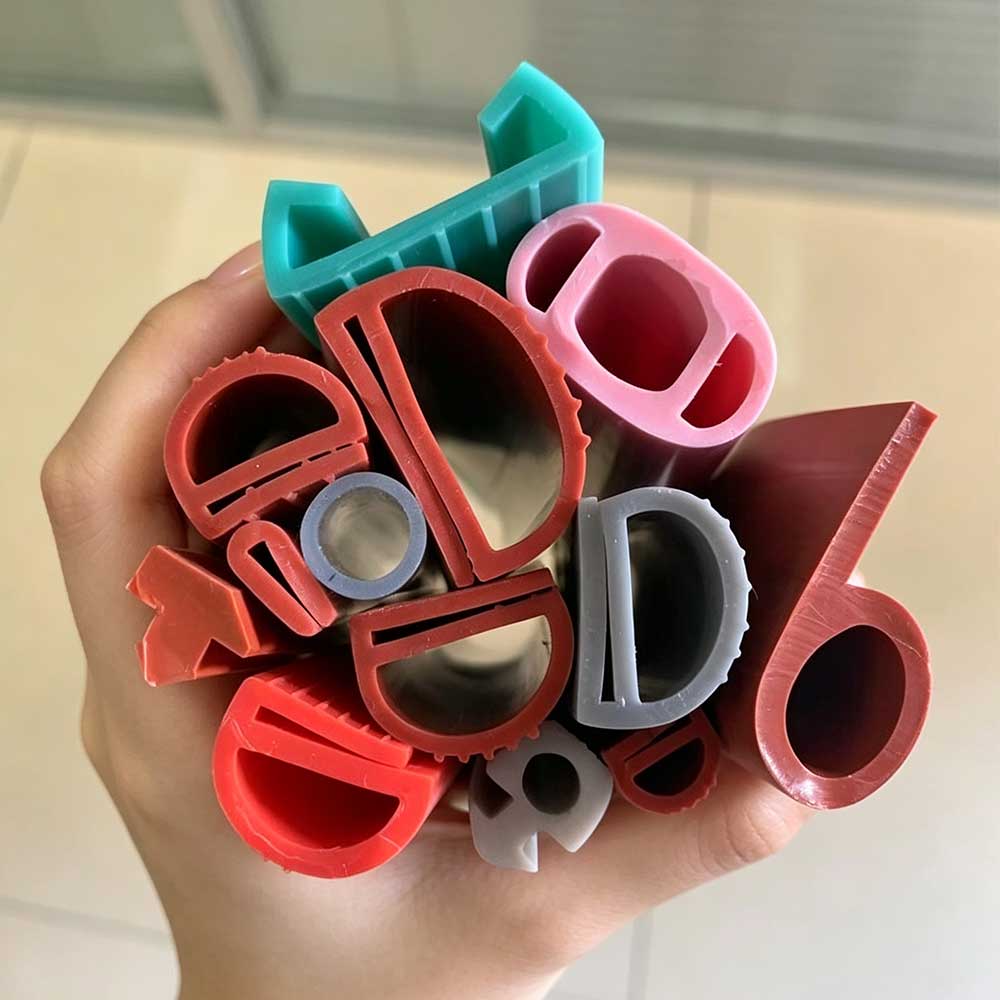
Practical Examples of Complex Silicone Extrusion Profiles
Hollow Bulb With Mounting Channel
This design combines a rigidly located mounting section with a compressible hollow bulb.
The main engineering challenge is balancing the relatively heavy mounting section with the thinner walls around the bulb.
Multi-Lip Sealing Profile
Several thin lips can provide multiple contact points against a mating surface.
The critical issue is maintaining lip position and consistency while avoiding excessively weak unsupported sections.
Multi-Cavity Silicone Seal
Several hollow chambers can create different compression zones within one extrusion.
This requires careful control of internal wall thickness and cavity stability.
H-Shaped Joining Profile
An H-shaped extrusion can connect two panels or surfaces using channels on opposite sides.
Channel dimensions and central wall stability are usually more important than decorative external dimensions.
How to Evaluate Whether Your Profile Can Be Extruded
Before manufacturing a complex silicone extrusion, the supplier should ideally review the actual cross-sectional drawing rather than rely on a general description.
The drawing should clearly identify the dimensions that control installation and function.
Useful information includes the required silicone hardness, critical tolerances, mounting dimensions, compression requirements, operating environment, and any surfaces that must perform a sealing function.
This allows the manufacturer to determine whether the profile can be produced as drawn or whether a small DFM adjustment would improve repeatability.
Conclusion
Silicone rubber extrusions can combine multiple hollow chambers, mounting channels, grooves, sealing lips, ribs, compression sections, and retaining features in one continuous profile.
The true limit is not the visual complexity of the drawing.
It is whether silicone can flow through the die evenly enough, compensate for die swell, retain the required cross-sectional shape before and during curing, and consistently meet the dimensions that control the final application.
For complex silicone extrusion profiles, good DFM is therefore more important than simply reducing the number of features. A well-designed profile can remain highly functional and geometrically complex while still being practical for repeatable production.


Leave a Reply
Want to join the discussion?Feel free to contribute!