High Quality Co-Extruded Rubber Seal China Manufacturer
SEASHORE RUBBER is a trusted China manufacturer of premium co-extruded rubber seals. Our EPDM and silicone seals deliver superior flexibility, weather resistance, and long-lasting durability. Ideal for automotive, construction, and industrial applications, we provide custom profiles, sizes, and OEM solutions. Get a quote today and ensure the perfect seal for your projects.
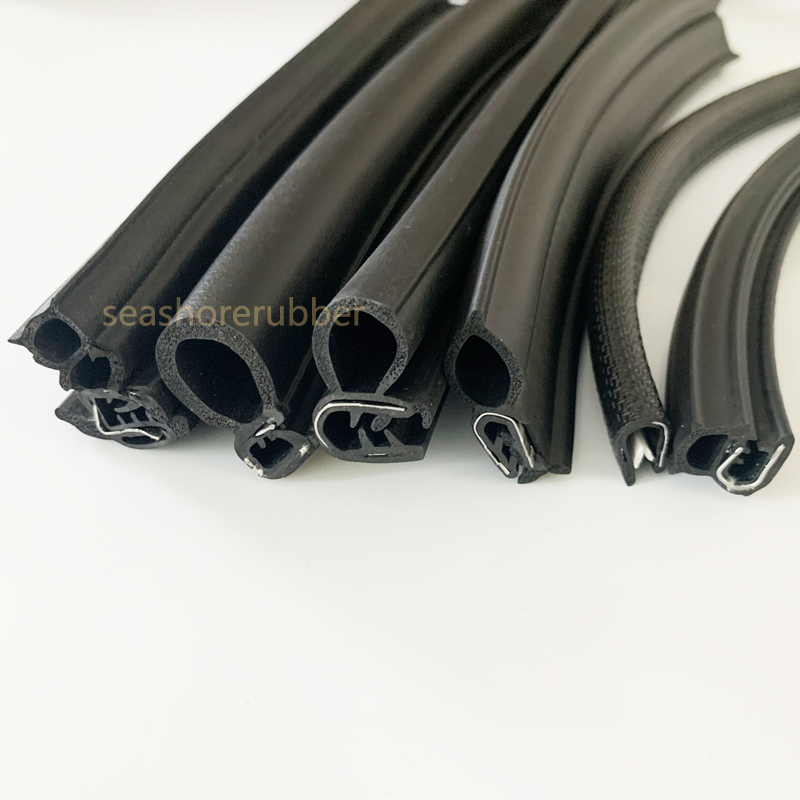
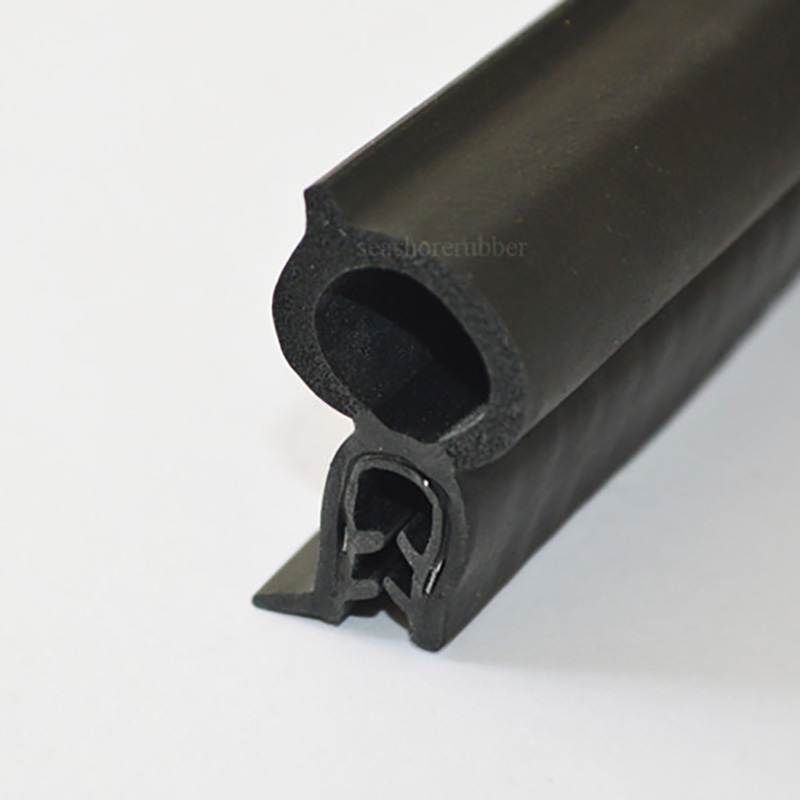
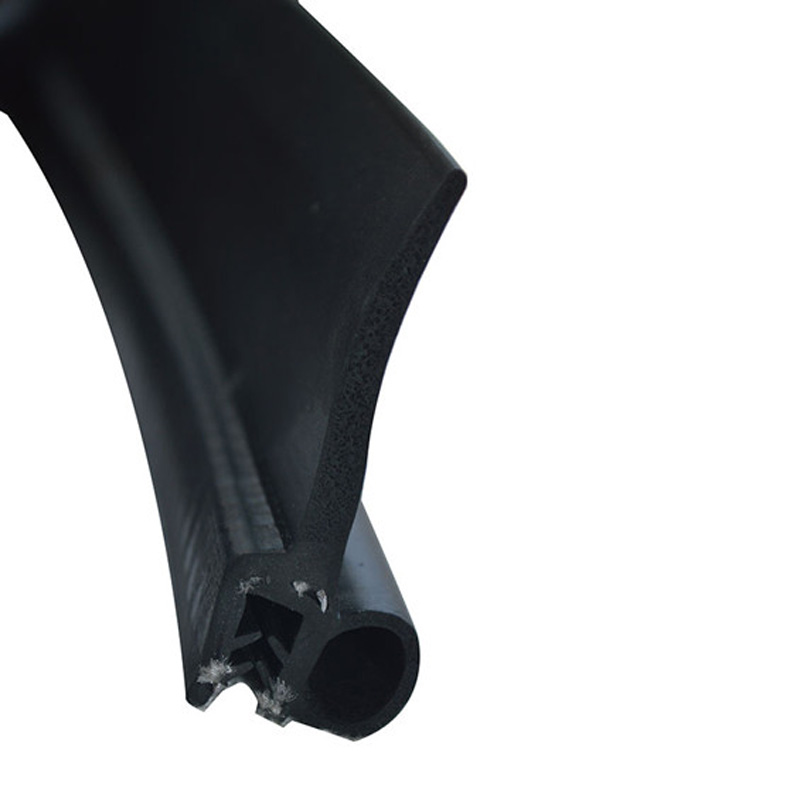
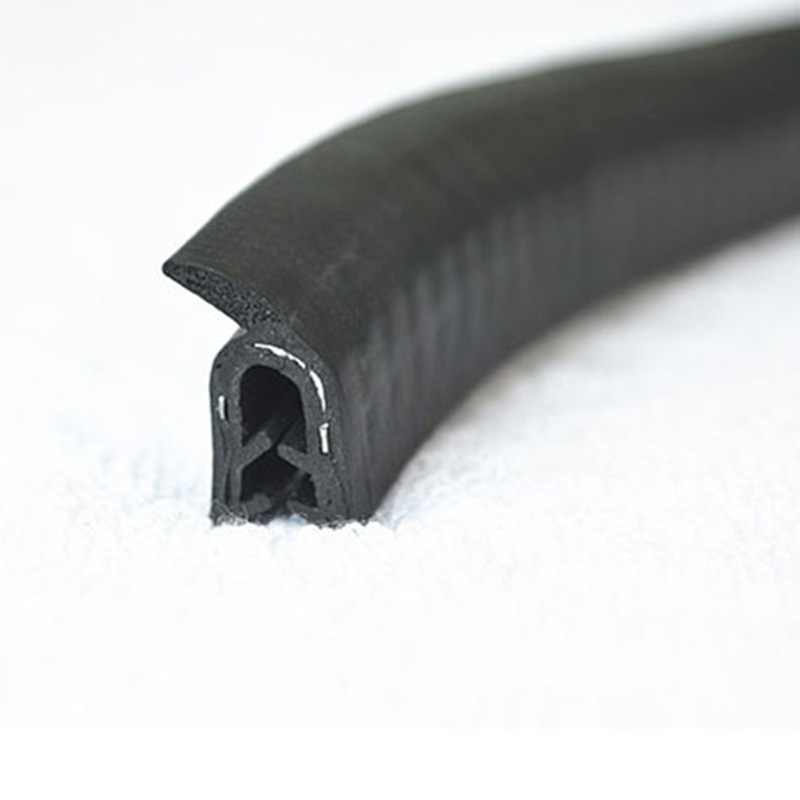
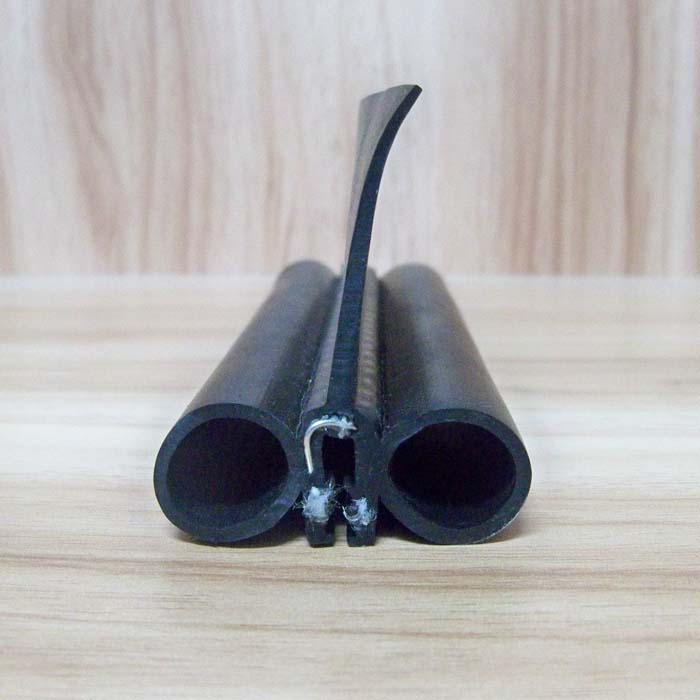
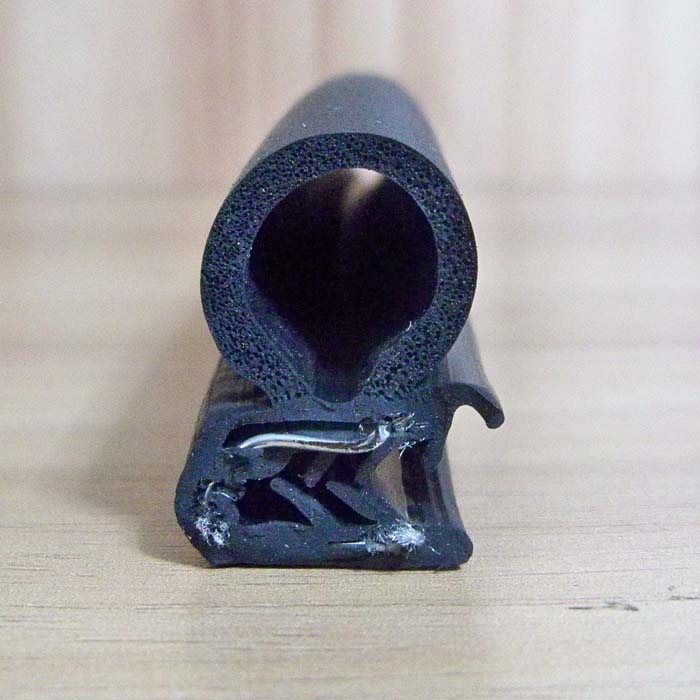 U channel Flexible rubber coextrusion profiles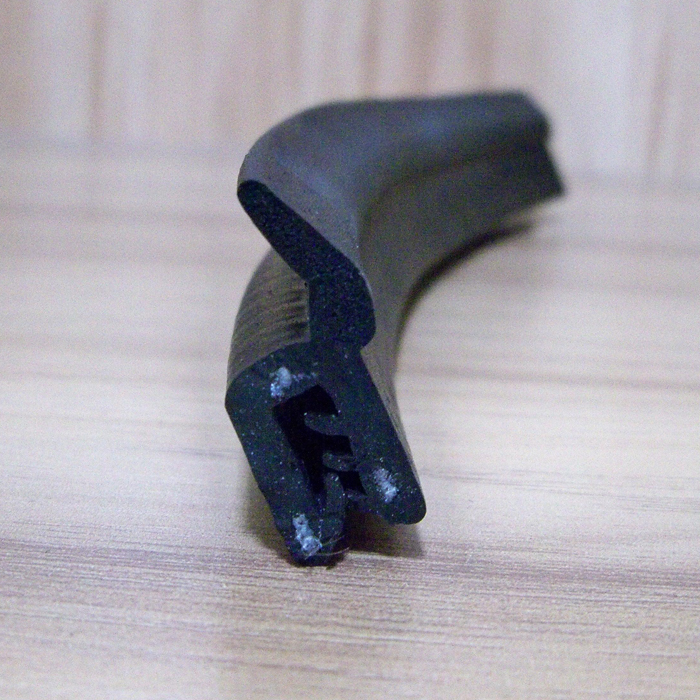
What Is Rubber Coextrusion?
Rubber coextrusion (also written as co-extrusion or co-extrusion) is an advanced manufacturing process that simultaneously extrudes two or more different rubber compounds through a single die to produce a single, integrated profile. The result is a multi-material seal or strip that combines the mechanical and chemical properties of each compound in a single, bonded cross-section.
Unlike adhesive bonding or post-process assembly, coextrusion creates a molecular-level bond between layers during vulcanization. The two materials become inseparable, giving the final product consistent performance along its entire length without delamination risk.
Coextrusion is not simply two parts glued together — it is a single, unified component engineered at the molecular level to perform multiple sealing functions simultaneously.
The Core Principle: Combining Sponge and Solid Rubber
The most common and significant application of rubber coextrusion is combining sponge (foam/cellular) rubber with solid (dense) rubber in a single profile. Each material contributes a distinct sealing function:
Solid Rubber Zone: Provides structural rigidity, dimensional stability, and load-bearing grip. Typically forms the mounting flange, carrier rib, or rigid edge of the seal.
Sponge Rubber Zone: Compresses under minimal force to create an airtight, watertight seal. Absorbs vibration, fills surface irregularities, and provides soft contact.
The Bond Line: Co-cured during vulcanization so both materials cure simultaneously, forming an inseparable bond with no adhesive layer that could fail.
If you’re searching for “sponge solid rubber seal,” “dual durometer rubber profile,” “two-material rubber weatherstrip,” or “co-cured rubber seal strip” — you are looking for co-extruded rubber products. These are all the same technology.
The Manufacturing Process: Step by Step
1. Compound Preparation
Each rubber compound (e.g., EPDM sponge and EPDM solid) is mixed separately in an internal mixer or open mill. Vulcanizing agents, fillers, plasticizers, and foaming agents (for sponge zones) are added and dispersed uniformly. The compounds are then calendered into strip form ready for feeding to the extruder.
2. Twin or Multi-Head Extrusion
Two (or more) separate extruder barrels feed their respective compounds into a common crosshead die. The die geometry determines how the streams meet and bond before exiting the die opening. Precision control of temperature, back-pressure, and flow rate at each barrel is critical to achieving a consistent bond line.
3. Die Shaping
The unified, uncured extrudate exits the die in the cross-sectional shape of the finished profile. Common shapes include D-sections, P-sections, U-channels, T-profiles, pinchweld carriers, and complex custom geometries. At this stage the extrudate is soft, warm, and dimensionally close to — but slightly larger than — the final cured size.
4. Vulcanization (Curing)
The extrudate passes through a vulcanization system, most commonly a salt bath (molten salt at ~180–200°C) or a hot air oven. Salt bath curing provides extremely precise temperature control and buoyancy support, which is essential for maintaining profile geometry in complex coextruded shapes. Both compounds cure simultaneously, chemically bonding at the interface.
5. Cooling, Cutting and Coiling
After curing, the profile passes through a water cooling tank and is then cut to specified lengths or spooled onto reels. Dimensional checks (cross-section geometry, hardness of each zone, bond strength) are performed inline and during batch inspection.
6. Secondary Operations (Optional)
Finished profiles may receive additional processing: adhesive tape backing (e.g., 3M VHB), flocking (velvet fiber coating for glass-run channels), color coating, or punching and corner-molding for frames and closed-loop seals.
Salt bath vulcanization is the gold standard for co-extruded rubber profiles. The molten salt medium provides uniform heat transfer and supports the profile’s shape during cure, preventing sag or distortion in complex sponge/solid geometries.
Rubber Materials & Compound Options
EPDM — The Dominant Choice
Ethylene Propylene Diene Monomer (EPDM) rubber is by far the most widely used material for co-extruded seals, accounting for the vast majority of automotive, construction, and industrial applications. Its dominance comes from an exceptional balance of properties:
Why EPDM Leads in Coextrusion
- Outstanding UV and ozone resistance — ideal for exterior seals exposed to sunlight
- Excellent weathering resistance, performing from -40°C to +150°C
- Available in both sponge and solid grades, enabling true mono-material coextrusion
- Good compression set resistance — seals maintain compression force over time
- Compatible with water, steam, and most polar solvents
- RoHS and REACH compliant formulations readily available
- Black as standard, but can be color-compounded
| Compound | Best For | Temperature Range | Key Strength | Key Weakness |
|---|---|---|---|---|
| EPDM | Exterior seals, automotive, construction | -40°C to +150°C | UV/ozone/weather resistance | Poor oil/fuel resistance |
| NBR (Nitrile) | Oil seals, fuel systems, industrial | -30°C to +120°C | Oil and fuel resistance | Poor UV/ozone resistance |
| Neoprene (CR) | Marine, refrigeration, mid-duty outdoor | -40°C to +120°C | Oil + UV balance, fire retardant | Moderate cost increase |
| Silicone | High-temp food, medical, aerospace | -60°C to +200°C | Extreme temperature range | Higher cost, lower tear strength |
| TPE/TPV | Recyclable seals, consumer products | -40°C to +120°C | Recyclable, no vulcanization | Limited compression set performance |
Industry Applications & Use Cases
Automotive & Commercial Vehicles
The automotive industry is the single largest consumer of co-extruded rubber. Every modern passenger car contains multiple co-extruded profiles — typically 15 to 30 linear meters per vehicle — sealing doors, hoods, tailgates, sunroofs, and glazing. Commercial trucks, buses, and agricultural equipment use heavier-duty versions requiring greater compression force and wider temperature tolerances.
Key automotive applications include door frame weatherstrips, window run channels (glass-run seals), trunk lid seals, sunroof perimeter seals, bonnet/hood seals, and cab door seals on trucks and tractors.
Building & Construction
Architectural and construction applications demand seals that survive decades of outdoor exposure. Co-extruded EPDM profiles are specified for curtain wall glazing systems, aluminum and PVC window frames, fire door perimeter seals, cold room and refrigerated warehouse door seals, and expansion joint covers. The sponge zone conforms to surface imperfections in panels and frames; the solid zone maintains precise geometry for repeatable installation.
Electrical & Electronic Enclosures
Control panels, switchgear cabinets, outdoor electrical enclosures, and industrial machinery housings all require gaskets that maintain IP-rated protection against dust and water. Co-extruded profiles provide better consistency than cut foam or molded gaskets and can be produced in continuous lengths that wrap an entire cabinet door without joints.
Rail & Marine
Train carriage windows and doors, ship superstructure glazing, and porthole frames demand seals that withstand constant vibration, high UV exposure, saltwater spray, and pressure differentials. Neoprene-based co-extruded profiles are common in marine applications for their oil and fuel resistance alongside weather resistance.
General Industrial
Machine guards, access panels, inspection hatches, oven door seals, refrigeration display case seals, and container door seals all use co-extruded profiles. U-channel profiles are especially popular because they allow tool-free installation by simply pressing onto panel edges.
Rubber Coextrusion vs. Single-Material Extrusion
| Factor | Single Extrusion | Coextrusion |
|---|---|---|
| Material | One compound throughout | Two or more compounds bonded |
| Sealing function | One function (seal or grip) | Multiple simultaneous functions |
| Hardness profile | Uniform hardness | Varying hardness zones by design |
| Tooling cost | Lower | Moderate to higher |
| Bond security | N/A | Co-vulcanized — permanent |
| Assembly steps | May need separate bonding | One-piece — no assembly |
| Performance consistency | Good | Excellent — no joint failure |
| Weight | Heavier (if full solid) | Optimized by zone |
| Best use case | Simple seals, edge trim | Door seals, weatherstrips, complex profiles |
If your sealing challenge requires both retention/mounting and sealing/cushioning in a single profile, coextrusion is almost always the right technology. Single extrusion is appropriate only when one material can adequately serve both purposes.
How to Choose the Right Co-Extruded Rubber Seal
1. What environment will the seal face?
Outdoor UV exposure → EPDM. Oil or fuel contact → NBR or Neoprene. High temperature → Silicone or high-EPDM. Saltwater → EPDM or Neoprene. Define your environment first; it drives compound selection.
2. What gap or flange does the seal need to fill or grip?
Measure the flange thickness (for U-channel/pinchweld profiles) or the gap width and depth (for compression seals). Provide a dimensioned cross-section drawing, or describe the mating geometry as clearly as possible. Most manufacturers will reverse-engineer an appropriate profile from this information.
3. What compression force is acceptable?
Low compression force is required where doors or panels are thin or where the closing mechanism has limited force (e.g., refrigeration display cases, electrical enclosures). High compression force is acceptable in heavy automotive doors. This determines sponge density and bulb geometry.
4. What profile shape is needed?
Common profiles include P-type (round bulb + flat base), D-type (D-shaped bulb), E-type (three-finger profile), U-type (channel grip), T-type (T-section for slot mounting), and complex combinations. Send a sketch or existing sample if available.
5. What secondary features are required?
- Self-adhesive backing (3M tape, foam tape) for tool-free installation
- Flocked (velvet) surface on glass-contact zones to reduce friction and noise
- Steel wire or metal reinforcement inside U-channels for increased grip force
- Flame-retardant compound for electrical or rail applications
- Color other than black (grey, white, brown — available in EPDM)
- Pre-cut lengths, mitred corners, or formed frames rather than linear strip
Sourcing Co-Extruded Rubber Seals from China
China is the world’s largest producer of co-extruded rubber profiles, supplying automotive OEMs, Tier 1 suppliers, construction product manufacturers, and distributors across Europe, North America, and Southeast Asia. Seashore Rubber manufactures top quality rubber extrusion and coextrusion products serving customers across the automotive, construction, marine, rail, and electrical sectors globally. With in-house compound mixing, salt bath vulcanization, and ISO-quality processes,we offer custom co-extruded profiles to OEM and distribution customers worldwide.


