
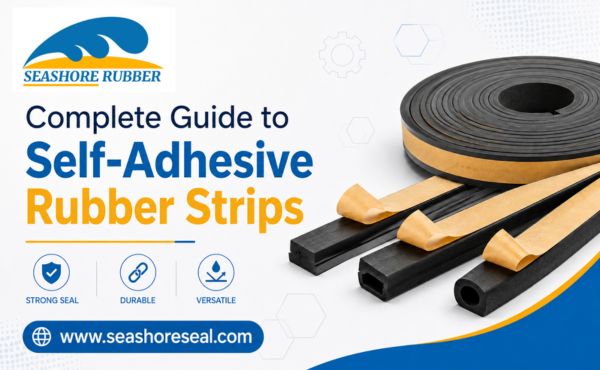
Complete Guide to Self-Adhesive Rubber Strips
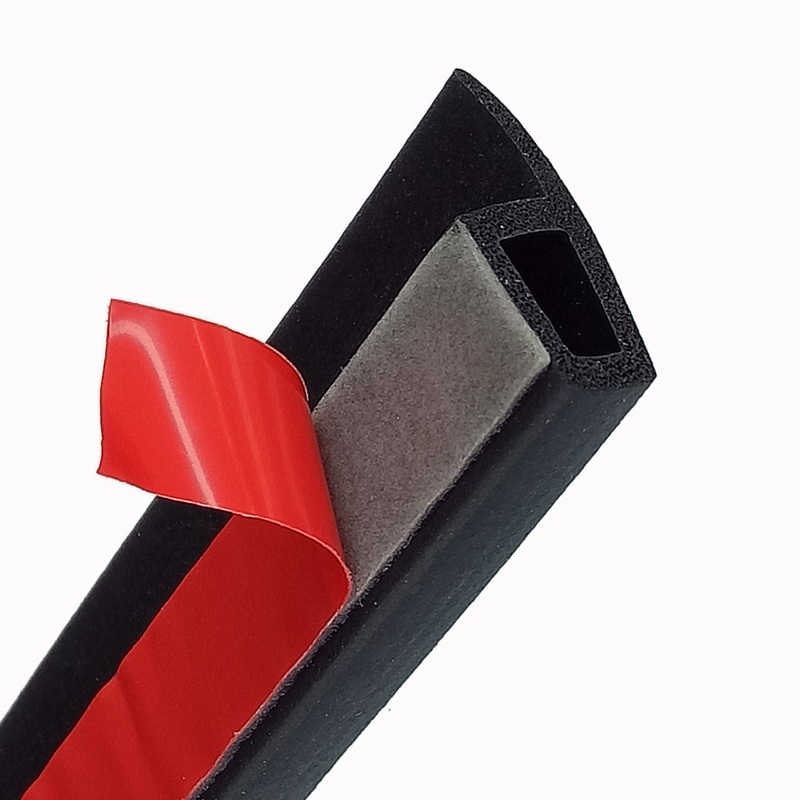
Self-adhesive rubber strips provide a convenient way to seal gaps, protect surfaces, reduce vibration, and prevent dust, air, or moisture from entering an enclosure. They combine a flexible rubber layer with pressure-sensitive adhesive, allowing them to be installed without separate glue or mechanical fasteners.
These sealing strips are widely used on doors, windows, cabinets, vehicles, electrical enclosures, industrial machinery, and HVAC equipment. However, their performance depends on selecting the correct rubber material, construction, dimensions, adhesive type, and compression level.
What Are Self-Adhesive Rubber Strips?
Self-adhesive rubber strips are flexible sealing products supplied with an adhesive layer on one side. A removable liner protects the adhesive during storage and transportation. Once the liner is peeled away, the strip can be pressed directly onto a clean surface.
They are commonly supplied in rolls, coils, or pre-cut lengths. Depending on the application, the rubber may have a flat, rectangular, D-shaped, E-shaped, or custom profile.
The rubber section may be made from solid rubber or sponge rubber. Solid strips are denser and provide better resistance to abrasion and mechanical contact. Sponge strips are softer and compress more easily, making them suitable for filling uneven gaps and cushioning components.
How Do Adhesive-Backed Rubber Strips Work?
These strips form a flexible barrier between two surfaces. When installed across a gap, seam, frame, or edge, the rubber compresses and helps block air, water, dust, light, or sound.
The adhesive backing holds the seal in position, while the rubber provides the main sealing and cushioning performance. In applications involving moving doors, covers, or panels, the material compresses when the components close and returns toward its original shape when the pressure is released.
Effective sealing depends on several factors:
- The strip must match the size of the gap.
- The rubber should compress sufficiently without being crushed.
- The adhesive must be compatible with the mounting surface.
- The material must withstand the operating environment.
- The installation surface must be clean, dry, and free from oil.
A strip that is too thin may not close the gap. A product that is too thick may prevent a door or panel from closing correctly and may place excessive stress on the adhesive.
Common Materials Used for Self-Adhesive Rubber Strips
Different rubber compounds provide different levels of resistance to weather, heat, oil, chemicals, and mechanical wear. Material selection should be based on the actual working conditions rather than price alone.
EPDM Rubber
EPDM is commonly used for outdoor weather sealing because it offers strong resistance to sunlight, ozone, rain, and changing temperatures.
Typical applications include:
- Door and window weatherstripping
- Outdoor cabinets
- Roofing and construction joints
- Automotive body seals
- HVAC equipment
EPDM is usually a better choice than neoprene for prolonged UV and ozone exposure. However, it is not recommended for applications involving petroleum oils or fuels.
Neoprene Rubber
Neoprene provides a balanced combination of flexibility, weather resistance, oil resistance, and mechanical durability.
It is commonly selected for:
- Machinery enclosures
- Industrial equipment
- Automotive components
- General-purpose gaskets
- Vibration isolation
- Moderate oil exposure
Neoprene performs well in many indoor and sheltered outdoor environments, although EPDM is generally preferred for continuous exposure to strong sunlight and ozone.
Silicone Rubber
Silicone remains flexible across a wide temperature range and is suitable for applications exposed to heat or cold.
Typical uses include:
- Ovens and heating equipment
- Lighting enclosures
- Electrical cabinets
- Refrigeration equipment
- High- and low-temperature machinery
Silicone rubber is often more expensive than EPDM or neoprene, but its temperature stability makes it valuable in demanding environments.
NBR Rubber
NBR, also called nitrile rubber, is mainly selected for resistance to oil, grease, and some fuels.
Common applications include:
- Oil-handling equipment
- Mechanical assemblies
- Workshop machinery
- Industrial gaskets
- Automotive components
NBR is generally less suitable for long-term outdoor exposure because its ozone and weather resistance are lower than those of EPDM.
Solid Rubber vs Sponge Rubber Strips
Construction has a major effect on sealing performance.
Solid Rubber Strips
Solid rubber is dense, firm, and resistant to wear. It is suitable for applications requiring mechanical protection, firm spacing, or resistance to repeated contact.
Its advantages include:
- Strong abrasion resistance
- High dimensional stability
- Better resistance to tearing
- Reliable edge protection
- Firm support between components
However, solid rubber requires more force to compress and may not conform well to irregular gaps.
Sponge Rubber Strips
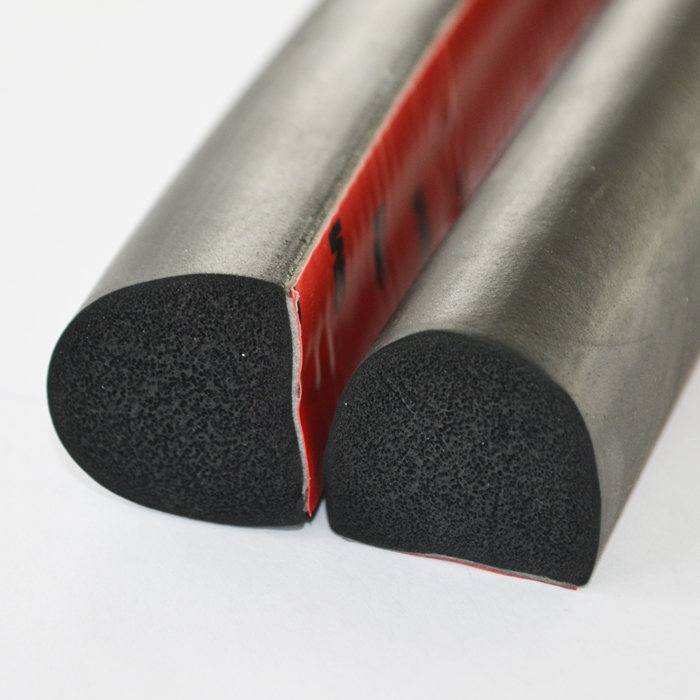
Sponge rubber contains a cellular structure that makes it softer and easier to compress. It can adapt to uneven surfaces and provides effective cushioning.
Its advantages include:
- Easy compression
- Improved gap filling
- Vibration absorption
- Noise reduction
- Lower closing force
Closed-cell sponge rubber is generally preferred for sealing against air, water, and dust because its cells do not readily absorb moisture. Open-cell sponge is softer and provides good cushioning, but it is not normally recommended for waterproof sealing unless specially treated.
Applications of Self-Adhesive Rubber Strips
Door and Window Sealing
Adhesive-backed weatherstripping can reduce drafts and help prevent dust, rain, and outside noise from entering through frame gaps.
EPDM sponge strips are frequently used for exterior doors and windows because they combine flexibility with reliable weather resistance.
Electrical Enclosures and Cabinets
Rubber seals can be installed around cabinet doors, access panels, and enclosure frames. They help reduce the entry of dust, moisture, and debris while cushioning the door when it closes.
The correct material should be selected according to the required temperature, environmental exposure, and enclosure protection level.
Machinery and Industrial Equipment
Industrial rubber strips can seal equipment covers, protect metal edges, separate contacting components, and reduce vibration between panels.
Neoprene and NBR are often considered for machinery, especially where oils, lubricants, or mechanical movement are present.
Automotive Applications
Self-stick rubber seals are used around vehicle doors, trunks, hoods, interior panels, and storage compartments.
They can help reduce rattling, cushion contact points, and block dust or water. Automotive applications require adhesives that can tolerate temperature changes, vibration, and prolonged use.
HVAC and Appliance Sealing
Rubber gasket tape can be used around air-conditioning units, ventilation ducts, refrigerators, freezers, and household appliances.
The strip may provide thermal insulation, prevent air leakage, reduce noise, or cushion metal panels.
Custom Gasket Making
Flat adhesive rubber strips can be cut and joined to create simple gaskets for covers, access panels, cabinets, and machinery.
For demanding sealing conditions, buyers should confirm whether a continuous die-cut or molded gasket would provide better reliability than a strip assembled by hand.
Benefits of Self-Adhesive Rubber Strips
Fast Installation
The peel-and-stick backing eliminates the need to apply separate glue. Many products can be installed using only a cleaning cloth, measuring tape, and cutting tool.
Flexible Sealing
Sponge strips can conform to minor surface irregularities and provide sealing across gaps that are not perfectly uniform.
Vibration and Noise Reduction
Rubber absorbs impact and helps separate contacting surfaces. This can reduce rattling, vibration transmission, and operational noise.
Protection Against Contaminants
When correctly selected and compressed, the strip can help limit the entry of air, water, dust, and debris.
Reduced Surface Damage
Rubber cushioning prevents direct metal-to-metal or panel-to-frame contact, helping protect painted, coated, or finished surfaces.
Wide Range of Options
Buyers can choose from different compounds, profiles, densities, hardness levels, widths, thicknesses, adhesive systems, and roll lengths.
How to Choose the Right Self-Adhesive Rubber Strip
Identify the Main Function
First determine what the strip needs to do. Common functions include:
- Weather sealing
- Dust protection
- Water resistance
- Thermal insulation
- Vibration reduction
- Sound damping
- Edge protection
- Spacing or cushioning
A product intended for cushioning may not provide the same sealing performance as a closed-cell weather seal.
Select the Rubber Material
Choose the material according to environmental exposure:
- EPDM for UV, ozone, and outdoor weather resistance
- Neoprene for general industrial sealing and moderate oil exposure
- Silicone for extreme temperatures
- NBR for oil and grease resistance
The rubber compound should be verified against the specific chemicals, temperatures, and exposure conditions of the application.
Choose Solid or Sponge Construction
Use solid rubber where firmness, wear resistance, or physical protection is required.
Choose sponge rubber where the material must compress, fill an uneven gap, or reduce vibration. For moisture sealing, closed-cell sponge is normally more suitable than open-cell sponge.
Measure the Gap Correctly
Measure the gap at several points because the distance may not be uniform.
The strip should be thick enough to make contact after installation but not so thick that it becomes permanently crushed. Sponge seals usually perform best when compressed within a controlled percentage of their original thickness.
The recommended compression range varies by material, density, and profile, so buyers should request guidance from the manufacturer rather than using a single percentage for every product.
Check Width and Profile
The strip should be wide enough to bond securely to the mounting surface. A narrow seal on a wide frame may not provide sufficient adhesive contact.
Flat rectangular strips suit many general applications, while D-shaped, P-shaped, E-shaped, and custom profiles may provide better compression control for doors, hatches, and enclosures.
Evaluate the Adhesive
Not all self-adhesive backings provide the same performance.
Important factors include:
- Acrylic or rubber-based adhesive
- Initial tack
- Temperature resistance
- Aging resistance
- Moisture resistance
- Compatibility with the mounting surface
- Indoor or outdoor suitability
Smooth metal, glass, and painted surfaces usually provide better bonding than dusty, porous, textured, or oily surfaces. Low-surface-energy plastics may require a special adhesive or primer.
Consider the Operating Environment
Confirm whether the strip will be exposed to:
- Direct sunlight
- Rain or humidity
- High or low temperatures
- Oil or fuel
- Cleaning chemicals
- Continuous compression
- Repeated opening and closing
- Vibration or abrasion
A strip that performs well indoors may fail quickly when exposed to heat, UV radiation, oil, or moisture.
What Specifications Should Buyers Confirm?
For commercial or industrial purchasing, buyers should provide detailed application information instead of requesting only a general “rubber strip.”
Key specifications include:
- Rubber material
- Solid or sponge construction
- Closed-cell or open-cell structure
- Profile shape
- Width and thickness
- Roll length or cut length
- Density or hardness
- Color
- Operating temperature
- Required compression
- Adhesive type
- Mounting surface
- UV, water, oil, or chemical resistance
- Flame-retardant requirements
- Tolerance requirements
- Packaging method
- Order quantity
- Custom cutting or die-cutting requirements
Providing these details helps the manufacturer recommend a more suitable compound and adhesive system.
B2B buyers should also ask for available technical data, material test reports, adhesive information, samples, production tolerances, and packaging options before placing a bulk order.
Installation Guide
Prepare the Surface
The mounting surface should be clean, dry, and smooth.
Remove:
- Dust
- Oil
- Grease
- Moisture
- Loose paint
- Adhesive residue
Use a cleaning method that is safe for the substrate. Allow the surface to dry completely before installation.
Measure and Cut
Measure the required length and cut the strip using clean scissors or a sharp utility knife.
Avoid stretching the rubber while measuring or installing it. A stretched strip may shrink back later and create gaps at the ends.
Apply the Strip
Peel away a small section of the release liner and align the strip carefully.
Continue removing the liner gradually while pressing the product into position. Avoid touching the adhesive with your fingers because oil and dirt can reduce bonding performance.
Apply Even Pressure
Press firmly along the entire strip to improve contact between the adhesive and the surface.
Pay particular attention to corners, joints, and strip ends. Some adhesives require time to reach their full bond strength, so heavy loading or exposure should be avoided immediately after installation.
Maintenance and Troubleshooting
Inspect the seal regularly for:
- Cracking
- Permanent deformation
- Peeling
- Shrinkage
- Hardening
- Surface wear
- Loss of compression
- Water or dust leakage
Clean the rubber using a mild method compatible with the material. Strong solvents may damage the rubber or weaken the adhesive.
If a strip starts peeling, pressing it back into place may provide only a temporary solution. When the adhesive is contaminated or degraded, removing the old strip, cleaning the surface, and installing a new product is usually more reliable.
Premature failure often results from:
- Poor surface preparation
- Incorrect material selection
- Excessive stretching during installation
- Too much compression
- Incompatible adhesive
- Exposure beyond the rated temperature
- Oil or chemical contact
- Rough or porous mounting surfaces
Frequently Asked Questions
Can Self-Adhesive Rubber Strips Be Used Outdoors?
Yes, but the material and adhesive must be suitable for outdoor exposure. EPDM is commonly selected because it resists UV radiation, ozone, water, and changing weather conditions. The adhesive should also be rated for moisture and temperature fluctuations.
Which Rubber Material Is Best for Doors and Windows?
EPDM sponge rubber is generally a suitable option for exterior doors and windows. It provides weather resistance and compresses easily to seal irregular frame gaps.
Can These Strips Be Used on Oily Surfaces?
Adhesive-backed seals do not bond reliably to oily or greasy surfaces. The surface should be thoroughly cleaned before installation. For environments with continuous oil exposure, an oil-resistant rubber such as NBR or neoprene and a compatible adhesive system may be required.
What Surfaces Provide the Best Adhesion?
Smooth, clean, and dry surfaces such as metal, glass, and coated panels usually provide good adhesion. Rough masonry, untreated wood, dusty surfaces, and some plastics may require additional preparation, primer, or a different attachment method.
How Long Do Self-Adhesive Rubber Strips Last?
Service life depends on the rubber compound, adhesive quality, surface preparation, compression, temperature, weather exposure, and contact with chemicals. Manufacturers should avoid promising a fixed lifespan without evaluating the application conditions.
Can the Strip Be Removed and Reused?
Most self-adhesive strips are designed for one-time installation. Removing the product usually damages or contaminates the adhesive layer. A new strip is recommended when resealing the area.
Are Thicker Rubber Strips Always Better?
No. The strip must match the actual gap. A product that is too thick may prevent proper closing, create excessive pressure, or cause the adhesive to peel. The correct thickness should provide controlled compression without crushing the material.
Can Custom Sizes and Shapes Be Produced?
Many manufacturers can supply custom widths, thicknesses, roll lengths, profiles, adhesive options, die-cut parts, and packaging. Buyers should provide drawings, samples, tolerances, application conditions, and estimated quantities when requesting customization.
Conclusion
Self-adhesive rubber strips offer a practical solution for sealing, cushioning, insulation, vibration control, and surface protection. Their performance, however, depends on more than simply choosing the correct width and thickness. Buyers should also consider the rubber compound, solid or sponge construction, cell structure, compression level, adhesive compatibility, and operating environment. Careful surface preparation and installation further improve bonding reliability. By matching the strip to the actual application conditions, users can achieve better sealing performance, reduce premature failure, and extend the service life of doors, enclosures, vehicles, appliances, and industrial equipment.


Leave a Reply
Want to join the discussion?Feel free to contribute!