EPDM Rubber Extrusion: How It Works and Where It Is Used
EPDM rubber extrusion is a manufacturing process used to produce continuous rubber profiles for sealing, cushioning, insulation, weather protection, and edge protection. Because EPDM offers strong resistance to sunlight, ozone, water, and changing temperatures, it is widely used for both indoor and outdoor applications.
The extrusion process allows manufacturers to create profiles with consistent cross-sectional shapes, including channels, bulb seals, tubing, angle profiles, weatherstrips, and custom sections. Understanding how EPDM rubber extrusion works and where it is used can help engineers and buyers determine whether it is suitable for a specific sealing or protection requirement.
How Does EPDM Rubber Extrusion Work?
The EPDM extrusion process consists of several stages that transform raw rubber compounds into finished profiles with controlled dimensions and performance characteristics.
1. EPDM Compound Preparation
Production begins with the preparation of the rubber compound.
EPDM polymer is blended with selected additives such as fillers, curing agents, pigments, processing aids, and reinforcing materials. The formulation depends on the required properties of the final extrusion.
Manufacturers may adjust the compound to achieve different levels of:
- Hardness
- Flexibility
- Compression resistance
- Weather resistance
- Temperature performance
- Tensile strength
- Color
For example, a soft compressible seal may require a different EPDM formulation from a solid rubber edge profile used for mechanical protection.
2. Feeding and Conditioning the Rubber
The prepared EPDM compound is fed into an extrusion machine.
Inside the extruder, a rotating screw moves the rubber through the barrel while applying pressure and controlled heat. This conditions the material and creates a consistent rubber flow before it reaches the extrusion die.
Maintaining stable temperature, pressure, and feed speed is important because variations can affect the dimensions and surface quality of the finished EPDM rubber extrusion.
3. Shaping Through the Extrusion Die
The conditioned rubber is then forced through a precision die.
The opening in the die determines the cross-sectional shape of the profile. This is what makes rubber extrusion particularly useful for producing continuous seals with complex geometries.
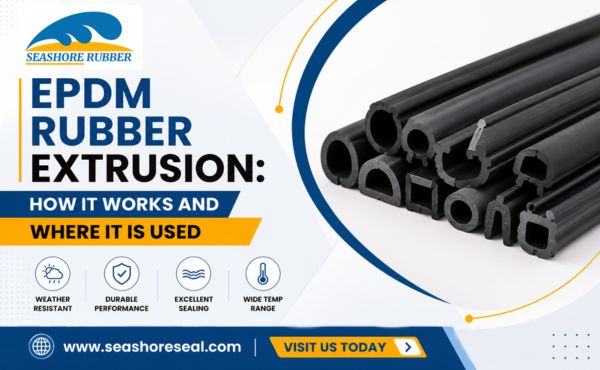
Typical EPDM extrusion profiles include:
- D profiles
- P profiles
- U channels
- L-shaped profiles
- Rectangular strips
- Hollow sections
- Bulb seals
- Tubular profiles
- Custom cross sections
Custom dies can also be manufactured according to drawings, samples, installation grooves, or sealing requirements.
Because rubber can expand slightly after leaving the die, die design and process control must account for the material’s behavior during extrusion.
4. Vulcanization and Curing
The extruded EPDM profile is still relatively soft and uncured after leaving the die. It must therefore pass through a vulcanization process.
Curing creates cross-links within the rubber structure, helping the material develop its final elasticity, strength, dimensional stability, and resistance to permanent deformation.
Continuous curing methods may use hot air, microwave systems, salt baths, or other controlled heating processes depending on the production equipment and profile design.
Correct vulcanization is essential because insufficient or excessive curing can affect sealing performance and service life.
5. Cooling, Cutting, and Finishing
After curing, the EPDM rubber extrusion is cooled and stabilized.
The finished profile may then be supplied in continuous coils or cut to specific lengths. Additional finishing operations can also be performed according to the application.
These may include:
- Adhesive backing
- Drilling or punching
- Splicing
- Joining into frames
- Surface treatment
- Cutting to fixed lengths
- Packaging in coils
Dimensions, surface condition, hardness, and other specifications are typically inspected before shipment.
Solid vs Sponge EPDM Rubber Extrusion
EPDM extrusion is commonly available in both solid and sponge constructions.
Solid EPDM Extrusion
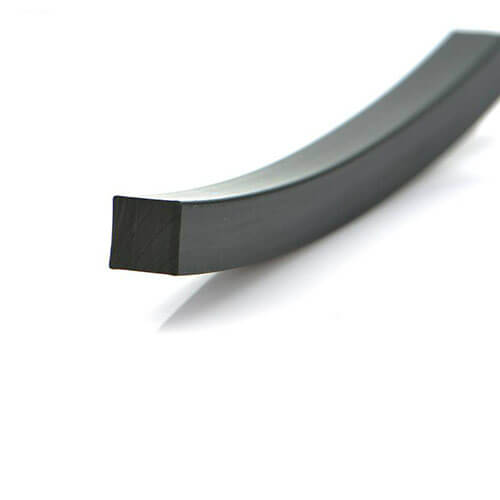
Solid EPDM has a dense rubber structure. It generally provides higher mechanical strength and better resistance to abrasion and physical impact.
Typical uses include:
- Edge protection
- Structural seals
- U channels
- Rubber angles
- Glazing profiles
- Industrial equipment seals
Solid EPDM is commonly selected where the profile must maintain its shape while still providing flexibility.
Sponge EPDM Extrusion
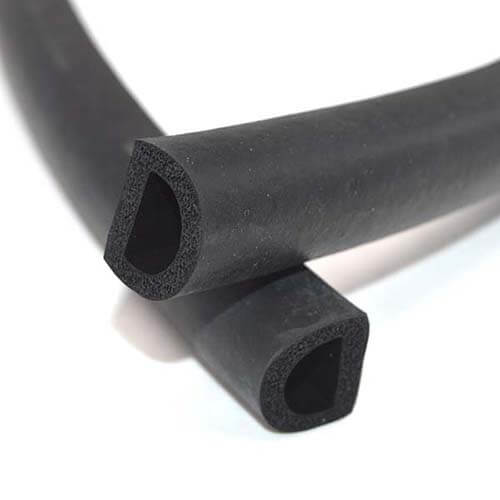
Sponge EPDM contains a cellular structure that makes the material softer and more compressible.
When pressure is applied, the profile compresses easily and conforms to uneven surfaces. This makes sponge EPDM especially useful for sealing gaps.
Typical applications include:
- Cabinet seals
- Door seals
- Enclosure gaskets
- Weatherstripping
- HVAC equipment
- Access panels
Some products also combine solid and sponge EPDM in a single co-extruded profile to provide both structural strength and compression sealing.
Where Is EPDM Rubber Extrusion Used?
The combination of flexibility, weather resistance, and sealing performance allows EPDM extrusions to be used across many industries.
Automotive Sealing
EPDM rubber extrusions are widely used in automotive weather-sealing systems.
Common locations include vehicle doors, windows, trunks, hoods, and body panels. The profiles help reduce the entry of water, dust, air, and exterior noise.
EPDM is particularly suitable for vehicle exteriors because it can withstand prolonged exposure to sunlight, ozone, rain, and changing temperatures.
Windows and Doors
EPDM extrusion profiles are frequently installed around windows and doors to create a flexible barrier between moving or fixed components.
Applications include:
- Window frame seals
- Door perimeter seals
- Glazing seals
- Weatherstripping
- Gap seals
The rubber compresses when the window or door closes, helping reduce air leakage, water penetration, and drafts.
Construction and Building Systems
EPDM’s outdoor durability makes it suitable for many construction sealing applications.
Extruded profiles can be used in:
- Curtain wall systems
- Façades
- Architectural glazing
- Expansion joints
- Roofing systems
- Exterior building joints
Resistance to UV radiation and ozone is particularly important in building applications where rubber profiles may remain exposed to outdoor conditions for extended periods.
Industrial Equipment
Industrial machinery and equipment often require rubber seals to protect internal components from environmental exposure.
EPDM extrusions are commonly installed on:
- Machinery doors
- Equipment housings
- Electrical cabinets
- Control enclosures
- Access panels
- Protective edges
Depending on the profile design, they can help prevent the entry of moisture and dust while also reducing vibration and impact.
HVAC and Appliance Applications
EPDM rubber profiles are also used in heating, ventilation, air-conditioning, refrigeration, and appliance systems.
Typical functions include sealing access panels, reducing air leakage, cushioning components, and minimizing vibration between contacting surfaces.
Sponge EPDM is especially useful in these applications because it can compress around irregular gaps and provide a reliable seal with relatively low closing force.
Why Is EPDM Commonly Used for Extruded Seals?
EPDM is particularly suitable for applications involving long-term exposure to outdoor environments.
Key properties include:
- Excellent ozone resistance
- Strong UV resistance
- Good weather resistance
- Good water and steam resistance
- Flexible sealing performance
- Good resistance to temperature changes
- Availability in different hardness levels
- Suitability for complex continuous profiles
These properties explain why EPDM rubber extrusion is commonly selected for automotive weatherstrips, building seals, industrial enclosures, and outdoor equipment.
However, EPDM is generally not the preferred material for continuous exposure to petroleum oils, gasoline, or many hydrocarbon fuels. For those environments, other elastomers such as nitrile rubber may be more appropriate.
Custom EPDM Rubber Extrusion Options
EPDM profiles can be customized to meet different installation and performance requirements.
Common customization options include:
- Custom profile shapes
- Solid or sponge construction
- Different Shore A hardness levels
- Profile dimensions
- Colors
- Cut lengths
- Continuous coils
- Adhesive backing
- Co-extruded designs
- Custom tolerances
When designing a custom EPDM rubber extrusion, factors such as sealing gap, compression level, installation groove, operating temperature, environmental exposure, and mechanical load should all be considered.
Selecting the correct profile geometry is just as important as choosing the right rubber compound because both directly affect sealing performance.
Conclusion
EPDM rubber extrusion converts specially formulated EPDM compounds into continuous profiles through material preparation, extrusion, die shaping, vulcanization, cooling, and finishing.
The process can produce a wide variety of solid and sponge profiles for automotive systems, windows and doors, construction, industrial machinery, HVAC equipment, and appliances.
Because EPDM combines flexibility with strong resistance to weather, UV radiation, ozone, and moisture, it is particularly well suited to long-term sealing applications. For projects requiring continuous, durable, and customizable rubber profiles, EPDM extrusion remains one of the most widely used solutions.


Leave a Reply
Want to join the discussion?Feel free to contribute!