
When Should You Use Rubber Strips With Adhesive Backing?
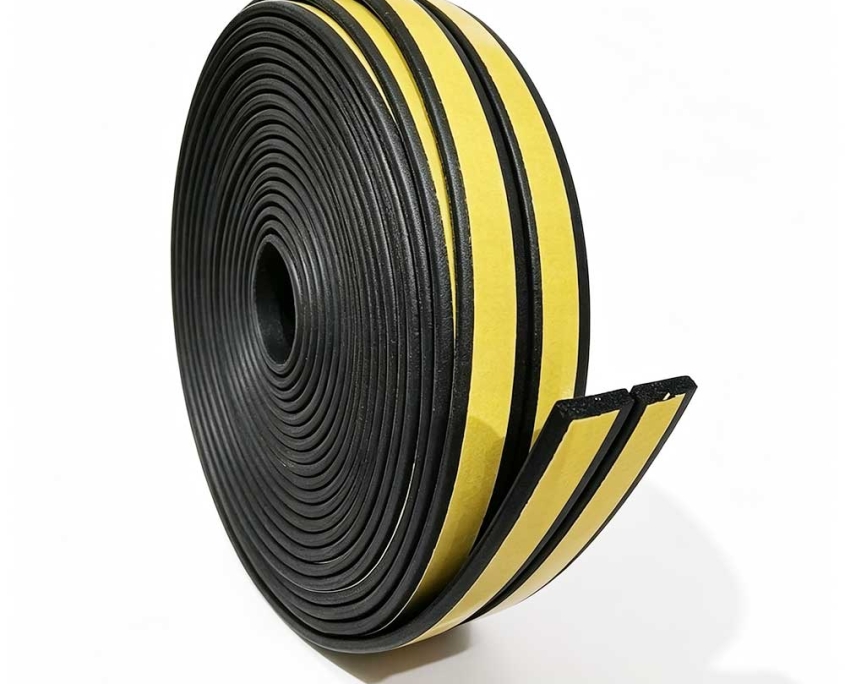
Rubber strips with adhesive backing are useful when a seal, cushion, or protective strip needs to stay in a defined position on a suitable surface. The adhesive holds the strip during installation and service; the rubber provides the compression, cushioning, or barrier. Whether the combination works depends on the joint, the surface, and the forces acting on the strip.
They are often a practical option for enclosure doors, access panels, equipment covers, and other assemblies where drilling or separate glue application would complicate installation. They are less dependable where the strip is pulled away from its mounting surface, dragged repeatedly, exposed to incompatible fluids, or expected to support the assembly itself.
When Adhesive-Backed Rubber Strips Make Sense
Seals need to stay aligned during assembly
Consider enclosure doors or removable covers with flat bonding lands. An adhesive-backed strip can remain in place while the door closes and the rubber compresses against the mating surface. This can simplify assembly, particularly where loose gaskets tend to shift before fasteners are secured.
The adhesive attaches the seal to one side of the joint. It does not, by itself, make the joint watertight or establish a particular ingress-protection rating. Sealing still depends on continuous contact, appropriate compression, sound corners and joints, and the performance of the chosen rubber.
Drilling, channels, or separate glue application are impractical
Adhesive backing can be useful on existing panels, painted frames, or equipment covers that lack a groove for retaining a seal. It also allows a strip to be applied without adding holes or waiting for separately applied adhesive to set. This is especially useful in retrofits or assemblies with straightforward, accessible bonding surfaces.
That convenience should not be mistaken for universal compatibility. Paint, powder coating, and plastics vary. The actual finished surface, rather than the underlying metal or plastic alone, needs to be compatible with the adhesive system.
The strip provides cushioning or noise reduction
Rubber strips can cushion contact between lids and frames or reduce rattling where two parts meet. In these applications, the backing keeps the strip in its intended location while the rubber absorbs contact or vibration. The hinges, latches, screws, or other hardware should continue to carry any structural load.
A strip that is repeatedly rubbed sideways during opening and closing faces a different demand from one that is compressed against a fixed stop. Check the direction of movement before treating the two as equivalent.
The joint is accessible and the surface can be prepared
Pressure-sensitive adhesive needs sufficient contact with the mounting surface. A clean, dry, sound surface that can be pressed evenly is a much better candidate than a greasy, dusty, loose, or heavily textured one. Long or intricate paths also require careful placement so that the strip is not stretched around corners or forced into a shape that pulls its ends loose.
Typical Applications and the Main Limitation in Each
| Application | Why adhesive backing may help | What needs checking |
|---|---|---|
| Electrical enclosure doors | Holds a compression seal on the door or frame | Finished surface, compression, corners, and required enclosure rating |
| Appliance access panels | Keeps a cushion or seal aligned during assembly | Heat, cleaning agents, and repeated panel removal |
| Equipment covers and cabinet lids | Reduces rattling and contact noise | Whether sliding contact can lift the strip |
| Window and door frames | Positions weatherseals without a retaining channel | Weather exposure, substrate finish, and closing force |
| Retrofitted guards or panels | Adds a protective or cushioning strip without new holes | Surface condition and whether impacts or snagging cause peel |
These are application examples, not guarantees. The same enclosure door may be suitable with one coating and adhesive combination but unsuitable with another.
When Should You Use Another Retention Method?
The most important warning sign is peel: a force lifting the strip away from the surface. Adhesive-backed strips generally perform differently when pressed into the surface than when their edge is repeatedly pulled up. Sliding doors, snag points, and tight corners can create peel even when the strip carries no obvious weight.
Mechanical retention, a purpose-designed groove, or a clamped gasket deserves consideration when:
- The strip must support weight or resist regular pulling, scraping, or heavy impacts.
- The joint is frequently opened and the seal drags across a mating surface.
- The substrate is weak, contaminated, rough, or difficult to bond reliably.
- The installation involves sustained immersion, demanding chemicals, or temperatures beyond the specified adhesive system.
- Seal retention is critical and loss of adhesion would compromise equipment protection.
Adhesive may still help position a mechanically retained seal during assembly. In that case, the hardware or channel supplies retention; the adhesive is an assembly aid. For liquid sealing or specified ingress protection, validate the complete joint rather than assuming a strip alone delivers the requirement.
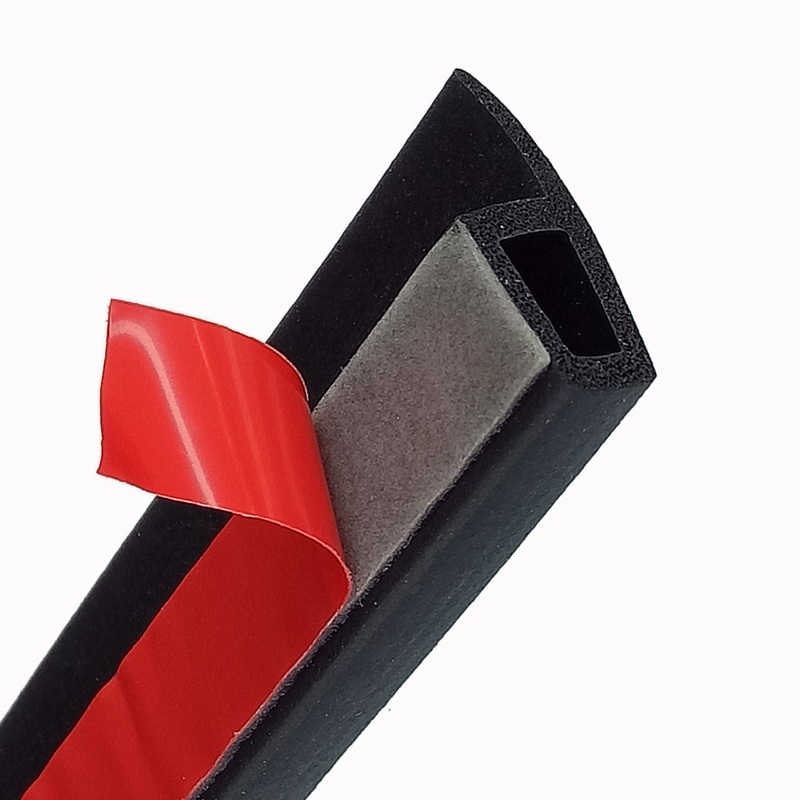
What Determines Whether the Backing Will Hold?
The actual bonding surface. Bare metals and glass often bond differently from polypropylene, polyethylene, silicone, textured coatings, or poorly adhered paint. A strip can also remain firmly attached to a coating while the coating separates from the part. Where the surface is uncertain, test the proposed adhesive on production-finished parts.
The direction and duration of force. Compression against a door frame is different from lifting an exposed edge. Repeated flexing, sustained shear, and thermal movement may gradually stress the bond. The required bond area and suitable adhesive construction depend on those loads and the supplier’s data.
The rubber and adhesive as a pair. EPDM, neoprene, nitrile, and silicone have different environmental and fluid resistance. Their adhesive backings also vary. Rubber that survives an operating temperature or fluid does not prove that its backing will do the same. Ask for the service limits of the complete laminated strip, including any bonding layer between rubber and adhesive.
Installation conditions. Pressure-sensitive adhesives need contact pressure and appropriate application conditions. The exact surface preparation, minimum application temperature, pressure, and time to develop bond strength depend on the adhesive product. Follow its technical instructions instead of applying a universal temperature or waiting period to every strip. For example, 3M describes bond-strength development over time for its VHB tapes; that schedule should not be assumed for unrelated adhesive backings.
Three Examples That Clarify the Decision
A hinged enclosure door: The gasket is fixed to a flat, finished flange and compresses when the door closes. Adhesive backing can keep it aligned. The design still has to verify that the corners seal, the door applies sufficient compression, and the backing bonds to the specific finish. If an ingress rating is required, test the assembled enclosure.
A sliding access panel: Each opening cycle scrapes across the strip and may lift its leading edge. Even if the rubber compound is suitable, repeated peel can make a simple adhesive backing a poor retention method. A channel-retained profile or revised contact path may be more reliable.
A powder-coated equipment cover: Adhesive backing may work, but “metal cover” is not enough information. The tape contacts the powder coating, whose chemistry and texture affect adhesion. Testing on the finished cover is more useful than relying on bond data for bare steel.
Conclusion
Use rubber strips with adhesive backing when the strip mainly needs secure positioning for sealing, cushioning, or protection on a compatible, prepared surface. Look more closely when regular motion can lift an edge, the surface is difficult to bond, or the joint depends on the adhesive for retention. The sound decision comes from the complete assembly: rubber, adhesive, substrate, movement, and sealing requirement working together.


Leave a Reply
Want to join the discussion?Feel free to contribute!