How Surface Finish Impacts Long-Term Rubber Seal Performance
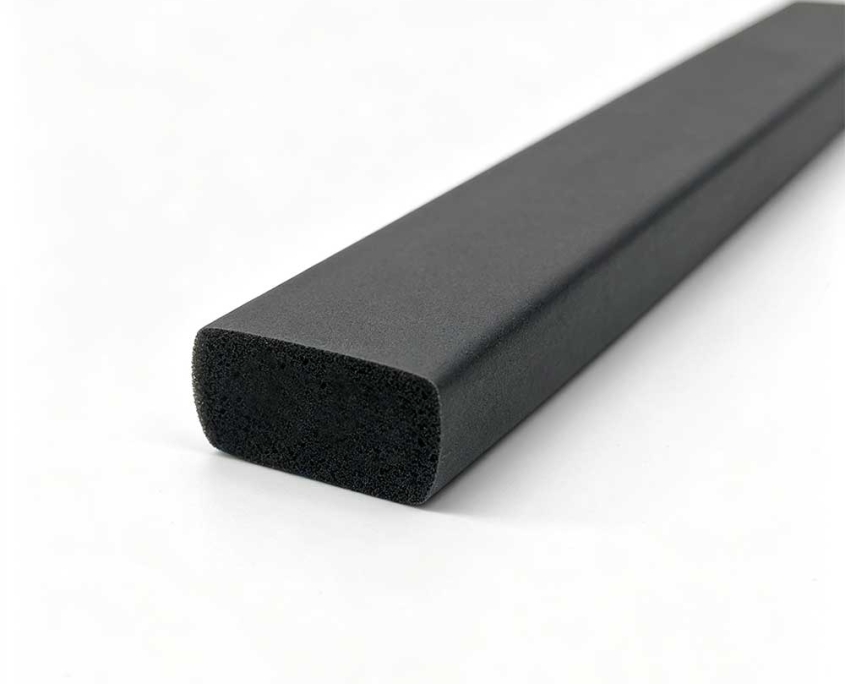
Surface finish affects rubber seal performance by influencing contact continuity, leakage paths, friction, and wear. Both the rubber surface and the component against which it seals require attention. Scratches, unsuitable texture, damaged coatings, and local defects can reduce reliability even when material selection and dimensions are otherwise correct.
The required finish depends on the application. Static enclosure gaskets, sliding sealing strips, hydraulic seals, and rotating shaft seals operate differently. Reliable specifications must reflect those differences rather than applying one roughness value to every sealing interface.
Surface Finish at the Sealing Interface
Rubber Surfaces and Mating Components
Rubber seals deform against mating surfaces to form continuous barriers. Manufacturing marks, damage, and contamination on either side can affect that contact.
On rubber products, relevant features include extrusion lines, mold parting lines, flash, pores, and joined sections. On rigid components, machining grooves, scratches, coating texture, and corrosion may influence sealing.
Research into static rubber seals confirms that leakage depends on the detailed interaction between roughness and contact conditions. Average roughness alone cannot describe the entire interface.
Surface Texture and Overall Geometry
Surface finish differs from component shape. Polished panels can still be warped, and smooth shafts can still have excessive runout.
These geometric errors change compression or contact pressure around the seal. Improving microscopic texture cannot reliably correct inadequate alignment, uneven gaps, or insufficient structural support.
Leakage Paths and Static Sealing
Defects Across the Contact Band
Static seals remain nominally stationary after assembly. Enclosure gaskets, compressed profiles, and O-rings between fixed components all require sufficiently continuous contact.
Scratches crossing the sealing band can connect the exposed side with the protected side. Marks running along the band may behave differently, although their depth and position can still make them unacceptable.
Local defects should therefore be assessed by function and location. Overall surface appearance does not show whether connected leakage paths remain beneath the compressed rubber.
Compression and Conformability
Rubber must deform enough to accommodate the mating texture while remaining within the profile’s design limits.
For enclosure and door seals, uneven gaps or inadequate latch force can leave lightly compressed regions. These broad contact problems may dominate leakage even when the panel finish appears satisfactory.
Increasing compression is not automatically effective. Excessive loading can collapse hollow sections, increase closure force, and accelerate permanent deformation. Correct geometry and suitable surface condition must work together.
Friction, Lubrication, and Dynamic Seal Wear
Reciprocating Seals
In lubricated reciprocating systems, microscopic valleys can help retain and distribute lubricant. Excessively rough surfaces may abrade sealing edges, while unsuitable ultra-smooth surfaces may provide inadequate lubricant retention.
Manufacturer guidance treats dynamic finish as a balance between sealing and lubrication. Performance depends on the seal design, compound, fluid, pressure, speed, and temperature.
Validation should reflect the actual duty cycle. Frequent reversals, low-speed motion, long dwell periods, and intermittent operation can create conditions that continuous movement testing does not reproduce.
Rotating Seals
Rotary applications require attention to directional surface features because machining patterns can influence fluid movement along the shaft.
Runout, alignment, contact temperature, and lubricant supply also affect performance. Roughness values copied from reciprocating equipment do not establish suitability for rotating equipment.
Use requirements developed for the specific seal arrangement. Describing shafts simply as polished or smooth leaves important characteristics undefined.
Sliding Profiles and Closure Systems
Rubber profiles that slide against painted panels, glass, or other surfaces encounter different conditions from oil-lubricated hydraulic seals.
Friction may affect closure force, noise, lip rollover, and wear. Dust accumulation, cleaning residues, and changing surface treatments can also alter performance over time.
Evaluate these systems under representative movement, contamination, and cleaning conditions rather than applying hydraulic surface guidance directly.
Rubber Surface Quality and Local Defects
Extruded and Molded Surfaces
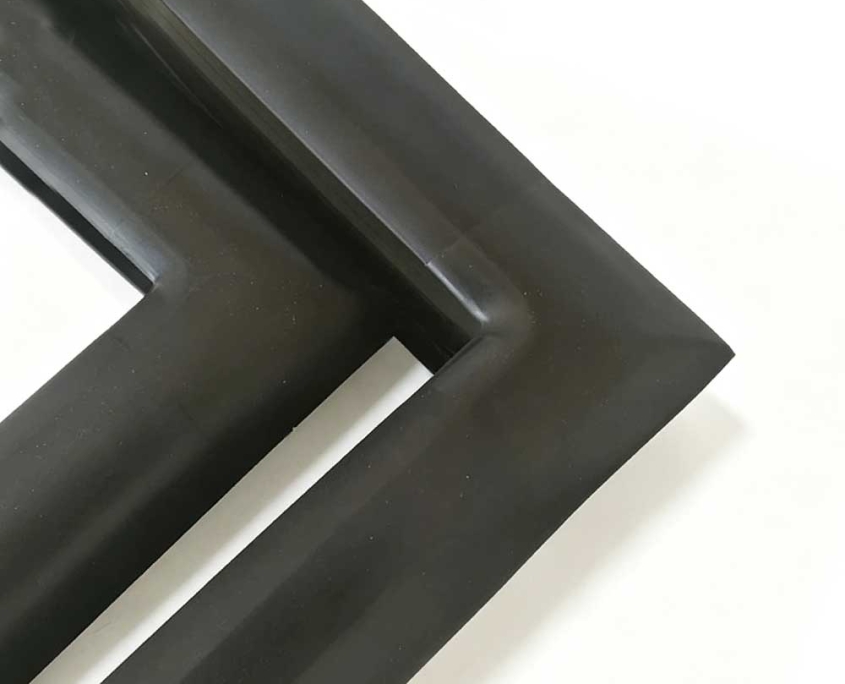
Extrusion lines may be normal manufacturing features. Their significance depends on depth, continuity, and position relative to the functional contact area.
Molded products may show parting lines or trimmed regions. These need appropriate acceptance limits, particularly where they cross sealing edges or influence sliding contact.
Gloss does not establish quality. Matte and glossy surfaces may both perform correctly when the compound, process, and design requirements are satisfied.
Joints and Local Discontinuities
Joined frames require inspection at splices and corners. Steps, incomplete bonding, or changes in profile shape may interrupt contact even when straight sections seal correctly.
Distinguish cosmetic variation from functional damage. Minor appearance differences may be acceptable, while small cuts on critical sealing lips may require rejection.
Specifications should identify critical surfaces and define acceptable discontinuities. This makes inspection more consistent than relying on general descriptions such as “good appearance.”
Surface Roughness Beyond Ra
Ra expresses the average magnitude of profile deviations along a measured trace. It is useful, but surfaces with similar Ra values can have different peaks, valleys, and directional patterns.
| Parameter or feature | Relevance to sealing |
|---|---|
| Ra | Describes average profile deviation |
| Rz or Rt | Adds information about profile heights |
| Material ratio | Describes the supporting portion of the profile |
| Lay | Identifies predominant texture direction |
| Waviness | Describes larger-scale surface variation |
| Local defects | Identifies scratches, pits, and isolated discontinuities |
Hallite provides different requirements for dynamic sealing surfaces, static faces, and housing faces, including parameters beyond Ra. Measurement direction, filtering, and evaluation length must also be defined where they affect acceptance. Ra, RMS roughness, and different Rz definitions should not be treated as interchangeable.
Coatings, Corrosion, and Surface Changes
Inspection After Surface Finishing
Paint, plating, anodizing, and other finishes change texture and dimensions. Measurements taken before these operations cannot establish the final condition presented to the seal.
Inspect cured coatings where contact occurs. Overspray, particles, runs, and uneven build can produce gaps or abnormal friction.
For moving components, plating damage and corrosion pits may create abrasive features. Replacing seals without correcting counterface damage can lead to repeated failure.
Surface Condition During Service
Surfaces continue changing after installation. Dust, wear debris, dried residues, and cleaning damage may alter interfaces that originally met specification.
Cleaning methods must suit both the rubber and the counterface. Abrasive tools can introduce scratches, while incompatible chemicals may attack rubber compounds or coatings.
Approved lubricants and low-friction treatments also require maintenance consideration. Their initial effect does not establish durability throughout repeated movement and cleaning.
Surface Finish Specifications and Inspection
Functional Requirements
Identify sealing contact areas separately from mounting surfaces, decorative faces, and assembly lead-ins. Each has different requirements.
A practical specification should address:
- Rubber contact surfaces: Permissible defects, joint quality, critical edges, and handling protection.
- Rigid counterfaces: Roughness parameters, texture direction where relevant, local defect limits, and final coating condition.
- Assembly geometry: Compression, flatness, alignment, support, and runout where applicable.
Approved samples can clarify appearance requirements, but measurable criteria should control functional acceptance wherever practical.
Measurement and Manufacturing Sequence
Verify surfaces after operations that determine their final condition. Polishing, coating, repair, and aggressive cleaning can change previously accepted results.
Use compatible measurement methods when comparing suppliers or batches. Different instrument settings or trace directions can produce results that are difficult to compare meaningfully.
Keep surface measurements separate from geometric checks. Acceptable roughness does not establish correct flatness, dimensions, or alignment.
Functional Validation
Surface finish interacts with lubrication, pressure, temperature cycling, stretch, and compression. Seal design guidance identifies these as interrelated influences on dynamic performance.
Validation should therefore reproduce relevant service conditions. Depending on the application, these may include starting after long dwell periods, temperature exposure, operating fluids, cleaning cycles, and expected contamination.
Troubleshooting Long-Term Seal Problems
Begin by recording failure locations and operating conditions. Preserve removed seals where practical, and photograph mating surfaces before cleaning.
| Observed problem | Investigation priorities |
|---|---|
| Leakage at one position | Scratches, local gaps, joints, and uneven compression |
| Rapid sliding wear | Texture, particles, lubrication, and alignment |
| High starting resistance | Dwell time, surface treatment, contact load, and lubricant condition |
| Damage recurring after replacement | Installation edges and persistent counterface defects |
| Gradual leakage after exposure | Corrosion, coating changes, and material compatibility |
These patterns guide investigation without proving the cause. Compare failed and successful assemblies using consistent methods. Polishing surfaces or changing compounds before confirming the mechanism may leave the underlying problem unresolved.
Frequently Asked Questions
Can softer rubber compensate for rough mating surfaces?
Softer compounds may conform more readily under certain conditions, but softness alone does not guarantee sealing. Compression, geometry, pressure, durability, and detailed surface texture remain important.
Does passing water testing prove gas tightness?
No. Test media behave differently. Interfaces that prevent visible water leakage may still leak gas, so validation must use the specified medium and acceptance method. Research comparing air, helium, and water leakage demonstrates this distinction.
Can worn counterfaces be polished and reused?
Possibly, provided the repair preserves dimensions, geometry, coating integrity, and the required final texture. Inspect repaired components before returning them to service.
Do low-friction coatings replace surface-finish control?
No. Coating performance still depends on application, adhesion, wear, and the underlying interface. Validate coated seals against their intended mating surfaces.
Can seals wear in against unsuitable surfaces?
Initial running may change contact conditions, but uncontrolled wear should not be used to correct nonconforming counterfaces. Excessive abrasion can damage sealing edges before stable operation develops.
Conclusion
Surface finish affects long-term rubber seal performance through contact continuity, lubrication, friction, and wear. Reliable evaluation considers both sides of the interface together with geometry and operating conditions.
Define functional surfaces clearly, inspect final finishes, and use appropriate measurements and validation. When failures recur, investigate the complete interface before changing materials or polishing components. This supports more consistent sealing and more effective corrective action.


Leave a Reply
Want to join the discussion?Feel free to contribute!