
Appliance Rubber Extrusions Manufacturer and Wholesale Supplier in China
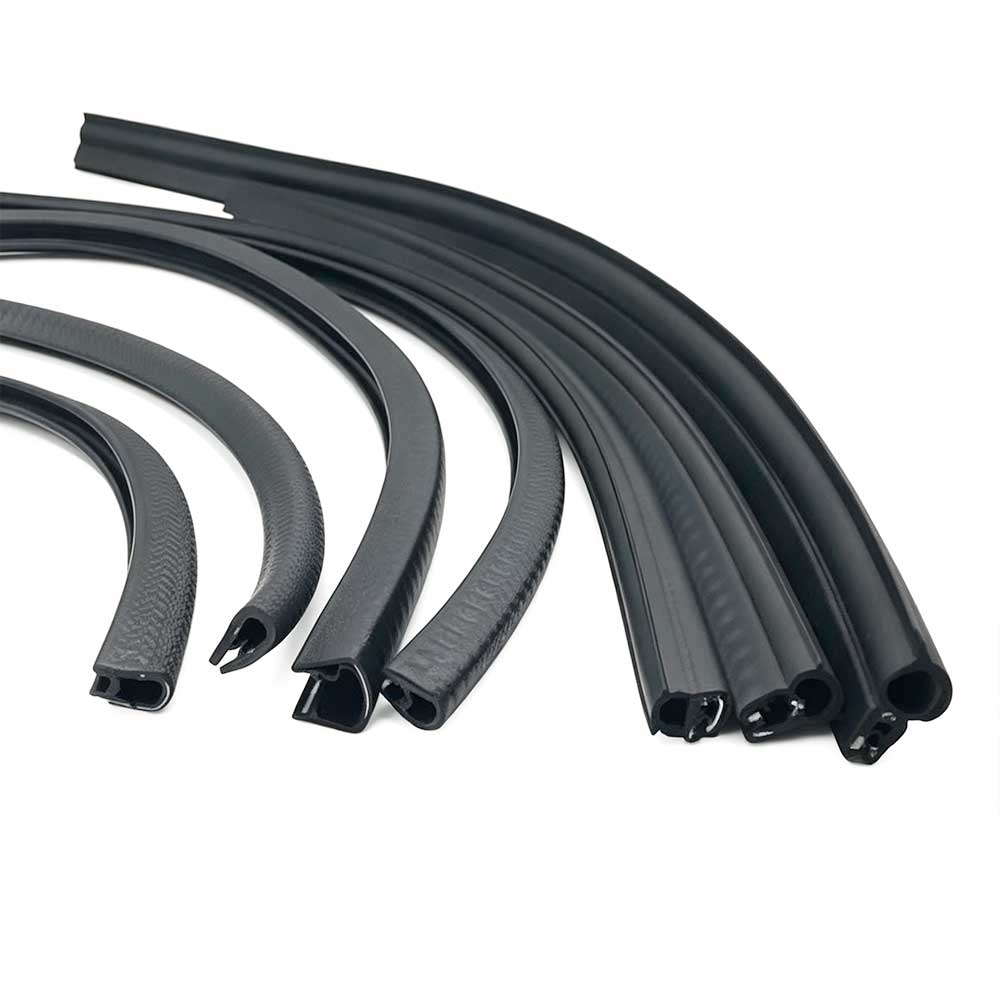
SEASHORE manufactures custom appliance rubber extrusions for refrigerators, freezers, ovens, dishwashers, washing machines and dryers. Our product range includes extruded sealing strips, hollow bulb seals, sponge profiles, U-channels and protective edge profiles for appliance doors, cabinets and internal assemblies.
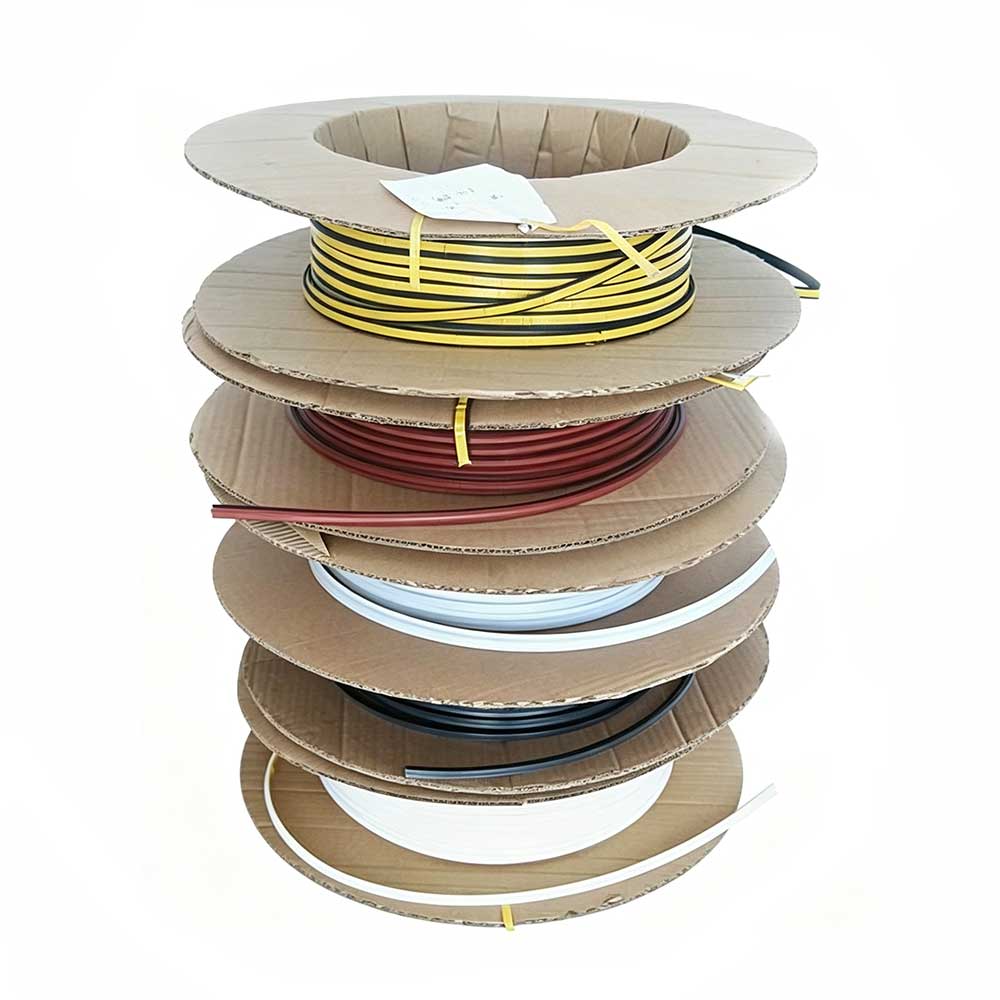
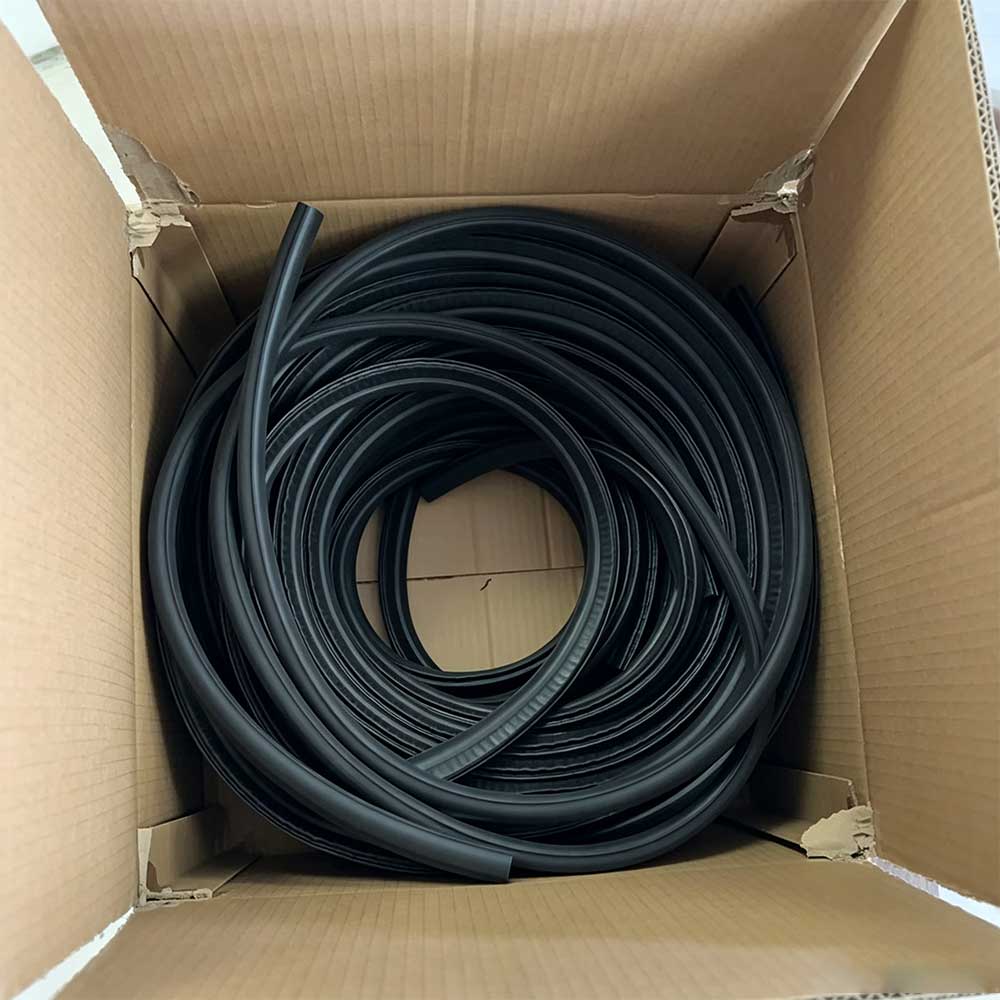
Profiles can be produced to specified cross-sections, materials, dimensions and supply lengths. Tell us the installation position, mounting dimensions and operating conditions, and we can discuss suitable rubber profiles for your appliance project.
SEASHORE Appliance Rubber Seal Specifications
| Parameter | Specification |
| Material | Solid EPDM Rubber, Sponge EPDM Rubber, EPDM with Metal Carrier |
| Color | Black, any other colour is available |
| Hardness (Shore A) | Solid EPDM: 70 ±5; Sponge |
| EPDM: 25 ±5 (custom hardness available) | |
| Specific Gravity | Solid EPDM: 1.20–1.35 g/cm³ |
| Sponge EPDM: 0.50–0.70 g/cm³ | |
| Tensile Strength | ≥10 MPa (for solid EPDM rubber) |
| Temperature Range | -40°C to +120°C (-40°F to +248°F) |
| Weather Resistance | Excellent resistance to ozone, UV, aging and weathering |
| Chemical Resistance | Resistant to water, moisture, mild acids and alkalis |
| Tolerance | RMA Standard Cross-sectional Tolerance E2,or per request |
| Compression Set | ≤35% (Typical) |
| Elongation at Break | ≥300%(Typical) |
| Surface | Smooth surface, textured surface, flock coating available |
| Customization | OEM profiles according to drawings, samples or specifications |
Where Are Rubber Extrusions Used in Appliances?
| Equipment | Extruded profile applications | What drives the design |
|---|---|---|
| Refrigerators and freezers | Cabinet-joint seals, air-duct gaskets, perimeter strips and protective channels | Maintaining contact through repeated door cycles and temperature changes |
| Ovens and cooking equipment | Door perimeter gaskets, glass-edge seals and heat-exposed sealing strips | Temperature measured at the seal, compression and thermal cycling |
| Dishwashers | Door-edge profiles, cabinet seals and water-deflecting strips | Hot water, steam, detergents and the direction of drainage |
| Washing machines | Cabinet-panel gaskets, access-door strips, edge protection and cushioning profiles | Water exposure, vibration, fit and secure retention |
| Dryers | Door seals, housing gaskets and vibration-isolating strips | Repeated closures and heat at the installed position |
| Small appliances | Enclosure seals, cushioning strips and edge channels | Limited mounting space and consistent appearance |
Refrigeration: Air Sealing and Low-Temperature Flexibility
A refrigeration profile must maintain contact where doors, cabinets or air ducts meet. Even a well-chosen compound cannot seal reliably if the bulb height, lip direction or installed compression does not match the gap. Corner construction also matters: joints in a perimeter seal should not create a leakage path.
For a freezer application, check flexibility and compression recovery at the lowest expected temperature. If a refrigerator door design requires magnetic closing force, specify the magnetic gasket assembly separately from non-magnetic extruded cabinet or duct seals.
Cooking Appliances: Heat at the Seal Location
The relevant temperature for an oven gasket is the temperature reached by the gasket, not simply the temperature displayed inside the oven. Seals at a heated door edge, an outer panel and a glass interface can see very different conditions. Repeated heating and cooling can change contact pressure or accelerate aging if the compound and geometry are unsuitable.
Silicone rubber is a common candidate for high-temperature profiles. Final suitability depends on the compound formulation, temperature duration, contact materials and appliance-level testing. Do not use a general-purpose EPDM strip as an oven-door specification without checking these conditions.
Wet Appliances: Water Paths and Chemical Exposure
Dishwasher seals work as part of a drainage and door-closure design. The location of the lip, the direction in which water reaches it and the available compression are as important as resistance to hot water and detergents. A seal that appears to fit on a drawing may still allow water to travel around corners or through a joint.
For washing machines, extruded sections can seal cabinet interfaces, cushion contact areas and protect panel edges. Vibration and repeated movement make profile retention important. Large flexible door bellows, however, have three-dimensional shapes and should be specified as separate components.
Which Profile Construction Fits the Appliance?
Appliance rubber extrusions can be made as solid strips for support and edge protection, hollow bulbs for compressible sealing, sponge sections for uneven gaps, or channels and lips that grip and contact specific surfaces. The cross-section should be selected from the mounting arrangement and required closure force.
Material selection follows exposure. EPDM is often considered for water and general aging; silicone is commonly considered for higher-temperature locations. Other rubber compounds may be appropriate when oils, cleaning chemicals or unusual service conditions are involved. No material name alone establishes suitability for every appliance: the formulation and finished profile need to meet the project’s requirements.
Where the design calls for adhesive backing, joined perimeter seals or cut-to-length parts, the finishing method should be discussed alongside the extrusion itself. Joint placement and installation method can affect the performance of the finished seal.
Frequent Asked Questions
1. Can one rubber compound be used for refrigerators and ovens?
Possibly in some limited locations, but the temperature ranges and other exposures must be checked separately. A compound suitable for cold cabinet joints should not automatically be specified for a heat-exposed oven door.
2. Are sponge profiles always better at sealing than solid profiles?
No. Sponge sections compress more easily and can accommodate some variation in the gap, but retention, compression recovery and contact geometry still determine whether the installed profile seals. Solid sections can be useful where support or secure mounting is more important.
3. Can extruded strips replace magnetic refrigerator door gaskets?
A plain extruded strip does not provide a magnetic insert or reproduce the full gasket assembly. Magnetic gasket requirements should be stated explicitly so the complete construction can be evaluated.
4. Do you need finished appliance drawings before discussing profiles?
A detailed drawing helps, but an installation sketch with dimensions, the sealing function and operating conditions can also provide a starting point. Final geometry should be confirmed against the appliance assembly.


