Automotive Rubber Extrusions Manufacturer and Wholesale Supplier in China
Automotive rubber extrusions form the sealing, guiding and protective profiles fitted around vehicle openings. Seashore Rubber supplies custom extruded rubber profiles for automotive doors, windows, trunk lids and other body interfaces. Profiles can be developed around the mounting surface, required compression, glass movement and exposure conditions of each application.
Whether you need continuous weatherstrips for vehicle assembly or replacement profiles for established designs, the cross-section matters as much as the rubber compound. Share your profile drawing, dimensions or application requirements to discuss suitable extrusion options.
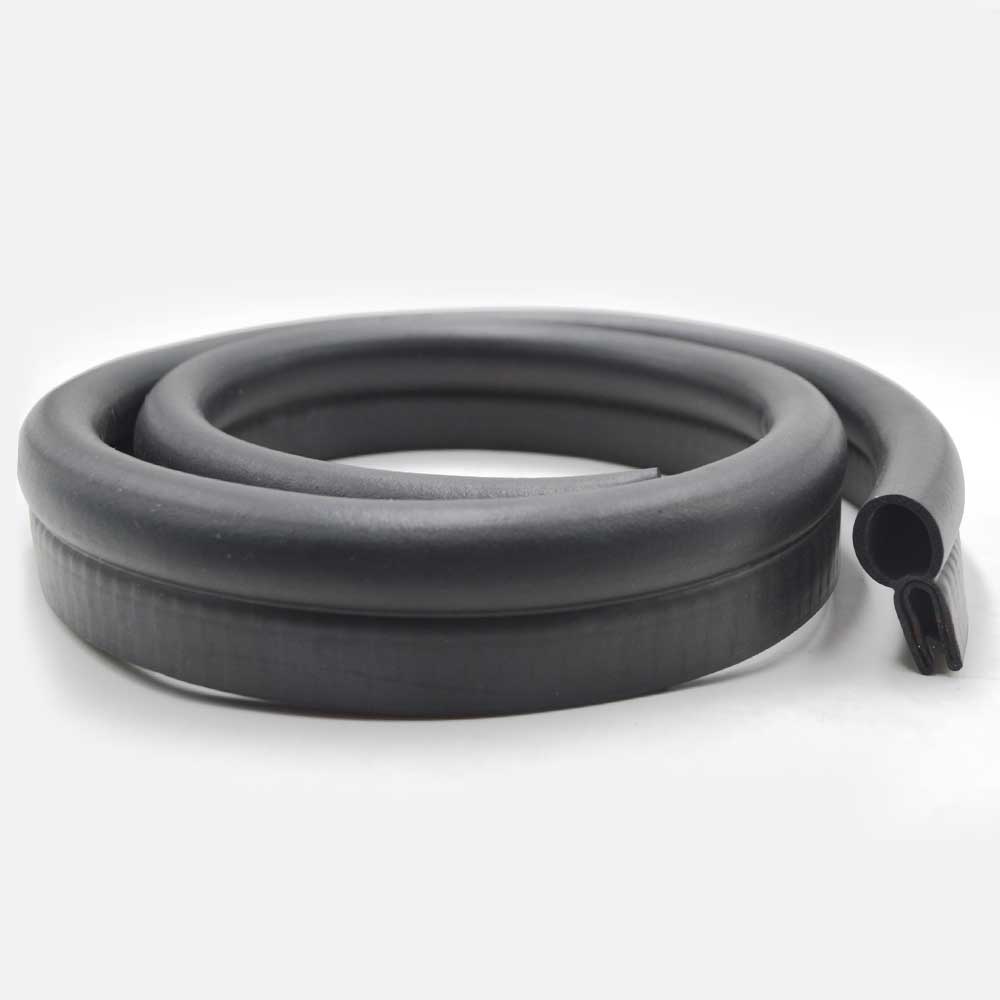
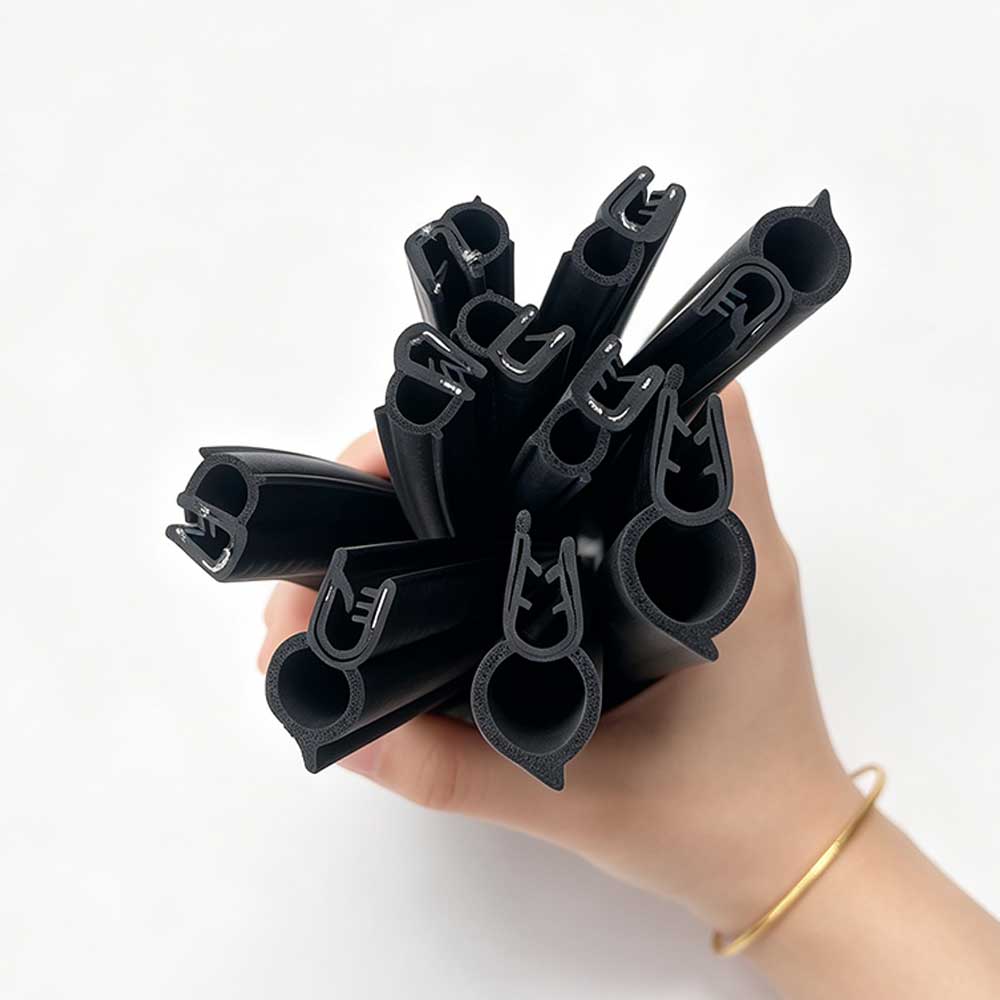
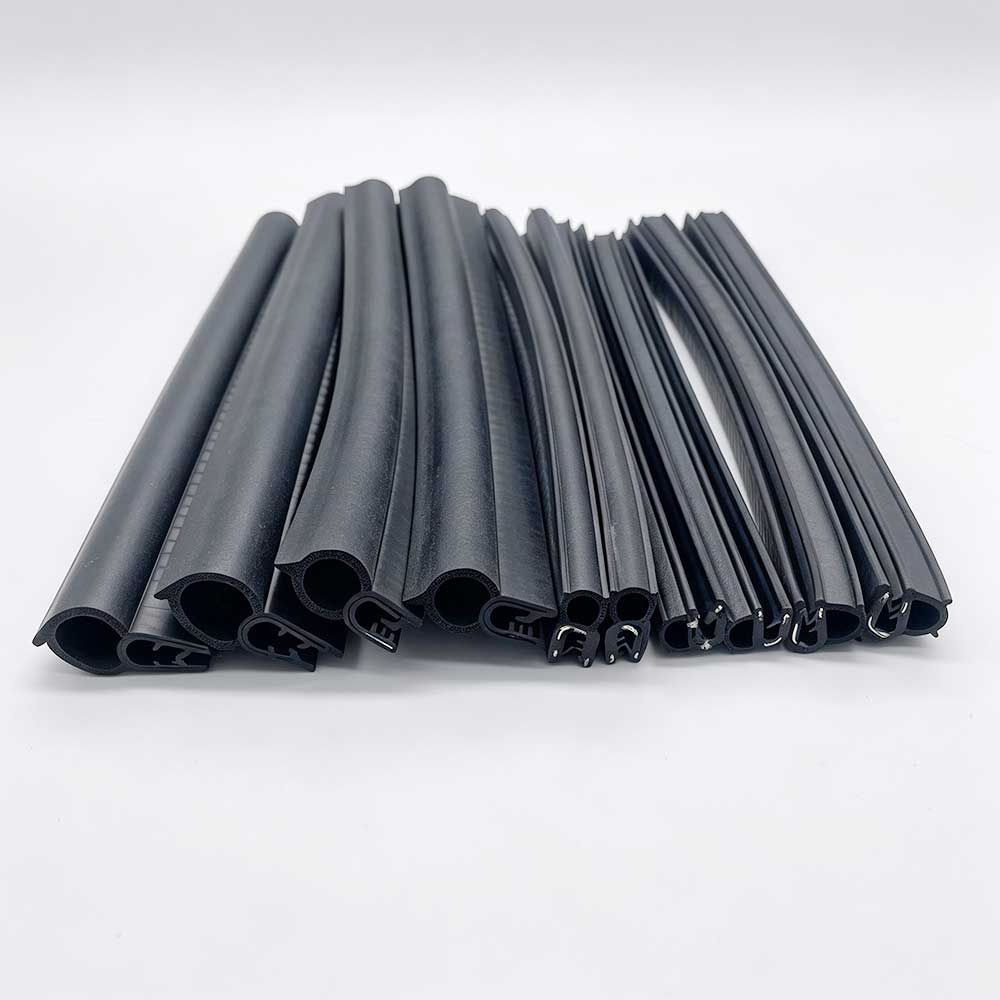
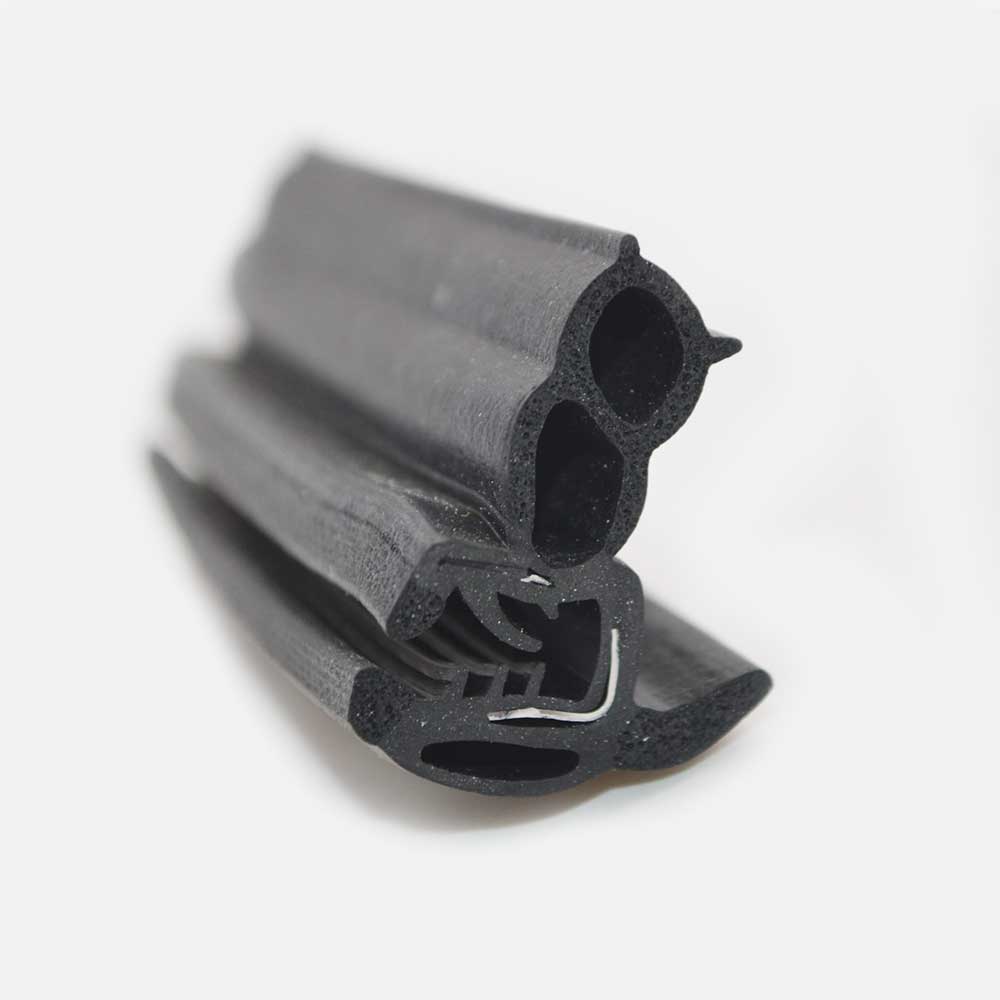
SEASHORE Automotive Rubber Seal Specifications
| Parameter | Specification |
| Material | Solid EPDM Rubber, Sponge EPDM Rubber, EPDM with Metal Carrier |
| Color | Black, any other colour is available |
| Hardness (Shore A) | Solid EPDM: 70 ±5; Sponge |
| EPDM: 25 ±5 (custom hardness available) | |
| Specific Gravity | Solid EPDM: 1.20–1.35 g/cm³ |
| Sponge EPDM: 0.50–0.70 g/cm³ | |
| Tensile Strength | ≥10 MPa (for solid EPDM rubber) |
| Temperature Range | -40°C to +120°C (-40°F to +248°F) |
| Weather Resistance | Excellent resistance to ozone, UV, aging and weathering |
| Chemical Resistance | Resistant to water, moisture, mild acids and alkalis |
| Tolerance | RMA Standard Cross-sectional Tolerance E2,or per request |
| Compression Set | ≤35% (Typical) |
| Elongation at Break | ≥300%(Typical) |
| Surface | Smooth surface, textured surface, flock coating available |
| Customization | OEM profiles according to drawings, samples or specifications |
Automotive Rubber Profiles by Application
| Application | Typical extruded profiles | What the profile needs to do |
|---|---|---|
| Vehicle doors | Door-mounted weatherstrips, body-side seals, bulb seals and edge trim seals | Maintain contact around the opening through repeated closing while helping limit water, dust and wind noise. |
| Moving side windows | Glass run channels and flocked or coated guide profiles | Guide the glass and provide contact at the edges without excessive sliding friction. |
| Window beltlines | Inner and outer beltline weatherstrips, also called window felts | Contact the moving glass at the door waist while helping manage water and debris. |
| Trunks and tailgates | Trunk lid, boot and tailgate weatherstrips | Seal irregular perimeter shapes and maintain compression at the closed opening. |
| Fixed glass and body edges | Glazing channels, fixed-window seals and edge protection profiles | Fit the glass or panel edge and protect the surrounding contact surfaces. |
Door and Body Opening Weatherstrips
Door seals are commonly built around hollow bulbs, sealing lips or combined sections. A bulb must compress enough to seal without making the door difficult to close. The mounting portion must also stay secure along straight runs and around corners. Depending on the design, profiles may be fitted to the door, the body flange or both.
For trunk lids and tailgates, the sealing path often changes direction around corners and hinges. Profile selection should account for flange dimensions, closure gaps and compression along the complete perimeter, including areas where water can collect.
Window Glass Run Channels and Beltline Seals
Glass run channels surround the edges of moving side windows. Their channel dimensions and contact surfaces affect glass guidance, sealing and movement. Flocked or coated contact surfaces may be specified where low friction and controlled glass movement are required.
Beltline weatherstrips sit along the lower edge of the side window opening. Inner and outer profiles perform related but distinct jobs, so the installation side, glass contact position and mounting method should be clear in the design. Treating these parts as generic window seals can lead to the wrong cross-section.
Frequently Asked Questions
1. Are automotive rubber extrusions always made from EPDM?
No. EPDM is common for exterior weatherstrips, but the compound should reflect the operating environment. Applications involving substantial oil or fuel contact may need a different material.
2. What is the difference between glass run channels and beltline weatherstrips?
Glass run channels guide and seal the sides and upper edge of moving window glass. Beltline weatherstrips contact the glass along the lower window opening at the door waist. They occupy different positions and use different profile geometries.
3. Can door and trunk seals use the same extrusion profile?
Sometimes a similar section can be adapted, but the flange, closure gap, corner path and compression requirements must be checked independently. A shared material does not mean the same profile will fit both openings.
4. Which details help define custom automotive profiles?
The most useful details are the cross-section, mounting dimensions, vehicle location, contact surface, compression gap, material requirements and whether the profile meets moving glass. A drawing, dimensions or an existing part can provide a starting point.


