
Which Adhesive Tape Works Best for Rubber Seal Profiles?
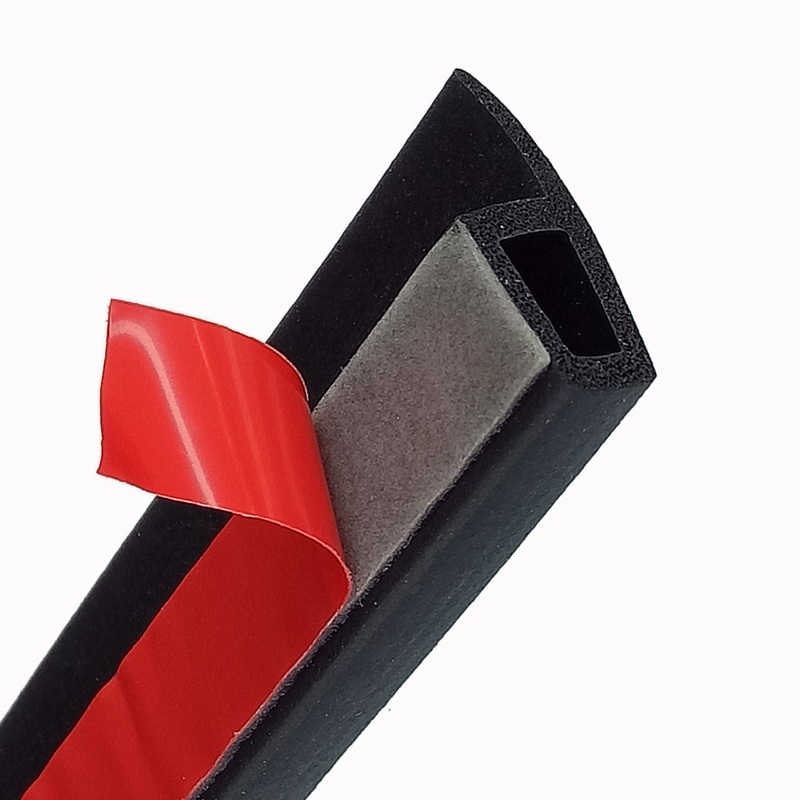
The best adhesive tape for rubber seal profiles is a grade qualified for both the rubber compound and the mounting surface. For EPDM sponge seals, purpose-designed weatherstrip tapes are a useful starting point. Silicone profiles usually require a silicone-compatible bonding system. Outdoor service, surface coatings and installation conditions then determine which specific product is suitable.
There is no universal winner among acrylic, rubber-based and silicone adhesives. A tape can adhere well to painted metal but fail on the seal, or bond strongly to rubber while lifting from a powder-coated panel. Manufacturers and maintenance buyers should therefore select the complete bonding system rather than a brand name or an initial tack level.
Match Both Bonding Surfaces Before Choosing the Tape
Start by identifying the seal compound, whether it is solid or sponge rubber, and the condition of its bonding face. EPDM, silicone and other elastomers present different adhesion challenges. A smooth extrusion skin can behave differently from a cut cellular surface, even when both are described as the same material.
EPDM may be difficult to bond because of low surface energy and ingredients that migrate to the surface. Mold-release residues, processing aids and handling contamination can add further variation. Cleaning alone does not establish compatibility with an arbitrary tape.
Identify the opposing surface just as carefully. Bare aluminum, painted steel, powder coatings and plastic panels are separate bonding substrates. A tape approved on one coating should not automatically be transferred to another finish.
Record the actual material grades and surface treatments used in production. If the rubber compound, paint or cleaning process changes, review the bond qualification. The interface is part of the specification, not a background detail.
Also determine what the adhesive must do. Some gasket tapes only hold a seal in position while the assembly supplies compression. Other tapes permanently retain a profile during repeated opening and closing. These applications need different evidence of load resistance and durability.
Choose an Adhesive System for the Rubber Compound
EPDM Profiles Need Purpose-Designed Weatherstrip Systems
EPDM seals can use several qualified tape constructions. Options include specialized rubber-based pressure-sensitive tapes, acrylic systems with an approved surface treatment, and factory-laminated systems with a heat-activated rubber-facing layer.
Avery Dennison documents rubber-based scrim tapes developed for EPDM foam weatherstrips and resistance to migrating ingredients. This is a useful counterexample to the assumption that rubber-based adhesives are always unsuitable outdoors. Performance belongs to the specific formulation.
The 3M SF weatherstrip tape documentation also describes constructions with either pressure-sensitive or heat-activated bonding layers. A heat-activated layer is a manufacturing process requirement; it is not an instruction to heat a fitted seal with an improvised tool.
For difficult EPDM compounds, ask the tape supplier to evaluate representative extrusion samples. A recommendation based on a generic rubber name is weaker than qualification on the actual supplied compound.
Silicone Profiles Need Silicone-Compatible Adhesion
Silicone rubber should not be treated as EPDM with a different temperature rating. Ordinary adhesive backing may provide inadequate adhesion to its surface.
Differential tapes can use silicone adhesive on the rubber-facing side and acrylic adhesive on the mounting side. 3M 9731 is one documented example of this construction. It illustrates a technical approach rather than establishing that one product suits every silicone seal and panel.
Confirm which side faces each substrate, especially during factory lamination. Both interfaces and the intended service conditions still require validation. Do not assume that a silicone adhesive’s temperature capability establishes the rating of the complete assembly.
Select Tape Construction Around the Seal Geometry
Adhesive chemistry and tape construction are different decisions. The carrier or foam layer affects handling, thickness and conformity, while the adhesive controls interaction with each surface.
| Tape construction | Useful starting application | Main qualification concern |
|---|---|---|
| Adhesive transfer tape | Thin bond on a sufficiently smooth mounting base | Surface contact and handling without a permanent carrier |
| Film-carrier double-coated tape | Dimensionally controlled lamination | Ability to follow the profile and substrate |
| Scrim-reinforced tape | Handling flexible sponge seals | Compatibility with rubber and resistance to stretching |
| Foam-core tape | Applications needing additional conformity | Added thickness, load behavior and seal compression |
| Differential adhesive tape | Different bonding needs on each side | Correct orientation and compatibility at both interfaces |
Choose a tape width that fits the usable mounting land. Adhesive extending beyond the base can collect contamination, while insufficient bonded area may compromise retention. Curves and narrow bases deserve a specific trial.
Tape thickness also changes installed geometry. Adding a thicker layer underneath a bulb moves it closer to the opposing panel, potentially increasing compression and closing force. More thickness is not automatically better sealing.
If the profile must bridge a large irregular gap or remain attached under persistent peeling loads, reconsider the mounting design. A mechanical carrier or different profile may be more appropriate than repeatedly increasing tape strength.
Define Service Exposure and Installation Conditions
Assess continuous temperature exposure separately from brief peaks. Check moisture, cleaning agents, oils, sunlight exposure and repeated movement against the particular tape’s documentation. A broad “weatherproof” claim is not a substitute for relevant testing.
Consider how the profile loads its bonded base. Opening a door can introduce peeling at an edge; a stretched seal can pull against the bond even before service begins. Installation should follow the profile supplier’s instructions without introducing unnecessary tension.
For pressure-sensitive systems, suitable application pressure promotes intimate surface contact. Bond development depends on the grade and conditions. Use the supplier’s stated installation temperature and required waiting period before applying the relevant loads.
Prepare surfaces with a compatible cleaning procedure and let them reach the specified dry condition. Use an adhesion promoter only as part of an approved system. It cannot repair a loose coating or turn every incompatible adhesive into a suitable rubber-bonding product.
Do not apply a universal solvent or abrasive preparation to all seals. Check whether the procedure affects the compound, surface finish or panel coating. Production instructions should identify the cleaner, any primer, application conditions and tape orientation.
Test the Complete Assembly and Inspect the Failure Mode
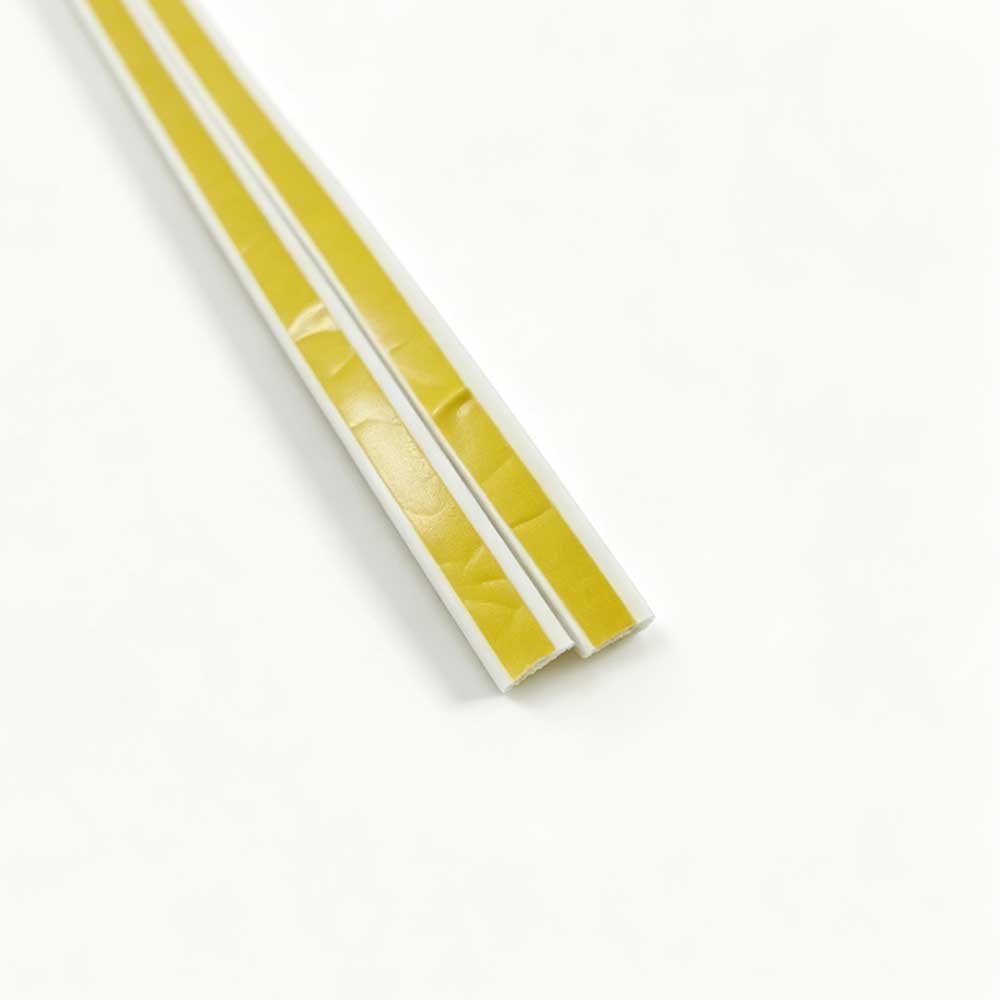
Qualify candidate tapes on the actual seal and substrate. Record preparation, tape grade, lamination conditions and the interval before testing. Keep an untreated reference and compare candidates under consistent conditions.
Evaluate retention after representative aging and opening cycles, not only immediately after installation. Include the intended cleaning exposure where relevant. Short-term tack measures an initial interaction, not the entire service requirement.
Inspect where a failed bond separates. Clean release from the rubber suggests a different investigation from release at the painted panel. Adhesive splitting, sponge tearing and coating detachment each point to different limitations; appearance alone does not prove their cause.
Finally, assess sealing performance separately. A firmly attached profile can still leak if its height, compression or corners are wrong. Bond qualification establishes attachment; the assembled enclosure or door must demonstrate the required sealing function.
Frequently Asked Questions
Can adhesive tape be used to join the ends of a seal?
Mounting tape is not automatically a suitable splice system. End joints may need a compatible joining adhesive, molded corner or another approved fabrication method. Qualify the joint separately from attachment to the panel.
Can a removed seal be reinstalled with its original backing?
Do not assume removal preserves the bond. Adhesive contamination, deformation and seal damage can affect reuse. Follow the supplier’s replacement procedure and check whether a new profile or properly renewed adhesive system is required.
Does a red release liner identify a genuine tape grade?
No. Liner color is not reliable proof of manufacturer, adhesive chemistry or performance. Specify the exact tape grade and obtain traceable supply documentation instead of approving adhesive-backed seals by liner appearance.
Conclusion
Choose adhesive tape for rubber seal profiles by matching the compound, mounting surface and service requirement. EPDM weatherstrip systems and silicone-compatible differential tapes provide useful starting options, but neither removes the need for assembly testing. A clear specification should preserve the approved tape grade, surface preparation, installation procedure and sealing geometry through repeat production.


Leave a Reply
Want to join the discussion?Feel free to contribute!