
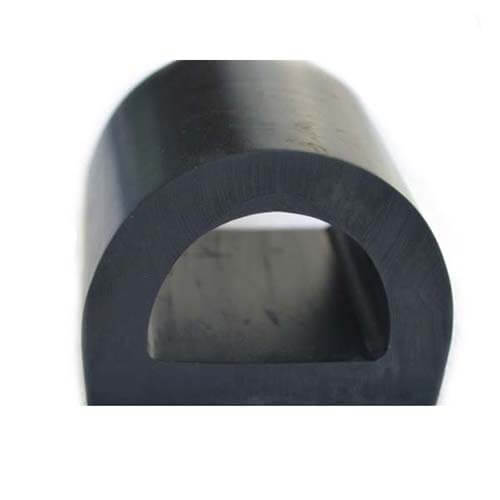

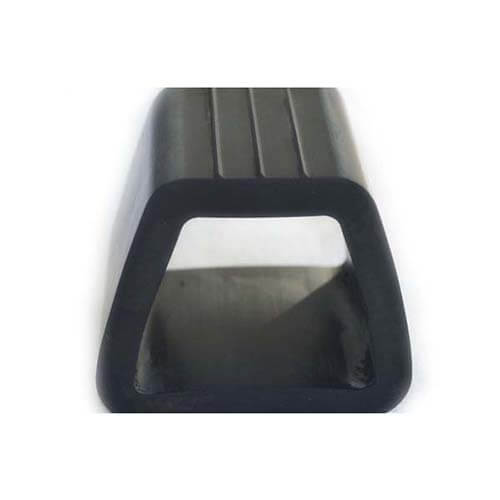
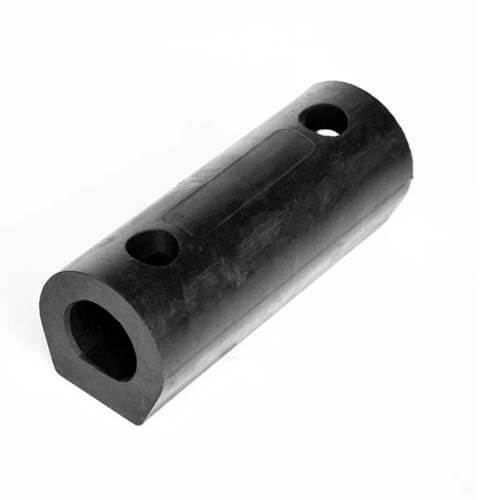
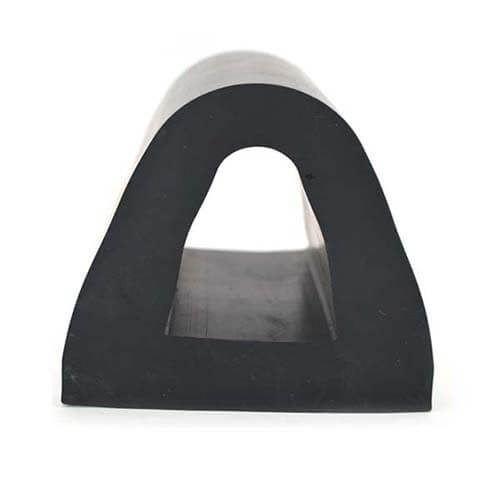
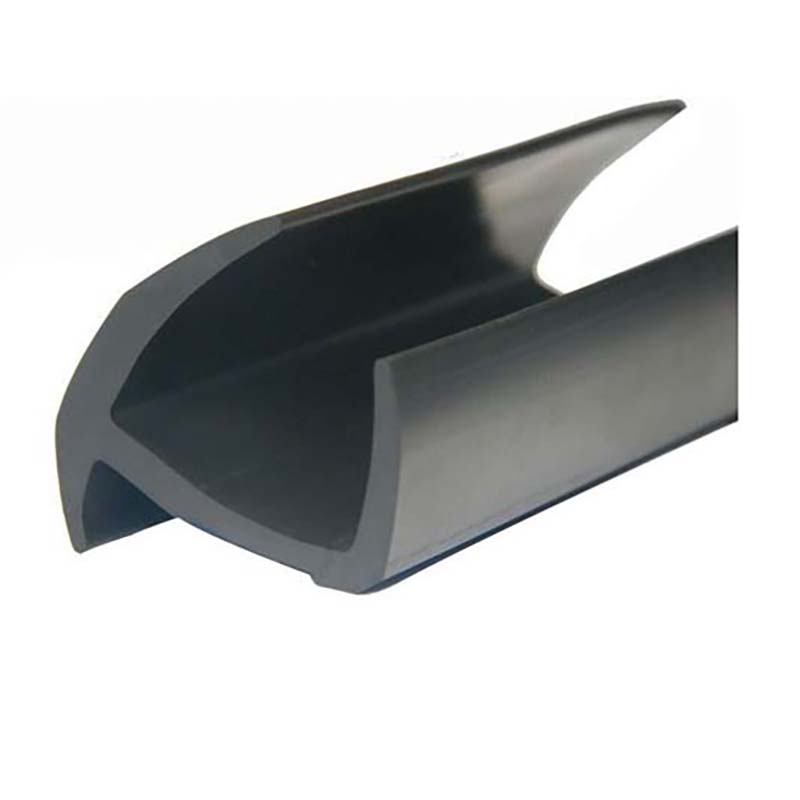
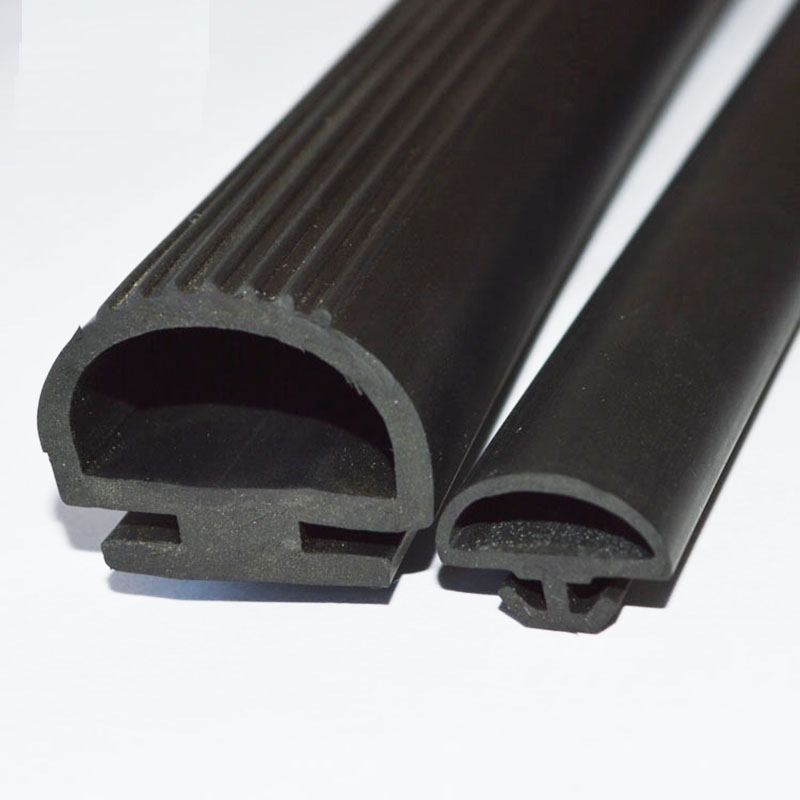
D Type Rubber Fenders are rubber protection profiles with curved contact faces and flat mounting bases. Installed between vessels and docks or along exposed structural edges, they deform under contact to cushion impacts and help reduce damage. Manufactured to customer specifications in various sizes and can also be pre-curved for corners where a straight fender will not work.
Product Specification:
- Material: EPDM
- Hardness Range: 70 Shore A
- Color: Any color is OK
- Size As per drawing dimensions
- Tolerance Standard :ISO2768-M or ISO3302-1:2014 CLASS M2
- Application: Marine
- Certificates:ISO9001,SGS, ROHS
EPDM D Type Rubber Fenders Descriptions
D Type Rubber Fenders are protective rubber profiles with flat mounting surfaces and rounded outer faces, giving them D-shaped cross-sections. They cushion contact between vessels, docks, vehicles, and other structures, helping reduce surface damage.
EPDM describes the rubber material, while D Type describes the profile shape. These fenders are commonly available in hollow designs that compress under contact. Their protective performance depends on the rubber formulation, profile dimensions, wall thickness, and installation.
Applications of D Type Rubber Fenders
Docks, Pontoons and Jetties
D fenders provide cushioning along selected edges of fixed and floating structures. Their relatively simple profiles can suit installations requiring protective coverage over extended lengths.
Placement must follow the expected contact zone. Water-level changes, vessel freeboard, and movement between floating and fixed structures can shift contact above or below incorrectly positioned fenders.
Workboats and Vessel Edges
D-profile fenders can protect suitable vessel sides and edges during contact with docks or adjacent structures.
Vessel-mounted applications can involve rubbing and angled contact as well as direct compression. The compound, profile, and fixing arrangement must accommodate the expected combination of loads.
Industrial Structures and Equipment
D-shaped rubber bumpers can also protect equipment frames and exposed structural edges where controlled contact is expected.
Industrial applications require their own load assessment. Marine fender performance should not be assumed from the appearance of smaller general-purpose rubber profiles.

Size and Performance Selection
Contact Conditions
Establish what will contact the fender, where contact occurs, and how the object approaches. Contact angle, speed, frequency, and available clearance affect the required protection.
For marine berthing, vessel mass alone is insufficient. Approach conditions and other project factors influence the energy the fender system must accommodate.
Profile Dimensions
Overall height determines how far the fender projects from its mounting surface. Base width determines the footprint available for support and attachment.
Internal opening dimensions and wall thickness affect compression behavior. Finished length determines coverage, but performance should be checked against the length actually engaged during contact.
Supporting Structure
Review the strength and condition of the dock, vessel structure, or frame supporting the fender.
The rubber, reinforcement, fasteners, and backing structure form one load path. Larger profiles cannot compensate for weak anchors or deteriorated supports.
Comparable Performance Data
Request energy absorption and reaction-force data for the proposed profile and compound. Confirm the stated deflection, test conditions, tolerances, and reference length.
Published figures are useful only when their basis is clear. Data from different geometries or rubber grades should not be treated as interchangeable.
Manufacturing and Customization Options
D Type Rubber Fenders may be extruded or molded, depending on their dimensions, compound, and design. Extrusion suits continuous profiles, while manufacturing routes for larger or specialized products vary.
For extruded products, uncured rubber passes through shaped tooling before curing establishes the finished properties. Cutting and drilling prepare the profiles for installation.
Custom Cross-Sections
Custom designs can adjust external height, base width, cavity shape, and wall thickness.
These changes influence both fit and deformation. Trial profiles and approved drawings help confirm geometry before full production.
Lengths, Holes and Curved Sections
Suppliers may provide plain lengths, drilled sections, angled cuts, or specially prepared curved profiles.
Straight sections should not automatically be forced around tight corners. Excessive bending can distort the profile and introduce stress. Purpose-made curved sections are available from some manufacturers to address this requirement.
Colors and Non-Marking Requirements
Black, grey, and other colors may be available depending on the compound.
Specify non-marking performance separately from color. Where painted surfaces or appearance matter, assess samples against representative contact surfaces rather than relying on visual inspection alone.
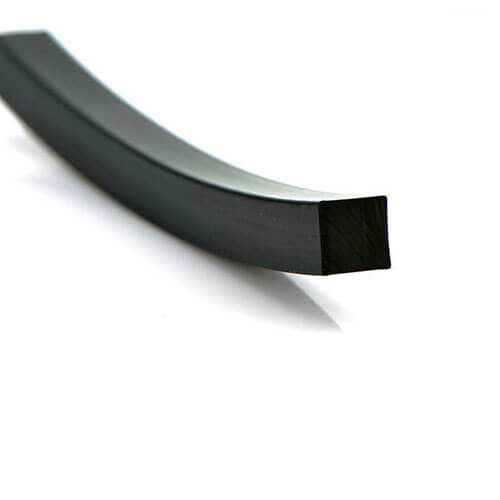 Epdm Rubber Square Cord Strip extrusion (2)
 Extruded rubber D shape fender for marine (4)
 E Shape EPDM Rubber Seal For Cool Room Door (1)
 EPDM Rubber Marine Fender extrusion (3)
 U Section EPDM Rubber Edge Seal (4)
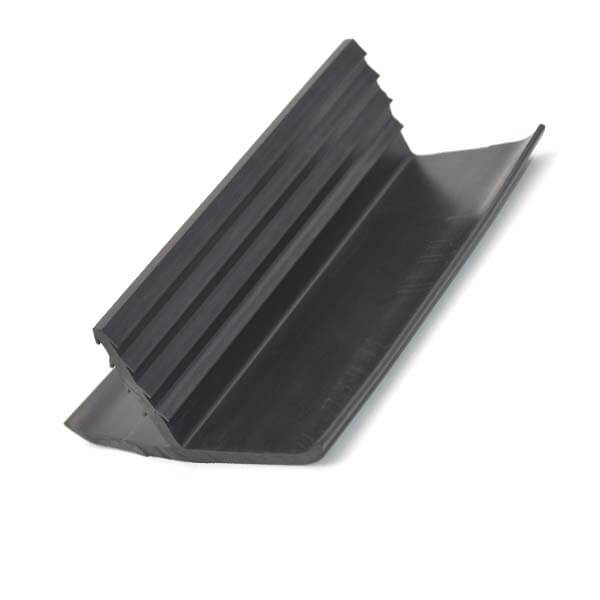 EPDM T Type profile Rubber For Truck Scale
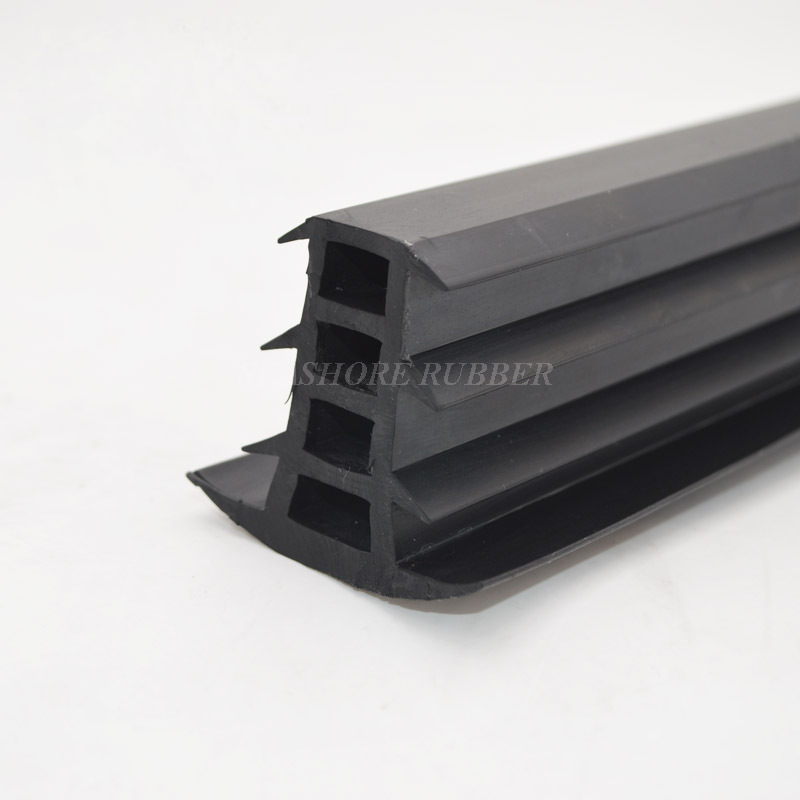

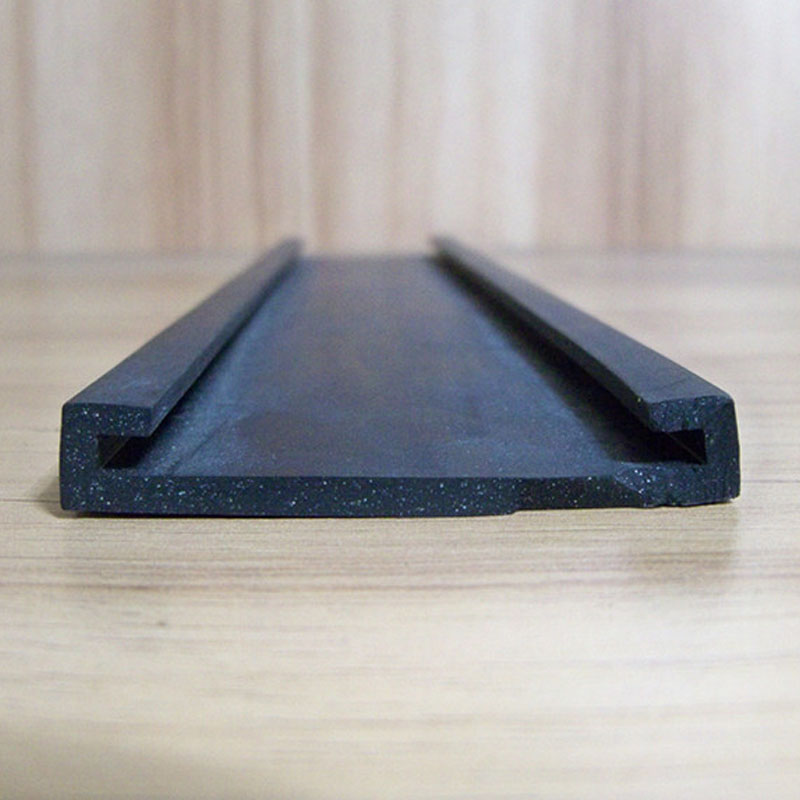


 EPDM Rubber Marine Fender extrusion (3)
 E Shape EPDM Rubber Seal For Cool Room Door (1)