
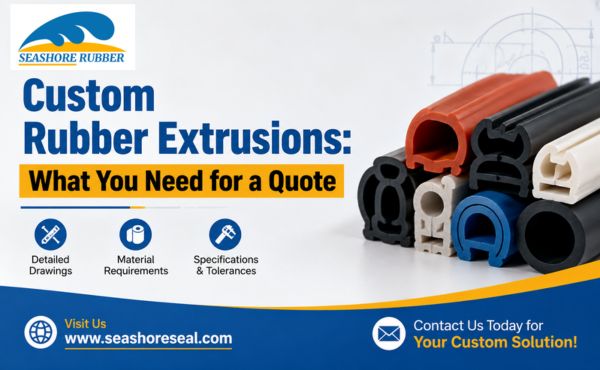
Custom Rubber Extrusions: What You Need for a Quote
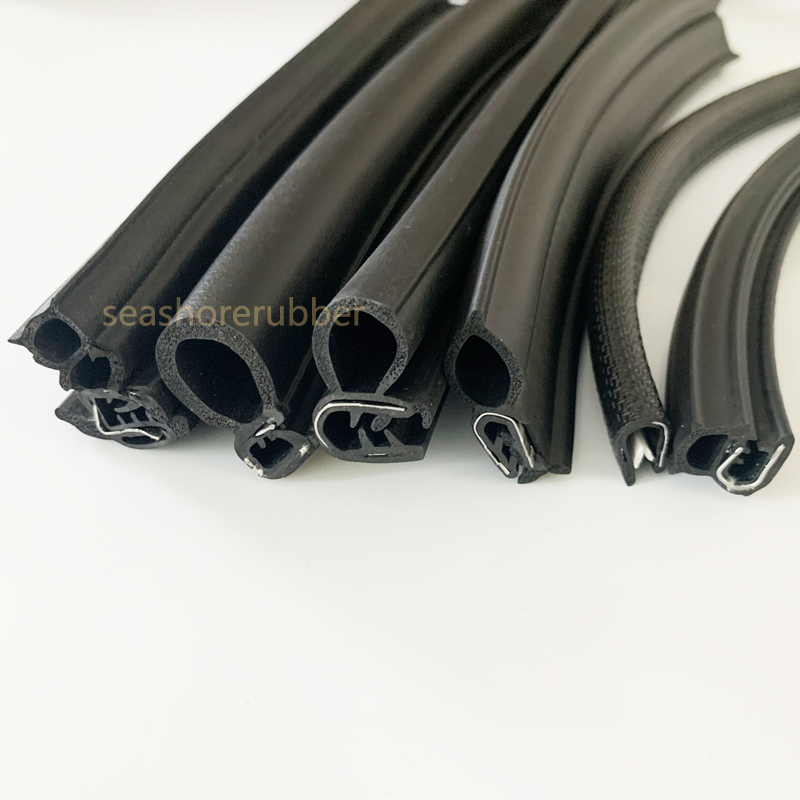
Getting an accurate quote for custom rubber extrusions requires detailed specifications. Manufacturers need clear dimensions, proper tolerances, the correct material, and the exact quantity. Any special requirements also matter. Having this information ready streamlines the quoting process. It prevents delays and unexpected costs.
Use this checklist as a guide before contacting a manufacturer. Collect each piece of data first. The sections below explain each requirement in detail. They cover what you need and why it matters. This preparation helps you get a faster, more accurate estimate for your custom rubber extrusions project. A complete request saves time for both parties.
Custom Rubber Extrusions: Key Dimensions & Tolerances
Providing Accurate Measurements
Accuracy in measurements determines the final part’s fit and function. The extrusion die relies on your specifications. A precise data set leads to an accurate quote. The most effective method is a 3D CAD model. Files in STEP or IGES format define the exact geometry. These files allow the manufacturer to analyze the shape without ambiguity. A 2D drawing with a cross-section view is also effective. It lets you mark critical dimensions and tolerances directly.
If CAD files are not available, you can provide other forms of data. Each method has different levels of accuracy. Below is a list of acceptable alternatives.
- Detailed written dimensions with a dimensional sketch
- A physical sample of the extruded profile
- A photograph with measured callouts
A physical sample can be useful, but it has limits. Rubber can compress or deform over time. The sample might not represent the exact final shape. A sample works best as a reference, not as the sole source of measurements. The manufacturer might need to measure the sample under controlled conditions. This adds time and potential error. Written dimensions work best when they list every critical feature. Include overall width, height, wall thickness, and any internal cavity sizes. The more complete your data, the faster the quote.
Tolerance Basics
A tolerance defines the acceptable variation in a dimension. It is the plus-or-minus range for a given measurement. For example, a width of 1.00 inch ±0.015 inch means the part can be between 0.985 and 1.015 inch wide. Rubber extrusions usually have wider tolerances than metal or plastic parts. The material’s flexibility and the extrusion process itself create some variation. The table below shows typical tolerance classes.
| Tolerance Class | Description | Typical Application | Example Tolerance on 1 inch width |
|---|---|---|---|
| Commercial | Standard variation for most applications | General-purpose seals, gaskets, bumpers | ±0.015 inch |
| Precision | Tighter control for critical fits | Dynamic seals, medical devices, aerospace | ±0.005 inch |
Specify the tolerance class in your request. If you do not, the manufacturer will use an industry standard, such as ISO 3302-1. This standard defines classes for dimensional tolerances on rubber products. The intended application helps you choose the right class. A dynamic seal that moves against another part needs a tighter tolerance. A static bumper that only blocks a gap can use a looser tolerance.
A common rule is to assign the loosest tolerance that still allows the part to function. Tight tolerances increase production costs without adding value if the application does not require them.
The tolerance value also affects the cost directly. A precision tolerance requires more careful die design and more frequent quality checks. The manufacturer may need to inspect each part individually. This adds time and labor. For non-critical dimensions, a commercial tolerance is usually sufficient. Mark the critical dimensions on the drawing. Leave the rest at standard commercial tolerances. This balances cost with performance. The manufacturer will note any dimensions that need special attention. They will adjust the quote accordingly.
Material Specifications for Your Project
Selecting the Right Compound
The material choice drives both performance and cost. Different rubber compounds handle different environments. Each compound has distinct strengths and weaknesses. Specifying the correct material prevents premature failure. It also avoids paying for properties you do not need.
EPDM rubber resists weathering, ozone, and UV exposure. It handles temperatures from -40°F to 250°F. This makes it ideal for outdoor seals, window gaskets, and automotive weatherstripping. EPDM also resists water and steam well. It performs poorly with petroleum oils and fuels.
NBR, or nitrile rubber, excels at oil resistance. It works well with petroleum-based fluids and hydraulic oils. NBR handles temperatures from -30°F to 225°F. Common applications include fuel hoses, oil seals, and gaskets in machinery. NBR does not resist ozone or weathering as well as EPDM.
FKM, also known as fluoroelastomer, offers superior chemical resistance. It withstands aggressive chemicals, fuels, and high temperatures up to 400°F. FKM resists ozone and weathering excellently. This compound costs significantly more than EPDM or NBR. Use it only when the application demands its properties.
VMQ, or silicone rubber, provides excellent flexibility at extreme temperatures. It operates from -60°F to 450°F. Silicone resists UV light and weathering well. It also offers good electrical insulation properties. VMQ works well for medical devices, food-contact applications, and electrical components. Its tear strength is lower than other compounds.
The table below summarizes these common materials.
| Material | Temperature Range | Key Strength | Typical Use |
|---|---|---|---|
| EPDM | -40°F to 250°F | Weather and ozone resistance | Outdoor seals, weatherstripping |
| NBR | -30°F to 225°F | Oil and fuel resistance | Fuel hoses, oil seals |
| FKM | Up to 400°F | Chemical and heat resistance | Aggressive chemical environments |
| VMQ | -60°F to 450°F | Extreme temperature flexibility | Medical, food-contact, electrical |
Manufacturer engineers can help you select the right compound. They review your application details and recommend options. Their expertise prevents costly mistakes. A wrong material choice leads to early failure and replacement expenses. The engineer will balance performance needs against material cost. This guidance is part of the quoting process. You do not need to be a rubber expert. You only need to describe your application clearly.
Hardness & Key Properties
Hardness measures a rubber’s resistance to indentation. The Shore A scale is the standard for rubber materials. Softer compounds range from 20 to 40 Shore A. Medium compounds range from 50 to 70 Shore A. Harder compounds range from 80 to 90 Shore A. The hardness affects how the part performs under compression and flexing.
A softer rubber compresses easily. It forms a better seal on irregular surfaces. It also absorbs vibration well. A harder rubber resists deformation. It maintains its shape under load. It also resists abrasion better. The right hardness depends on the application.
Seals and gaskets often use 50 to 70 Shore A compounds. This range balances sealing ability with durability. Bumpers and spacers might use harder compounds around 80 Shore A. Soft gaskets for delicate surfaces might use 30 to 40 Shore A.
Other key properties matter too. Tensile strength measures how much force the rubber can withstand before breaking. Tear resistance measures resistance to tearing once a cut starts. Compression set measures how well the rubber returns to its original shape after compression. Elongation measures how far the rubber stretches before breaking.
Specify these properties when they matter for your application. A gasket that must maintain a seal under constant pressure needs low compression set. A bumper that absorbs impacts needs good tear resistance. A flexible boot needs high elongation.
The application environment also influences material selection. Temperature extremes affect rubber performance. Chemical exposure can degrade certain compounds. UV light breaks down some rubbers over time. Abrasive conditions wear down softer materials quickly. Describe these conditions in your request. The manufacturer will factor them into the material recommendation.
Providing a complete material specification for Custom Rubber Extrusions ensures the quote reflects the true cost. A generic request without material details forces the manufacturer to assume a standard compound. That assumption might not match your needs. The quote could be too low or too high. Clear material specifications eliminate this uncertainty.

Quantity and Production Volume
Prototype vs. Production Runs
Prototype quantities serve a specific purpose. They let you test the extrusion in your actual application. You can check the fit, the seal performance, and the material behavior. This testing happens before you commit to a large production order. A prototype run might be 10 to 50 feet of extruded profile. That amount is enough to evaluate the part without excess waste.
Prototype parts cost more per unit. The manufacturer must set up the extrusion line, create the die, and run the equipment. These setup costs spread across a small quantity. The per-foot price reflects that overhead. Production runs spread the same setup costs across thousands of feet. The per-unit price drops significantly.
Lead time also differs between the two. Prototype runs often move faster through the facility. The manufacturer can schedule them around larger jobs. Production runs require more planning. Raw material orders, die maintenance, and quality checks all take time. A typical quote includes a lead time estimate. Review that estimate carefully. If your project has a hard deadline, state that date in your request. The manufacturer can then adjust the schedule or flag any conflicts.
Volume Pricing Impact
Volume pricing follows a simple principle. Larger quantities reduce the cost per unit. The manufacturer buys raw material in bulk. They run the extrusion line for longer periods. They reduce changeover time between jobs. These efficiencies lower the overall production cost. The savings pass to you in the form of a lower unit price.
The table below shows how quantity affects pricing.
| Quantity Range | Relative Unit Cost | Typical Use Case |
|---|---|---|
| Prototype (under 100 ft) | Highest | Testing and validation |
| Low production (100–1,000 ft) | Moderate | Short runs, pilot programs |
| High production (1,000+ ft) | Lowest | Full-scale manufacturing |
Consider your actual consumption needs. Ordering extra material beyond your immediate requirement can reduce the unit cost. That strategy works only if you have storage space and a stable design. A design change after a large order creates waste. Balance the lower unit price against the risk of holding excess inventory.
Communicate your expected annual usage. The manufacturer can quote a price based on your projected volume. They might also suggest a production schedule that optimizes cost. For example, running the full annual quantity in one batch reduces setup costs. Splitting it into quarterly runs adds flexibility but raises the per-unit price. The right choice depends on your cash flow and storage capacity. Clear quantity information helps the manufacturer provide the most accurate quote for your Custom Rubber Extrusions project.
Application & Finishing Services
Defining the Application Environment
The operating environment determines which rubber compound will survive in service. A seal that works indoors at room temperature needs a different material than one exposed to harsh weather. Describe every condition the part will face. Chemical exposure ranks among the most critical factors.
Oils, solvents, acids, and cleaning agents can degrade certain rubbers quickly. NBR resists petroleum products well. EPDM fails in those same fluids. Temperature extremes also matter. A gasket in a freezer operates differently than one near an engine manifold. UV light breaks down some compounds over time. Outdoor parts need materials with UV stabilizers or inherent resistance.
The quote accuracy depends on this environmental information. A manufacturer who lacks these details will assume a standard compound. That assumption might produce a lower quote. The part could fail early in service. Replacement costs exceed any initial savings.
Describe the environment honestly. Include temperature ranges, chemical names, and exposure duration. Mention whether the part faces constant or intermittent contact with these elements. This information lets the manufacturer recommend the right compound. It also ensures the quote reflects the true material cost.
Specifying Finishing Operations
Raw extrusion emerges as a continuous profile. Most applications require additional processing before installation. Cutting is the most common finishing operation. Straight cuts work for simple lengths. Angled cuts suit corners and frames. Die-cut shapes create gaskets with holes or notches.
Splicing joins two ends into a continuous loop. This process works well for large O-rings and perimeter seals. Adhesive backing simplifies installation. The tape attaches the profile directly to a surface without mechanical fasteners.
Full-service suppliers handle these operations in-house. They manage complex profiles with multiple finishing steps. This capability reduces handling damage and shortens lead times. The table below lists common finishing services.
| Finishing Service | Purpose | Typical Application |
|---|---|---|
| Straight cutting | Produce fixed lengths | Spacers, strips, simple seals |
| Angled cutting | Create mitered corners | Window frames, door seals |
| Splicing | Form continuous loops | Large gaskets, perimeter seals |
| Adhesive backing | Enable peel-and-stick installation | Weatherstripping, mounting strips |
| Die-cutting | Punch holes or custom shapes | Gaskets with mounting points |
Specify every finishing operation in your request. Each step adds labor and material cost. A clear list prevents surprises in the final quote. Custom Rubber Extrusions often require multiple finishing steps. The manufacturer can suggest the most efficient sequence. They might combine operations to reduce cost. Your detailed application description and finishing list give them everything needed for an accurate estimate.
Conclusion
A complete quote request covers four areas: dimensions with tolerances, material specifications, quantity, and application details. Providing this information upfront ensures accuracy and speed. Review your project now. Compile your CAD files, compound preferences, expected volume, and environmental conditions.
This preparation prevents delays and hidden costs. Manufacturers can respond faster when they have complete data. Contact the sales team directly or submit an online RFQ form. Describe your specific project and ask for a quote. The team will guide you through any remaining questions. Starting the conversation with full details puts your project on the fastest path to production.
FAQ
What files do I need to submit for a quote?
Submit a 3D CAD file or 2D drawing with cross-section views. Include critical dimensions, tolerance class, material type, hardness, quantity, and application environment. A physical sample works as a reference but cannot replace precise measurements.
How do tolerances affect the cost?
Tighter tolerances require more careful die design and frequent quality checks. This adds labor and time. Use commercial tolerances for non-critical dimensions. Reserve precision tolerances for features that truly need them. This balances cost with performance.
What if I don’t know which rubber compound to use?
Describe your application environment. Include temperature ranges, chemical exposure, UV conditions, and mechanical demands. Manufacturer engineers will recommend suitable compounds. They balance performance needs against material cost. You do not need to be a rubber expert.
How does order quantity impact pricing?
Larger quantities reduce per-unit cost. Setup costs spread across more feet of material. Prototype runs cost more per foot. Production runs lower the price. Consider your annual usage and storage capacity when choosing order size.
What finishing services should I specify?
List every post-extrusion operation. Common options include straight or angled cutting, splicing, adhesive backing, and die-cutting. Each step adds labor cost. A complete list prevents surprises in the final quote for Custom Rubber Extrusions.


Leave a Reply
Want to join the discussion?Feel free to contribute!