Salt Bath Vulcanization for rubber seals

Salt Bath Vulcanization: Enhancing Rubber Seal Performance

Salt bath vulcanization (LCM) is the optimal choice for high-volume production of extruded rubber seals where dimensional precision, consistent cross-link density, surface quality, and long-term performance under demanding conditions are primary requirements. It outperforms hot air vulcanization for thin-wall and filigree profiles, delivers superior compression set values compared to processes with cure gradients, and supports the full range of elastomers and cross-linking systems used in modern seal engineering.

What Is Salt Bath Vulcanization (LCM)?

Salt bath vulcanization is a continuous curing process for extruded rubber profiles in which uncured rubber is immersed in a bath of molten inorganic salt — typically a eutectic blend of nitrate and nitrite salts — held at precisely controlled temperatures between 177°C and 260°C (and higher for specialty compounds). The process enables uniform, rapid, and oxygen-free cross-linking across the full cross-section of the profile.

Unlike hot air vulcanization, where heat transfer is limited by the thermal conductivity of air, molten salt transfers heat rapidly and uniformly from all surfaces simultaneously. The result is a tightly controlled cure state, minimal surface oxidation, and dimensional accuracy that is critical for sealing applications where even fractions of a millimeter matter.

The Salt Bath Vulcanization Process: Step-by-Step

Understanding each stage of the LCM process is essential for engineers optimizing compound formulations, production speed, or seal tolerances.

1. Compounding and Raw Material Preparation

Elastomer selection sets the foundation. EPDM dominates weatherstripping and outdoor sealing applications due to its outstanding ozone and UV resistance. NBR excels in oil-contact environments such as hydraulic and pneumatic seals. FKM (Viton) is the material of choice for high-temperature and aggressive chemical exposure. Crucially, modern LCM systems are fully compatible with peroxide-cured compounds — opening formulation pathways not available with older, hot-air-only lines.

2. Extrusion

Cold-feed vented or vacuum extruders deliver consistent compound output with minimal air entrapment. Multi-extruder setups allow co-extrusion of different durometers or materials in a single pass — enabling complex seal geometries such as dual-hardness automotive door seals in one continuous operation.

3. Surface Pre-Cure

A trickle or spray section exposes the extruded profile to an initial heat pulse before salt bath immersion. This surface pre-cure step establishes dimensional stability, preventing the profile from distorting under its own weight or the hydraulic forces present during immersion.

4. Immersion Curing in the Salt Bath

The core of the LCM process. Profiles are submerged in the molten salt bath, where the high thermal mass and excellent heat transfer coefficient of the salt medium ensures that inner and outer surfaces of the profile reach cure temperature simultaneously. Roller and beater sections may be employed to maintain profile alignment and prevent distortion during curing. Temperature uniformity across the bath length is maintained to within tight tolerances using in-line sensors and precision heating controls.

5. Post-Cure: Salt Removal, Recycling, and Finishing

After exiting the bath, profiles pass through shaking, washing, and blow-off stations to remove residual salt. Modern closed-loop systems capture and recycle salt at high recovery rates, minimizing waste and operating costs. Profiles are then cooled, cut to length, and finished — with options for splicing, punching, or assembly depending on application requirements.

What Salt Bath Vulcanization Delivers for Rubber Seals

The performance advantages of LCM over alternative curing methods are not merely theoretical. They translate directly into measurable improvements across the metrics that matter most for sealing applications.

Dimensional Accuracy and Tolerance Control

One of the most cited advantages of LCM is its ability to maintain extremely tight dimensional tolerances for extruded profiles. Wall thicknesses of 1 mm held to ±0.1 mm are achievable — tolerances that are extremely difficult to maintain with hot air vulcanization, where uneven heat transfer can cause differential expansion and surface skin effects.

Compression Set and Sealing Resilience

For any sealing application, compression set is a primary performance indicator — it measures the degree to which a seal permanently deforms under sustained compression, losing its ability to maintain contact force. The uniform cross-linking achieved through LCM produces a more consistent network density throughout the seal cross-section, resulting in lower compression set values compared to seals with cure gradients. Better compression set means longer service life, better sealing force over time, and reduced risk of leak paths developing.

Surface Quality and Chemical Resistance

Because curing takes place in an inert, oxygen-free environment (the salt bath excludes atmospheric oxygen entirely), there is no surface oxidation of the rubber profile during vulcanization. The result is a clean, smooth surface finish with consistent chemical properties from surface to core — critical for seals exposed to aggressive media such as hydraulic fluids, fuels, KOH-based electrolytes in green hydrogen electrolyzers, or process chemicals in pharmaceutical and food-grade applications.

Long-Term Durability in Demanding Environments

Salt bath vulcanized rubber seals have demonstrated exceptional durability in some of the most demanding real-world applications. Wind turbine foundation seals produced via LCM are engineered and validated for service lives exceeding 35 years — a requirement made possible by the superior material properties and dimensional consistency that uniform curing provides. In aerospace applications, LCM-cured profiles deliver the flexibility and fatigue resistance required for dynamic sealing in extreme temperature ranges.

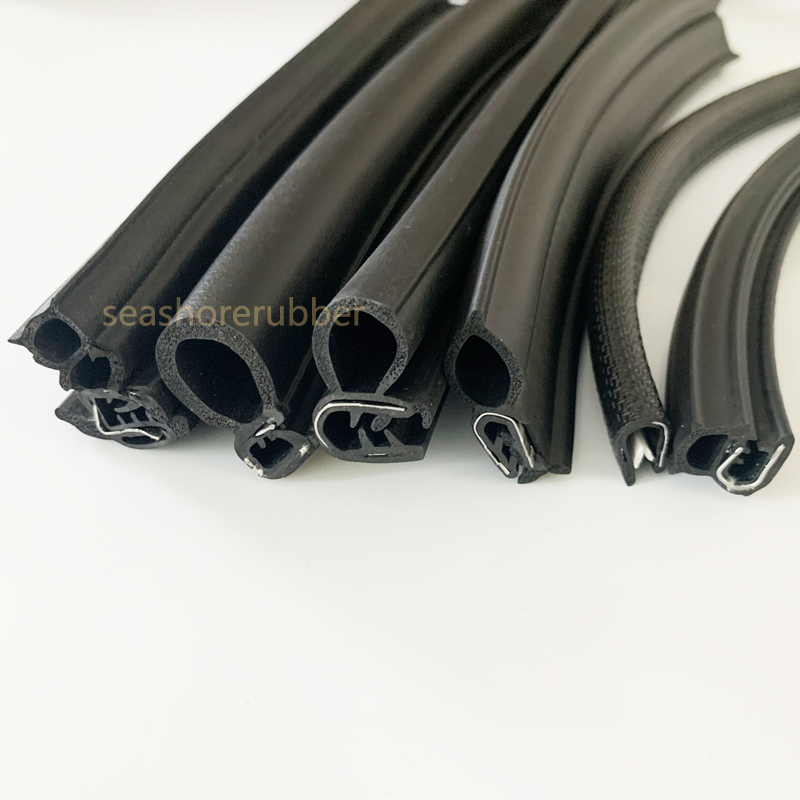
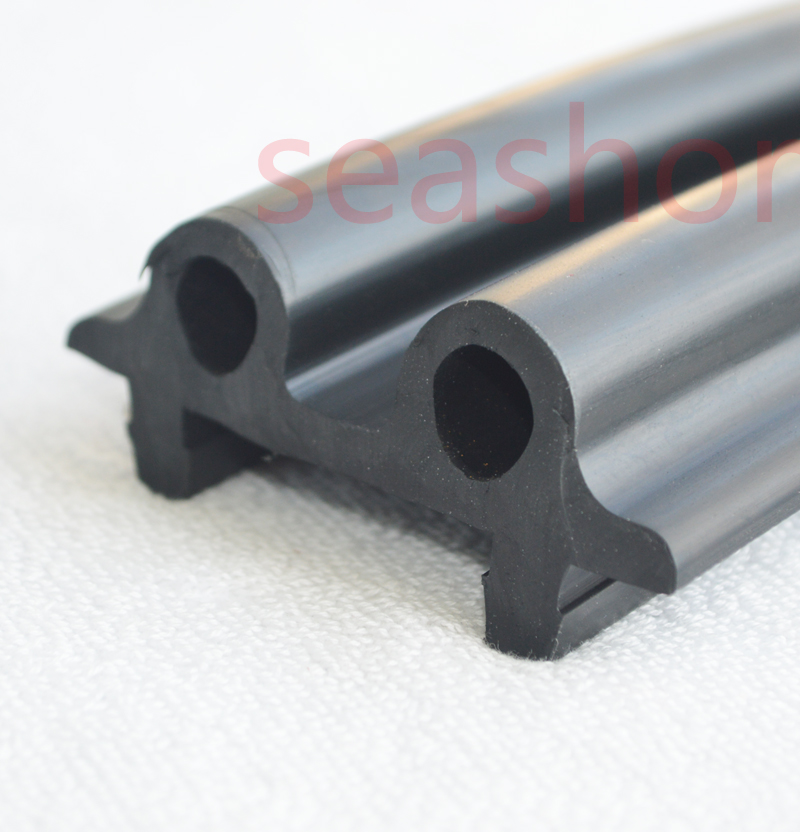
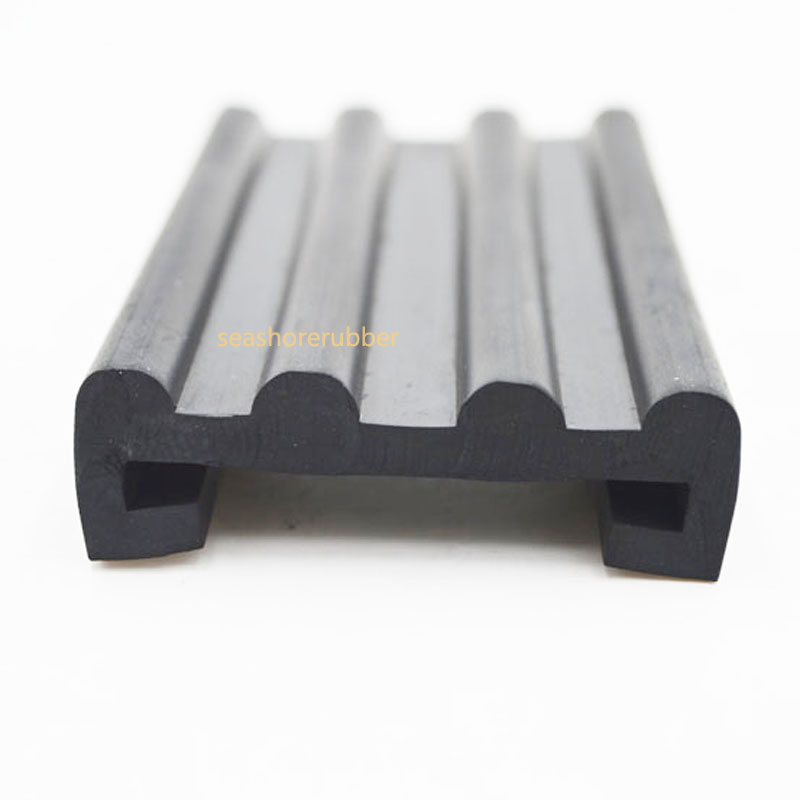
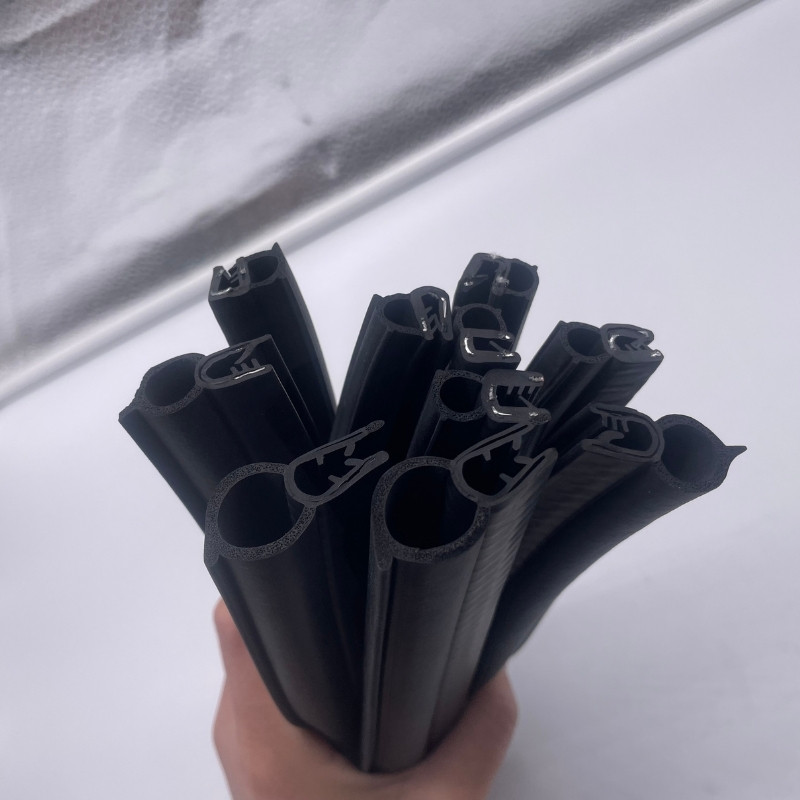
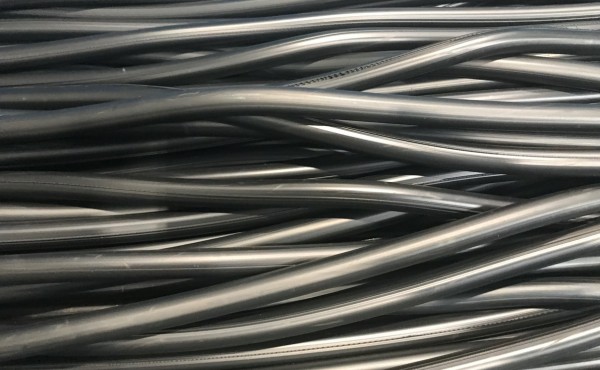
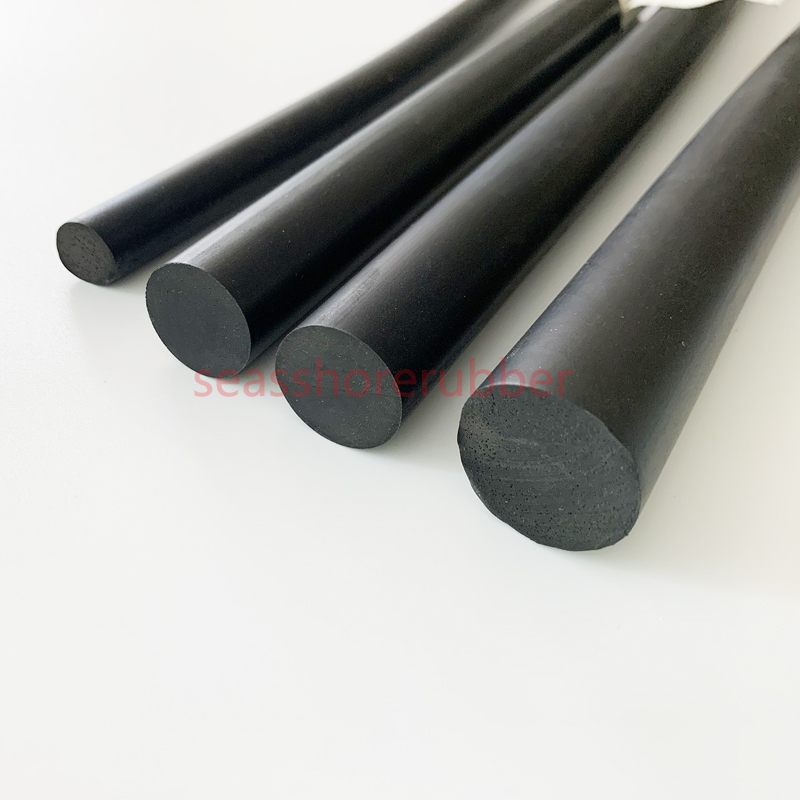
Salt Bath Vulcanized Rubber Seal Strip

Salt Bath vs. Alternative Vulcanization Methods

Salt Bath vs. Hot Air Vulcanization (HAV)

Hot air vulcanization remains widely used for its simplicity and lower capital cost, but it carries fundamental limitations for precision seals. Air’s low thermal conductivity means that heat penetrates the profile from the outside in, creating a cure gradient — the surface reaches cure temperature before the core. For thin-wall profiles, this effect is compounded by differential expansion. LCM eliminates this gradient entirely, making it the preferred choice for filigree profiles, thin-wall geometries, and applications where consistent cross-sectional properties are critical.

Salt Bath vs. Microwave and Steam Vulcanization

Microwave vulcanization offers rapid heating but requires electrically conductive compounds to function effectively, limiting its applicability. Steam vulcanization can introduce moisture into the compound, potentially causing porosity in certain formulations. Salt bath vulcanization is compound-agnostic within the range of common elastomers, delivers faster cycle times than steam autoclave processes, and avoids the moisture-related challenges that complicate steam curing for complex seal profiles.

Salt Bath vs. Compression/Injection Molding

Molding processes are excellent for discrete, three-dimensional rubber parts — gaskets, O-rings, and formed seals. For long extruded profiles — door seals, weatherstripping, glazing seals, tube seals — continuous vulcanization processes like LCM are far more economical and practical. The choice between molding and continuous vulcanization is largely determined by part geometry rather than performance requirements.

Material Compatibility and Compound Optimization 

Not all rubber compounds behave identically in a salt bath environment. Optimizing for LCM involves selecting elastomers and cross-linking systems that respond well to the rapid, high-temperature cure profile characteristic of the process.

EPDM with peroxide curing systems is ideally suited to LCM — peroxide systems require the higher temperatures and shorter cure windows that the salt bath provides, and produce a thermally stable cross-link network with excellent heat aging properties. Sulfur-cured systems can also be processed via LCM but require careful compound adjustment to avoid reversion at elevated temperatures.

Specialty formulations for regulated applications — FDA-compliant compounds for food contact, low-nitrosamine formulations required by occupational health regulations — are fully compatible with modern LCM lines that incorporate closed-loop salt management and adequate ventilation systems.

Advantages, Limitations, and Sustainability Considerations

Key Advantages

  1. Rapid, uniform curing with no cure gradient across the profile cross-section
  2. High throughput for continuous extruded profiles — production speeds are superior to batch autoclave processes
  3. Excellent surface finish — oxygen-free environment prevents surface oxidation and bloom
  4. Compatibility with peroxide-cured systems, enabling formulations not achievable with hot air lines
  5. Profile flotation in the salt bath prevents gravitational distortion during cure
  6. Energy efficiency in modern closed-loop systems with salt recycling and heat recovery

Limitations and Risk Mitigation

The primary challenges of salt bath vulcanization are capital investment in the LCM line, salt handling and recycling infrastructure, and — for nitrate/nitrite salt systems — potential nitrosamine formation under certain processing conditions. Modern LCM installations address these through closed-loop salt recycling that achieves high recovery rates, robust ventilation and emission controls, and reformulation strategies that minimize nitrosamine precursors. The health and regulatory risks are well-understood and manageable with proper engineering controls.

Applications of Salt Bath Vulcanized Rubber Seals

Automotive Weatherstripping and Door/Window Seals

Automotive applications represent the largest volume market for LCM-cured rubber profiles. Door seals, window run channels, trunk seals, and hood seals demand consistent dimensional tolerances, low compression set over the vehicle’s service life (often 15+ years), and resistance to UV, ozone, and temperature cycling. Salt bath vulcanization is the process of choice for tier-one automotive seal suppliers globally.

Energy: Wind, Hydrogen, and Power-to-X

The energy transition is creating significant demand for seals in new application environments. Wind turbine foundation seals require demonstrated service lives exceeding 35 years in marine-adjacent environments. Green hydrogen electrolyzers use highly concentrated KOH or PEM electrolytes that place severe demands on seal chemical resistance — LCM-cured EPDM and FKM compounds meet these requirements. Power-to-X applications bring additional temperature and pressure requirements that premium vulcanized seals are engineered to handle.

Aerospace and Industrial

Aerospace sealing applications demand the highest performance tolerances and material traceability. The dimensional consistency and mechanical properties achievable through LCM support the fatigue resistance and low-temperature flexibility requirements of aerospace profiles. Industrial hydraulic and pneumatic seals, food processing seals (FDA-compliant), and pharmaceutical equipment seals all benefit from the clean surface finish and consistent cross-link density that salt bath curing provides.

Best Practices, Quality Assurance, and Future Trends

Optimizing salt bath vulcanization for rubber seal production requires disciplined process control across multiple variables. In-line monitoring of bath temperature, salt level, line speed, and extrusion pressure is essential for maintaining consistent cure state and dimensional tolerances. Process parameters should be validated against standardized test methods — ASTM D395 for compression set, ASTM D412 for tensile and elongation, and relevant SAE or ISO standards for application-specific performance.

Seal profile designs should be optimized for continuous vulcanization from the outset. Design guidelines include minimizing abrupt cross-sectional changes that create differential cure rates, specifying wall thicknesses within the LCM sweet spot for the compound in question, and ensuring that co-extruded materials have compatible cure windows.

Looking ahead, the integration of AI-driven process control into LCM lines represents a significant opportunity to further narrow process variation, reduce scrap rates, and enable predictive maintenance. Advanced salt formulations with lower environmental impact, combined with the digitalization of quality data from in-line sensors, will define the next generation of salt bath vulcanization systems.

FAQ

What is salt bath vulcanization used for?

Salt bath vulcanization is used for continuous curing of extruded rubber profiles, primarily for automotive weatherstripping, industrial seals, energy infrastructure seals, and aerospace profiles. It is the preferred method where dimensional precision, uniform cross-linking, and high throughput are required simultaneously.

What temperature is used in salt bath vulcanization?

Salt bath vulcanization typically operates at temperatures between 177°C and 260°C, depending on the elastomer and cross-linking system. Peroxide-cured EPDM compounds commonly require temperatures at the higher end of this range, while sulfur-cured systems may be processed at lower temperatures to avoid reversion.

How does LCM improve rubber seal compression set?

LCM improves rubber seal compression set by achieving uniform cross-link density throughout the full cross-section of the profile. Unlike hot air vulcanization, which creates cure gradients from surface to core, salt bath curing heats all surfaces simultaneously, producing a consistent network that resists permanent deformation under sustained compression.

What elastomers are compatible with salt bath vulcanization?

EPDM, NBR, and FKM are the most commonly processed elastomers in salt bath vulcanization systems. Modern LCM lines support both peroxide and sulfur cross-linking systems, with peroxide-cured EPDM being particularly well-suited to the high-temperature, short-cure-window characteristics of the process.


what is rubber extrusion

What is Rubber Extrusion? Key Insights and Applications

rubber extrusion

Rubber Extrusion Overview

What is Rubber Extrusion

Rubber extrusion is a process that shapes rubber into long pieces with a fixed cross-section. This method uses a machine to push soft rubber through a specially designed opening called a die. The die gives the rubber its final shape as it comes out. The process can create many different profiles, such as tubes, strips, or seals. Rubber extrusion is important because it allows manufacturers to make parts that are flexible, strong, and consistent in size.

The process starts with raw rubber, which is often mixed with other materials to improve its properties. The rubber is then heated and pressed through the die. As the rubber leaves the die, it cools and hardens into its final form. This method is used to make products that need to be both durable and flexible.

Note: Rubber extrusion is different from molding. Molding shapes rubber inside a closed space, while extrusion pushes rubber through an open die to form continuous lengths.

Key Terms

Understanding rubber extrusion involves knowing some important terms:

  • Die: The die is a metal tool with a specific shape cut into it. The rubber passes through the die, which gives it its final profile.
  • Extruder: This is the main machine used in the process. It heats and pushes the rubber through the die.
  • Compound: A compound is a mix of raw rubber and other ingredients. These ingredients can include fillers, colorants, and chemicals that change the rubber’s properties.
  • Profile: The profile is the shape of the rubber’s cross-section after it leaves the die. Common profiles include round tubes, flat strips, and custom shapes.
  • Curing (Vulcanization): Curing is a step where the rubber is heated to make it stronger and more elastic. This step often happens after the rubber leaves the die.
  • Continuous Length: Rubber extrusion creates products in long, unbroken pieces. These can be cut to the needed size later.
Term Meaning
Die Tool that shapes the rubber as it exits the extruder
Extruder Machine that pushes and heats the rubber
Compound Mixture of rubber and additives
Profile The cross-sectional shape of the extruded rubber
Curing Heating process that strengthens the rubber
Continuous Length Long, unbroken piece produced by extrusion

Learning these terms helps make the rubber extrusion process easier to understand. Each part of the process and every tool has a specific role in creating high-quality rubber products.

Rubber Extrusion Process


The rubber extrusion process transforms raw materials into finished products with precise shapes. This section explains the materials used, the machinery involved, and each step in the process.

Materials

Rubber Compounds

Rubber compounds form the base of the rubber extrusion process. Manufacturers blend natural or synthetic rubber with other substances to improve performance. These compounds can include fillers, which add strength, and plasticizers, which make the rubber softer. The choice of compound depends on the product’s requirements. For example, some compounds resist heat, while others stay flexible in cold conditions.

Tip: The right rubber compound ensures the final product meets its intended use.

Additives

Additives play a key role in the rubber extrusion process. They change the properties of the rubber to suit different needs. Common additives include:

  • Colorants: Give the rubber its color.
  • Antioxidants: Protect the rubber from aging.
  • Curing agents: Help the rubber harden during vulcanizing.
  • Reinforcing agents: Increase strength and durability.

Manufacturers select additives based on the product’s application. Additives help create rubber that lasts longer and performs better.

Machinery

Extruder Parts

The extruder is the main machine in the rubber extrusion process. It has several important parts:

Part Function
Hopper Holds and feeds the rubber compound
Screw Moves and mixes the rubber
Barrel Heats the rubber as it travels
Die Shapes the rubber into its final profile
Cooling System Cools the rubber after extrusion

The screw rotates inside the barrel, pushing the rubber forward. The barrel heats the rubber, making it soft and ready for shaping.

Die Design

Die design is crucial in the rubber extrusion process. The die determines the shape and size of the final product. Engineers create dies with different openings to produce various profiles, such as tubes, strips, or custom shapes. The die must be strong and precise to ensure consistent results.

Note: A well-designed die helps prevent defects and ensures the rubber comes out with the correct shape.

Process Steps

Feeding

Feeding is the first step in the rubber extrusion process. Workers load the rubber compound into the hopper. The hopper directs the material into the screw, which starts moving it forward.

Shaping

Shaping happens as the rubber travels through the barrel. The barrel heats the rubber, making it soft and easy to form. The screw mixes and kneads the rubber, ensuring an even texture. The rubber then passes through the die, which gives it its final profile. This step is where the extrusion process creates continuous shapes.

Vulcanizing

Vulcanizing is a key stage in the rubber extrusion process. The rubber is heated with curing agents, which cause chemical changes. These changes make the rubber stronger, more elastic, and resistant to wear. Vulcanizing can happen inside the extruder or after the rubber leaves the die, depending on the product.

Cooling

Cooling is the last step in the rubber extrusion process. The rubber exits the die and enters a cooling system, often using water or air. Cooling hardens the rubber and locks in its shape. Workers may cut the cooled rubber into desired lengths.

Callout: Each step in the rubber extrusion process is important for creating high-quality products.

The rubber extrusion process uses careful material selection, precise machinery, and well-defined steps to produce reliable and flexible rubber profiles. This method allows manufacturers to create products that meet strict standards for strength and durability.

Rubber Extrusion Products

rubber extrusion products


Rubber extrusion creates many useful items for different industries. These items are called extruded rubber products. They come in many shapes and sizes. Each shape serves a special purpose. Below are some common profiles made by this process.

Common Profiles

Seals

Seals are one of the most popular extruded rubber products. They keep out water, air, dust, and noise. Many doors and windows use seals to block drafts. Seals also protect machines from leaks. The shape of a seal depends on where it will be used. Some seals are round, while others have a flat or complex profile.

Tubes

Tubes are another common type of extruded rubber products. These tubes carry liquids or gases. Factories use them in machines. Cars use them for fuel and air lines. Tubes can be thick or thin. The size and material depend on what the tube will carry. Tubes must be strong and flexible.

Weatherstripping

Weatherstripping helps keep buildings comfortable. It fills gaps around doors and windows. This stops cold air from coming in and warm air from escaping. Weatherstripping also blocks rain and insects. Many homes and offices use this type of extruded rubber product. It comes in rolls or strips that are easy to install.

Custom Shapes

Some projects need custom rubber extrusions. These are special shapes made for unique jobs. Engineers design custom shapes for equipment, vehicles, or tools. Custom extruded rubber parts solve problems that standard profiles cannot. They may have grooves, holes, or unusual curves.

Tip: Custom shapes allow companies to get exactly what they need for their products.

Uses in Manufacturing

Automotive

Rubber extrusion plays a major role in the automotive industry. Many car parts rely on extruded rubber profiles for performance and safety. Door seals keep out wind and rain. Window channels help glass move smoothly. Engine gaskets prevent leaks and protect vital components. Tubes carry fluids such as coolant and fuel. These parts must withstand heat, vibration, and exposure to chemicals. Manufacturers choose rubber compounds that resist wear and last for years.

Tip: Reliable seals and gaskets help cars run quietly and safely.

Automotive factories use rubber extrusion to produce parts in large quantities. The process creates consistent shapes that fit tightly. Custom profiles solve unique challenges, such as sealing complex door frames or protecting wires. Extruded rubber parts help vehicles stay comfortable, efficient, and durable.

Construction

Construction projects depend on extruded rubber products for many tasks. Weatherstripping fills gaps around doors and windows. This keeps buildings warm in winter and cool in summer. Expansion joints absorb movement in bridges and sidewalks. Glazing seals hold glass panels in place. These products must handle changes in temperature, moisture, and pressure.

  • Weatherstripping improves energy efficiency.
  • Expansion joints prevent cracks in concrete.
  • Glazing seals keep glass secure.

Builders use rubber extrusion because it produces flexible and strong profiles. Custom shapes fit unusual spaces or meet special requirements. Rubber parts help protect buildings from water, air, and noise. They also make structures safer and more comfortable.

Construction Use Example Product
Doors & Windows Weatherstripping
Bridges & Sidewalks Expansion Joints
Glass Installation Glazing Seals

Electronics

Electronics manufacturers rely on extruded rubber for protection and insulation. Cable grommets shield wires from damage. Protective covers keep dust and moisture away from sensitive parts. Insulating strips prevent electrical shorts. These products must be precise and reliable.

Rubber extrusion allows for custom profiles that fit tightly around cables and connectors. The process produces parts that resist heat and chemicals. Electronics factories use rubber to make devices safer and longer-lasting.

Note: Protective covers and grommets help electronics work in tough environments.

Extruded rubber profiles support many electronic devices, from computers to appliances. They keep components safe and ensure smooth operation.

Medical

Rubber extrusion plays a vital role in the medical field. Many devices and tools in hospitals and clinics rely on extruded rubber parts. These components must meet strict standards for safety and cleanliness. The process allows manufacturers to create products that are both flexible and durable.

One of the most common uses is medical tubing. Tubes made from extruded rubber transport fluids, gases, or medications. They appear in devices such as IV lines, catheters, and respiratory equipment. Medical tubing must be smooth inside to prevent blockages and easy to sterilize. The extrusion process creates long, continuous tubes with consistent quality.

Seals and gaskets are also important in medical equipment. These parts prevent leaks in devices that handle liquids or air. For example, seals keep syringes airtight and help pumps work properly. Rubber extrusion allows for custom shapes, so seals fit tightly and perform well under pressure.

Medical devices often require protective covers and bumpers. These parts shield sensitive equipment from damage during use or transport. Extruded rubber profiles can absorb shocks and reduce noise. They also help keep devices stable on surfaces.

Note: Medical-grade rubber must be free from harmful chemicals and easy to clean. Manufacturers use special compounds that meet health and safety rules.

A variety of medical products use extruded rubber parts:

  • IV tubing and connectors
  • Catheters
  • Seals for pumps and valves
  • Protective bumpers for equipment
  • Gaskets in diagnostic machines

The table below shows some examples of how extruded rubber is used in medical settings:

Medical Product Purpose
IV Tubing Delivers fluids to patients
Catheter Tubes Drains or introduces fluids
Pump Seals Prevents leaks in devices
Equipment Bumpers Protects machines from impact
Diagnostic Gaskets Seals sensitive instruments

Rubber extrusion helps the medical industry by providing reliable, safe, and custom solutions. The process supports patient care by making sure devices work smoothly and safely.

FAQ

What is the main purpose of rubber extrusion?

Rubber extrusion shapes rubber into continuous profiles. Manufacturers use this process to create parts like seals, tubes, and strips for many industries.

How does rubber extrusion differ from rubber molding?

Rubber extrusion pushes rubber through a die to form long shapes. Rubber molding places rubber in a closed mold to create three-dimensional parts.

Can rubber extrusion produce custom shapes?

Yes. Engineers design dies to create unique profiles. Custom shapes help meet specific needs in automotive, construction, and medical applications.

How are extruded rubber products tested for quality?

Manufacturers check profiles for shape, strength, and flexibility. Quality control ensures each part meets standards and performs as expected.

Can extruded rubber withstand extreme temperatures?

Many rubber compounds resist heat and cold. Additives help improve temperature resistance, making extruded rubber suitable for harsh environments.

2019 Best Custom Rubber Extrusion China Manufacturer

Rubber Extrusion is a process, a part of a larger process. During rubber extrusion, a high-pressure machine forces natural or synthetic rubber through a given shaped die to bring out the desired shape, profile or cut.

Applications of rubber extrusion2019 Best Custom Rubber Extrusion China Manufacturer

Rubber extrusions can be wound or and vulcanized to make a myriad verity of shapes. Such ease to make splicing (wounding) enables to make seals, and gaskets for various applications in automotive, aerospace, construction, chemical procession, industrial oil and gas extraction, food procession and wire and cable manufacturing and a quite a few other industrial applications.

Benefits of rubber extrusion

Rubber extrusion is advantageous for many regions. It can bring out uniform cross-sectional objects when manufacturing complex shapes. The continuous process can create large length as much as 60 feet. Rubber extrusion is ideal for manufacturing products in tube shapes like hoses and pipes. Extrusion rubber can enable to make highly complex equipment, oil and gas applications accessories easy. heavy truck, valves, and electrical distribution.

EPDM rubber extrusion

EPDM is a high-density synthetic rubber and EPDM Rubber Extrusion is mainly used in mainly outdoor applications such as roofing. EPDM rubber extrusion has properties that range between those of natural rubber and synthetic rubber.

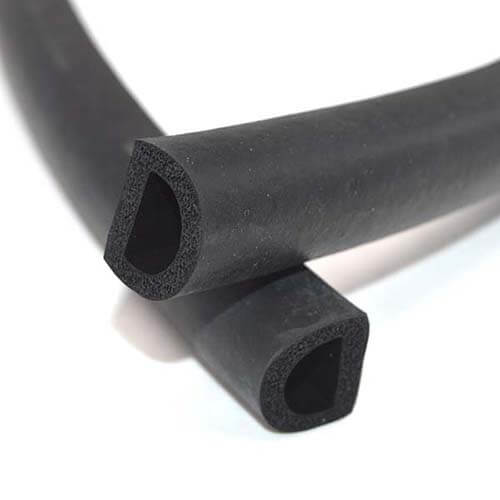
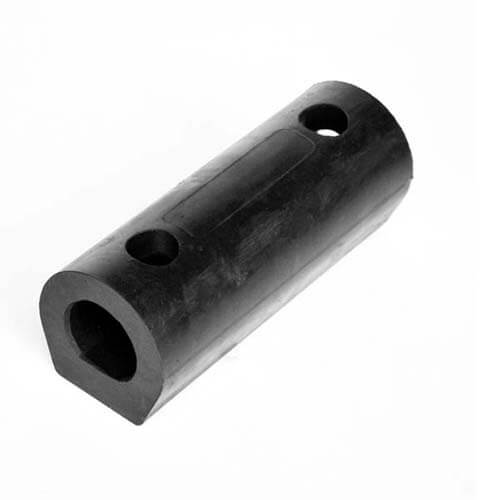
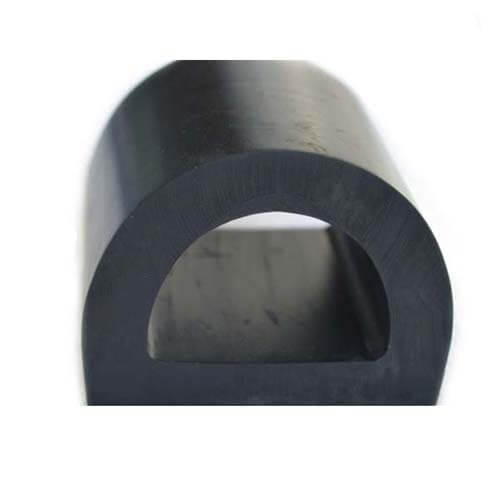
A few examples are EPDM rubber extrusion for Containers Sealing, EPDM rubber extrusion profile for Glass windows, Black EPDM Rubber Profiles for Windows and Doors, D-shape Bubble EPDM Rubber Seal Strip and many more.

Thanks to the high water resistance, temperature and weather tolerance properties of EPDM rubber, EPDM extrusion finds a great number of applications in jobs where water – fresh as well as salt is involved.

Look for reputed manufacturers

While rubber extrusions and EPDM Rubber Extrusions play a significant role in diverse industries, Industries need to choose good quality rubber extrusions. For this, you need to look for reputed rubber extrusion manufacturers and wholesalers. This is because such entities can help industries get rubber extrusions on time consistently without inflating the budget. Also, such manufacturers and wholesalers will have adequate expertise in the market and can help customers out in a time of need.

Look for manufactures in China. There are many rubber extrusion manufacturers in China. Yet remember to choose a reputed one like Seashore Seals. Seashore Seals top the rubber extrusion manufacturers in China. The company makes a variety of industrial products.

About Seashore Industrial

Situated in Qingdao, China, Qingdao Seashore Industrial Co. Ltd is a lead professional company engaged in manufacturing premium quality rubber extruded profiles, rubber profiles, sponge rubber, silicone rubber products, co-extrusion sealing strip, plastic profiles, rubber tubing & hose, and the like.

The company makes use of plastic extrusion lines and rubber injection machines, rubber extrusion lines, CAD/CAM mold development, and advanced detection equipment.

The company is of great capacity to manufacture single co-extrusion, corner welding, flocking, air hose punching, cold gluing, boding, and 3m taping, cutting & splicing.

Specialization

Seashore Industrial specializes in preparing custom solutions capable of reverse engineering drawing and samples or bring out a completely new product without any shape size or material.

Products and services

The products and services include rubber extrusion, sponge rubber extrusion, adhesive rubber strip, NBR & Neoprene rubber extrusion, rubber &PVC water stop, rubber cord, rubber tubing,

Commitment to valuesSEASHORE Rubber Logo

The company values the customer high. The priority is to bring out the best product as desired by the customer for their target job. Doing valuable service to the customer, the company has earned a great reputation in the market over the years.

The company is ready to offer any technical aid if the customer so desires. In such a case, the professional team will look into the project and would make necessary and valuable corrections to improve the performance of the product that is being designed and developed.

If you’re planning to start a business in rubber extruded profiles, and are looking for a reliable, experienced and reputed manufacture, remember to choose Seashore Industrial Co. Ltd. Doing so is beneficial. They can impart you the necessary technical, assistance and may help you out in case you have doubts, apprehensions concerning your business. The customer care service is open round the clock and you will get the right attention at the right time. To contact the company, just send them an email. You can also contact them by visiting the official website and filling in the Contact Us form and submit. The company will soon get back to you.

High Quality Rubber Extrusions & Seals Supplier in China

How Rubber Extrusion Process – Rubber Cord,Tubing,Coextrusion,Extrusion

Your Best EPDM Rubber Extrusion Suppliers & Manufacturer in China

High Quality Square Sponge Rubber Extrusion Suppliers in China

Your Best Sponge Rubber Extrusion Suppliers & Manufacturer in China


How to find the best rubber extrusion suppliers & factory in China