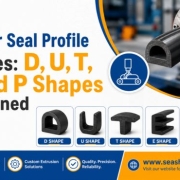
Common Extruded Rubber Shapes and How to Choose Them

Common Extruded Rubber Shapes and How to Choose Them
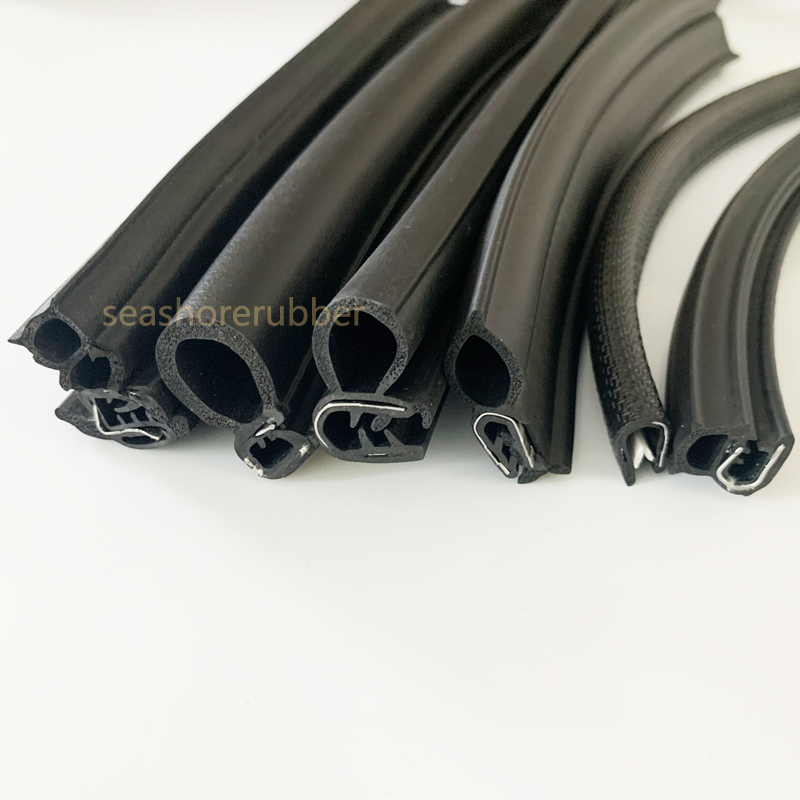
rubber sealing profiles

Extruded rubber shapes are continuous profiles manufactured by forcing uncured rubber compounds through specially designed dies. The profiles are then cured to stabilize their dimensions and develop the required physical properties.

Unlike molded rubber parts, which are produced as individual components, extrusions maintain the same cross-section along their length. This makes extrusion suitable for seals, channels, strips, cords, tubing and protective profiles used around doors, windows, panels, machinery and vehicle components.

However, profile selection should not be based on appearance alone. The cross-sectional shape, material, hardness, density and installation method must work together. A shape that performs well as an edge protector may not provide the compression recovery required for a long-term weather seal.

Common Types of Extruded Rubber Shapes

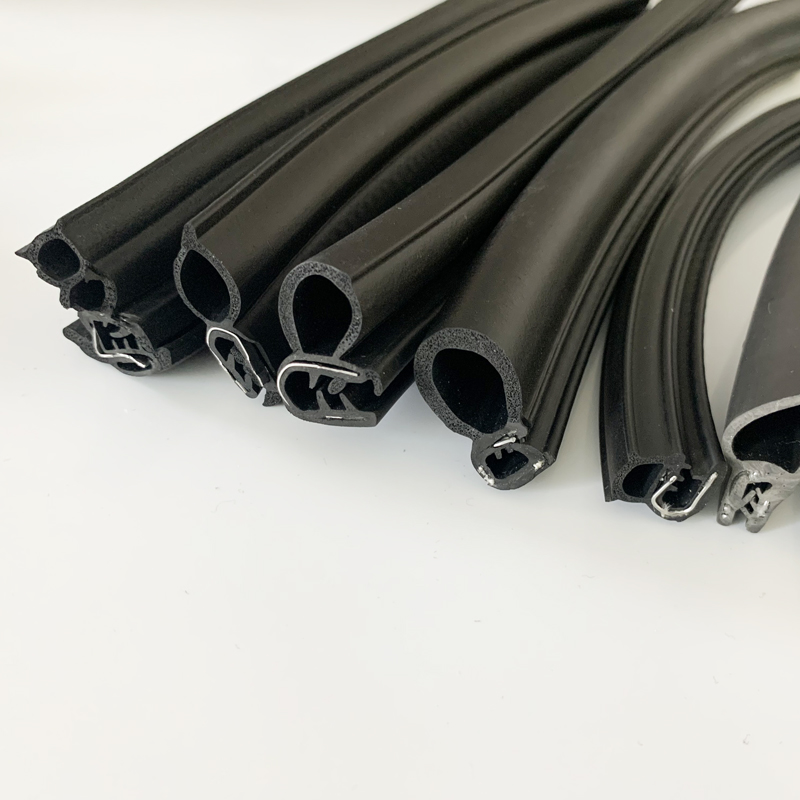
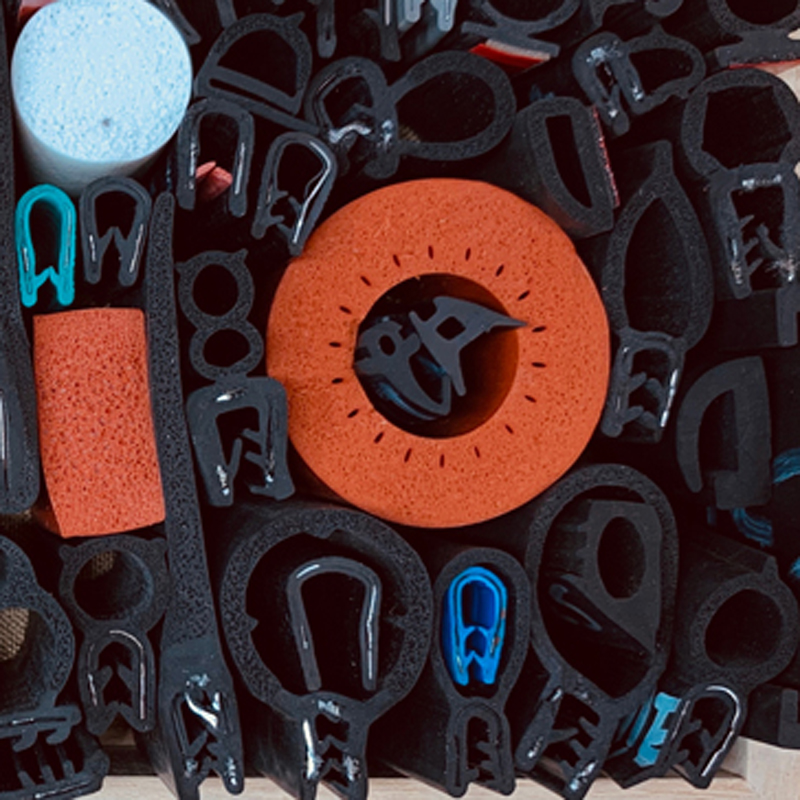
Extruded profiles range from simple solid strips to complex multi-cavity seals. Each shape controls how the rubber fits, compresses or moves in an assembly.

U-Shaped Rubber Channels

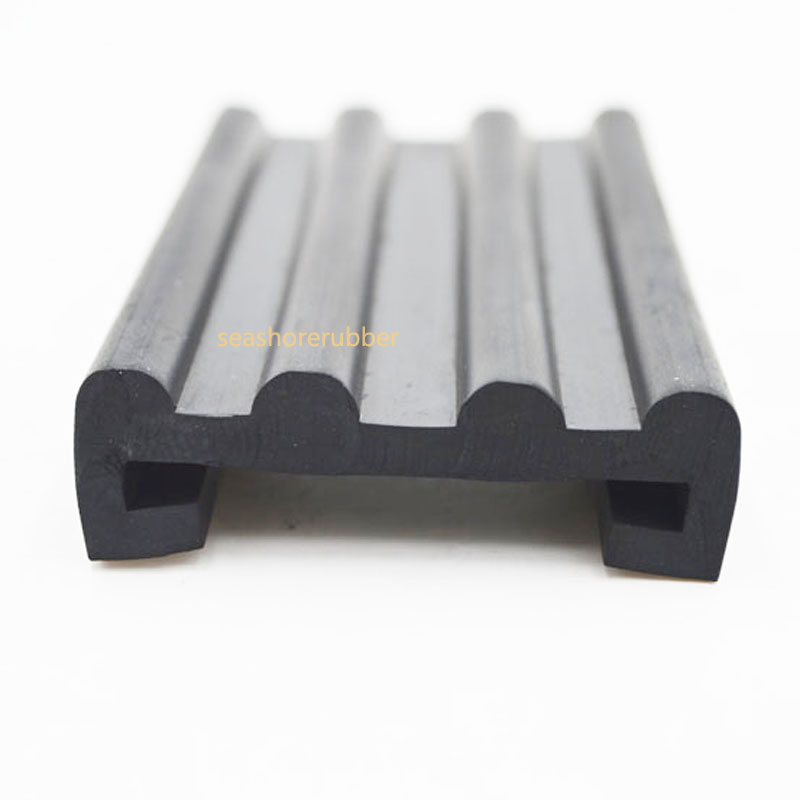
U-channels fit over sheet metal, glass, plastic panels or exposed edges. Their main functions include edge protection, cushioning, insulation and vibration reduction.

Some U-shaped profiles rely on the elasticity of the rubber to grip an edge. Others include internal ribs, lips or metal reinforcement to improve retention.

Typical applications include:

  • Sheet metal edge protection
  • Glass and panel mounting
  • Machinery guards
  • Vehicle body panels
  • Electrical cabinet edges

The channel width should match the thickness of the mounting edge. If the channel is too narrow, installation becomes difficult and may stretch the profile. If it is too wide, the profile may loosen during service.

D-Shaped Rubber Profiles

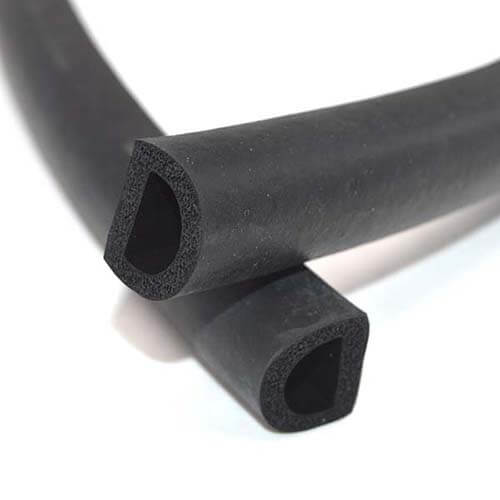
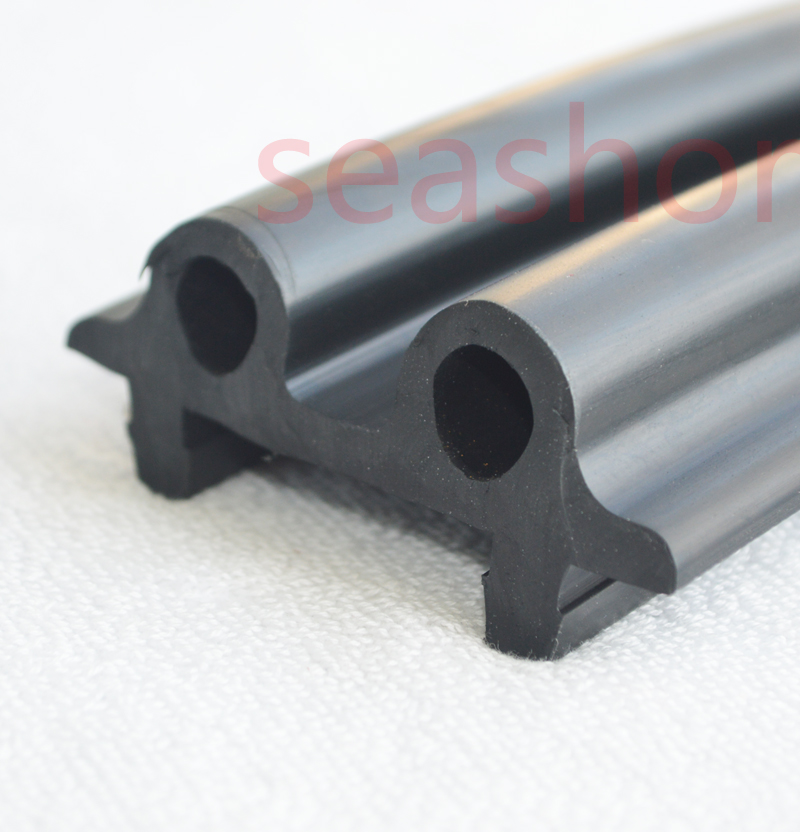
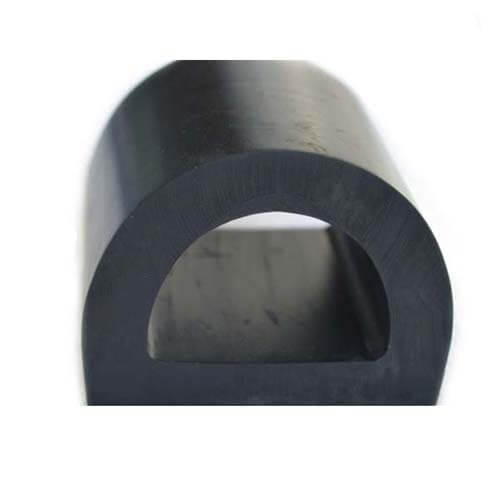
D-shaped profiles usually have a flat mounting base and a rounded or hollow sealing section. They are frequently used as compression seals around doors, hatches, enclosures and access panels.

A solid D-profile provides greater resistance to deformation, while a hollow D-profile compresses more easily. Hollow profiles are often more suitable when the available closing force is limited.

When selecting a D-shaped seal, buyers should consider the gap to be sealed, expected compression and the movement of the mating surfaces. Excessive compression can increase closing force and accelerate permanent deformation.

P-Shaped Rubber Seals

P-shaped profiles combine a rounded sealing bulb with a flat tail. The tail can be bonded, clamped or mechanically fastened to the assembly.

These profiles are used for:

  • Vehicle doors and compartments
  • Equipment cabinets
  • Marine hatches
  • Access covers
  • Window and panel seals

The tail simplifies mounting, while the bulb creates a flexible barrier against air, dust, water or vibration. The direction of compression is important: the bulb should be loaded as intended instead of being dragged sideways whenever the door closes.

T-Shaped Rubber Profiles

T-profiles are commonly inserted into tracks, joints or specially designed grooves. The upper part may cover a gap, while the lower stem anchors the profile.

They can be used as joint fillers, floor seals, glazing components and protective strips. Successful installation depends on the relationship between the stem and the retaining groove. A loose stem may pull out, while excessive interference may make field installation impractical.

L-Shaped and Angle Profiles

L-shaped extrusions protect corners, cover joints or form flexible barriers between perpendicular surfaces. They may also be used as wiping lips or deflectors.

Their performance depends on the thickness and flexibility of each leg. A soft, thin leg can conform to uneven surfaces, whereas a thicker profile provides more impact protection but requires greater installation force.

Rubber Bulb Seals

Bulb seals use a hollow, rounded section that collapses under compression and recovers after the load is removed. The bulb may be combined with a flat base, clip-on carrier or channel section.

They are commonly installed on doors, lids, vehicle compartments and enclosures where the gap varies slightly along the sealing line. Bulb diameter alone does not determine suitability. Wall thickness, material hardness and compression set are equally important.

Lip and Wiper Profiles

Lip seals have one or more thin flexible extensions. Instead of being heavily compressed, the lip maintains light contact with a moving or stationary surface.

They are used to deflect water, dust and debris or to wipe a surface during movement. The contact angle and interference should be controlled carefully. Excessive interference can increase friction and wear, while insufficient contact can leave a leakage path.

Solid Cords, Squares and Rectangular Strips

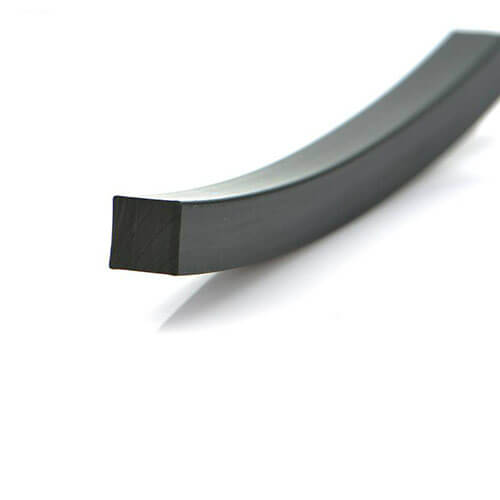
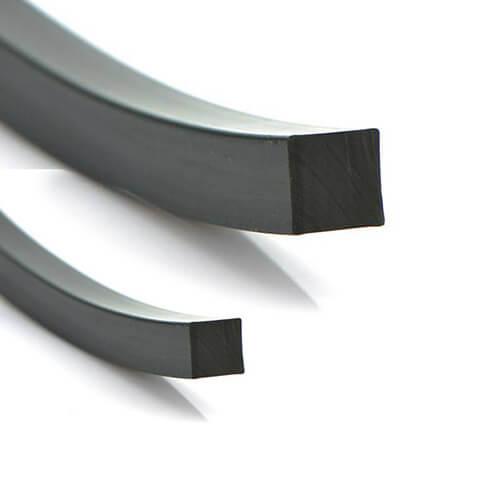
Solid cords and simple strips are among the most versatile extruded rubber shapes. They can be used as packing, spacers, bumpers, gasket material or stock for secondary fabrication.

Cord can also be cut and vulcanized into rings. Rectangular strips may be supplied in continuous lengths or cut to specified dimensions.

These shapes are economical, but buyers should not assume that a solid section is always more durable. For compression sealing, a properly designed hollow profile may require less force and accommodate dimensional variation more effectively.

Solid, Sponge and Dual-Durometer Profiles

The internal structure of an extrusion changes how it responds to load.

Profile construction Main characteristic Typical use
Solid rubber Firm support and higher resistance to deformation Edge protection, strips, channels and wear surfaces
Sponge rubber Lower compression force and better conformity Door seals, enclosure seals and weather stripping
Hollow profile Controlled collapse under compression Bulb seals and gap sealing
Dual-durometer profile Combines rigid retention with a softer sealing area Clip-on seals and complex mounting systems
Co-extruded profile Combines materials or structures in one section Multifunctional seals and reinforced profiles

Solid rubber is normally selected where strength, abrasion resistance or structural support matters. Sponge rubber is useful when a soft seal must conform to uneven surfaces. Closed-cell sponge is generally preferred for sealing because its cell structure limits the passage of air and water more effectively than open-cell foam.

Dual-durometer profiles solve a common design conflict: the mounting section needs to remain firm, while the sealing section needs to compress easily. Producing both functions in one continuous profile can reduce assembly steps.
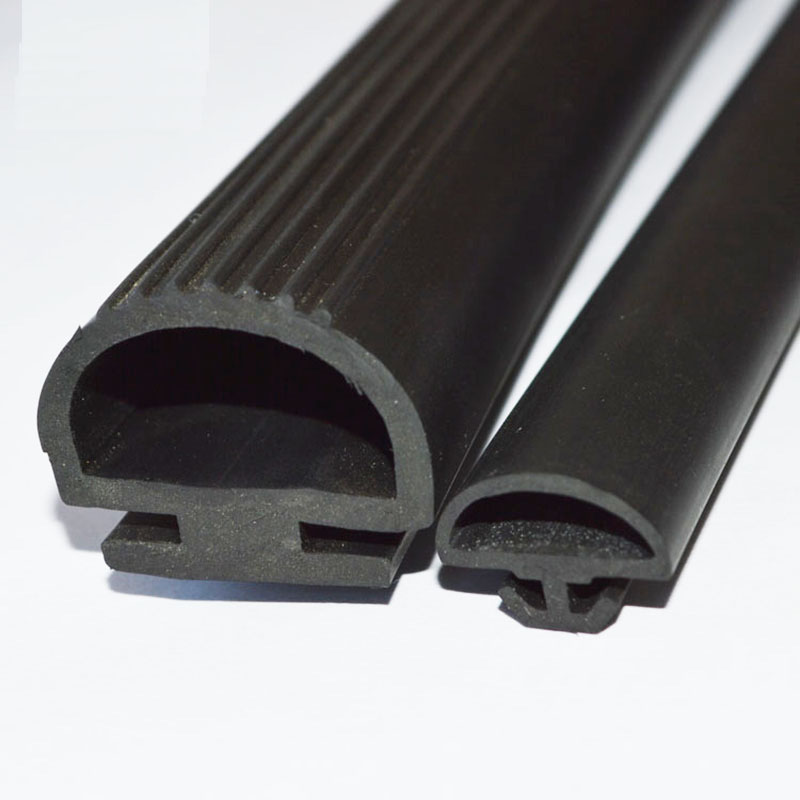
D-shape Buble EPDM Rubber Seal Strip

Choosing Materials for Extruded Rubber Shapes

Shape determines how a profile seals, but the compound determines whether it survives the operating environment.

EPDM is widely used for outdoor seals because of its resistance to weathering, ozone and water. It is commonly selected for doors, windows, enclosures and vehicle weather seals. However, it is generally unsuitable for continuous contact with petroleum oils.

NBR, or nitrile rubber, is commonly used around oils, fuels and petroleum-based hydraulic fluids. It is suitable for machinery, automotive and fluid-handling applications, but usually offers less outdoor weather resistance than EPDM.

Neoprene provides a balance of weather, moderate oil and mechanical resistance. It is frequently selected for equipment seals, cable protection and outdoor components that may experience mixed exposure.

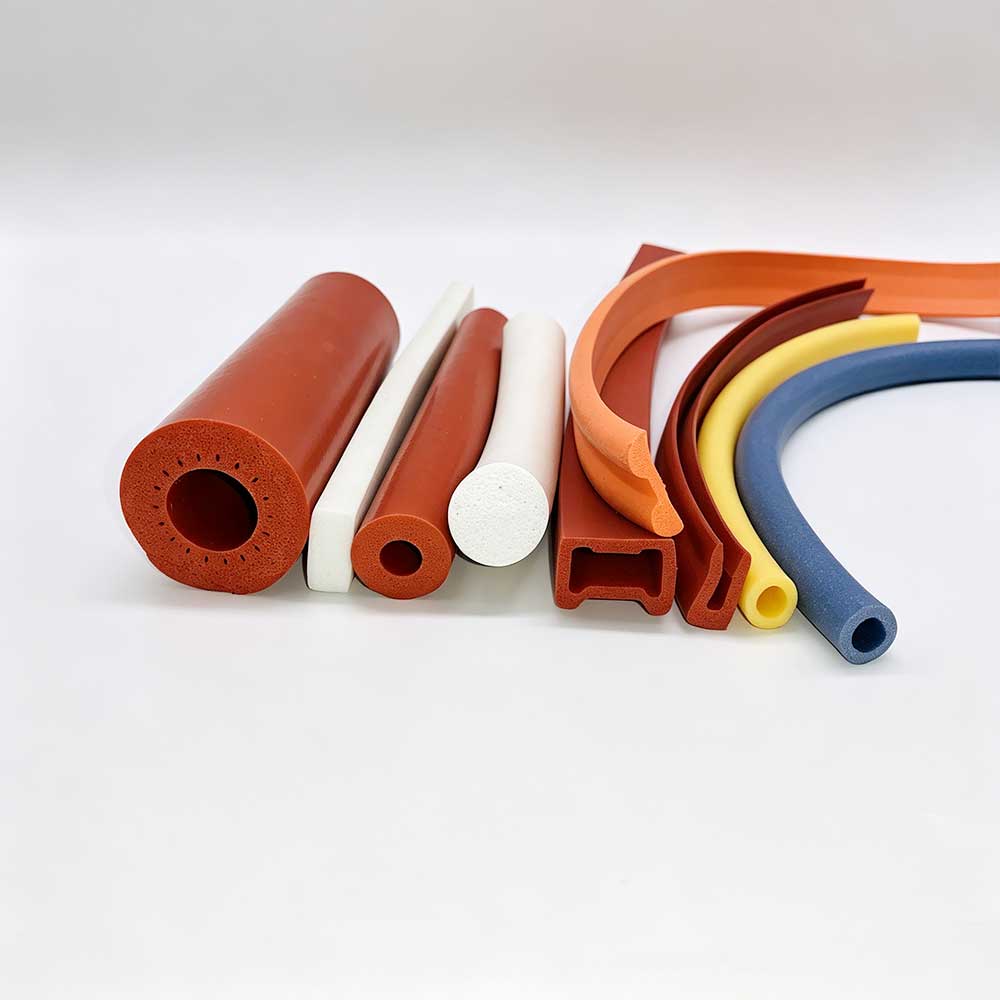
Silicone remains flexible across a broad temperature range and is used for ovens, lighting, electrical equipment and applications requiring clean or colored profiles. Its tear and abrasion performance must still be evaluated for the specific design.

Material names alone are not complete specifications. Different formulations of the same elastomer can have different hardness, compression set, tensile strength, flame resistance and chemical compatibility.

How to Select the Right Extruded Shape

Begin with the function of the profile rather than selecting a familiar cross-section.

For compression seals, define the minimum and maximum operating gap. The profile must maintain contact at the largest gap without becoming over-compressed at the smallest gap.

For edge protection, define the edge thickness, bend radius and required grip. For wiping profiles, specify the direction of movement, contact pressure and exposure to abrasive contamination.

The specification should also cover:

  • Service temperature
  • Contact with oils, fuels, cleaners or chemicals
  • Outdoor and ozone exposure
  • Required hardness or compression behavior
  • Solid or sponge construction
  • Installation method
  • Length, cutting and joining requirements
  • Color and surface finish
  • Applicable testing or regulatory requirements

A profile drawing should include a complete cross-section with dimensions and tolerances. The assembly drawing is also valuable because it shows the mounting position, compression direction and nearby components.

Conclusion

Extruded rubber shapes are functional elements rather than simple geometric products. U-channels protect edges, D- and P-profiles provide compression sealing, T-profiles fit into retaining grooves, and lip profiles create wiping contact. Solid, sponge, hollow and dual-durometer constructions further change how each shape behaves.

The most reliable selection process connects the profile geometry to the operating gap, mounting method, environmental exposure and required compression. When standard profiles cannot meet those conditions, a custom extrusion can integrate the necessary sealing and installation features into one continuous component.
How to Choose an Extruded Rubber Manufacturer

How to Choose an Extruded Rubber Manufacturer

silicone rubber extrusions

Choosing an extruded rubber manufacturer involves more than comparing unit prices. The supplier must translate a drawing or application requirement into a stable compound, workable die and repeatable production process.

For standard cords or strips, sourcing may be relatively straightforward. Custom profiles introduce more variables: material formulation, die swell, curing, dimensional tolerances, splicing, cutting and packaging. A weakness in any of these areas can cause installation difficulties or sealing failures.

The best evaluation process tests whether the manufacturer understands the application and can control the complete production route.

Confirm the Manufacturer’s Extrusion Capabilities

Begin by checking whether the supplier regularly produces the type of profile you need.

Relevant capabilities may include:

  • Solid rubber extrusions
  • Sponge rubber profiles
  • Hollow bulb seals
  • U-, D-, P-, T- and L-shaped profiles
  • Rubber tubing and cord
  • Dual-durometer profiles
  • Co-extruded profiles
  • Long continuous lengths
  • Cut and fabricated components

A manufacturer that specializes in simple solid strips may not have the same process experience needed for thin sealing lips, hollow chambers or multi-material sections.

Ask for examples of technically similar profiles, but do not expect the manufacturer to disclose confidential customer drawings. The useful question is whether it has experience with comparable materials, cross-sectional complexity and downstream operations.

Evaluate Material and Compound Knowledge

Rubber extrusion performance depends heavily on compound selection. The manufacturer should understand how environmental exposure affects different elastomers and how compound properties influence processing.

For example, EPDM is frequently selected for weather and water exposure, while NBR is commonly used around petroleum oils and fuels. Silicone may be chosen for broader temperature demands or electrical applications. Neoprene can offer a practical balance of weather and moderate oil resistance.

A capable supplier should ask questions such as:

  • What temperature range will the profile experience?
  • Will it contact oils, fuels, cleaners or chemicals?
  • Is the component used indoors or outdoors?
  • Does it need to resist ozone, UV or weathering?
  • What compression and recovery are required?
  • Are flame, food-contact or other compliance requirements applicable?

Be cautious when a supplier recommends a material without asking about the service conditions. An elastomer name is also not enough: the specific formulation determines hardness, compression set, tensile behavior, color stability and other properties.

If a proprietary or certified compound is required, request the relevant data and define which documents must accompany production.

Assess Tooling and Engineering Support

For custom extruded rubber shapes, the die rarely has exactly the same geometry as the finished profile. Uncured rubber can expand or distort after leaving the die, so tooling must compensate for material flow and elastic recovery.

This makes engineering support an important supplier-selection factor.

A manufacturer should be able to:

  • Review the cross-section for extrusion feasibility
  • Identify thin walls or unbalanced sections
  • Recommend functional radii
  • Discuss material-dependent dimensional behavior
  • Identify critical dimensions
  • Develop and adjust extrusion dies
  • Produce samples before mass production

The strongest suppliers do not simply accept every drawing unchanged. They explain where a design may cause instability, excessive tooling adjustments or unnecessary cost.

Ask how tooling corrections are handled. Initial samples may reveal that the die needs modification to bring important dimensions into specification. The quotation should make clear what is included in the tooling charge and how sample approval will be managed.

Review Quality-Control Methods

Quality control should cover raw materials, the extrusion process and finished profiles.

Incoming and Compound Controls

The supplier should identify compounds and prevent unintended material mixing. Depending on the project, controls may cover formulation, batch identification, hardness, color and cure characteristics.

For custom formulations, ask whether mixing is performed internally or by an external compounder. Either arrangement can work, but responsibilities and traceability should be clear.

In-Process Controls

Extrusion variables affect profile dimensions and appearance. The manufacturer should monitor the characteristics most relevant to the product, which may include:

  • Critical cross-sectional dimensions
  • Surface quality
  • Cure condition
  • Splice quality
  • Cut length
  • Adhesive position
  • Visual defects
  • Packaging condition

Inspection frequency should reflect the profile, production volume and consequences of variation.

rubber sealing profiles

Final Inspection

A useful inspection plan distinguishes between critical, functional and non-functional characteristics. Applying extremely tight requirements to every surface may add cost without improving performance.

Ask how soft sponge or hollow profiles are measured, because excessive gauge pressure can distort the sample. Both parties should agree on measurement methods before production approval.

Quality certificates can support supplier evaluation, but certification alone does not demonstrate that the supplier can control a specific profile. Review actual inspection procedures, sample reports and corrective-action methods where appropriate.

Check Secondary Fabrication Capabilities

Many extruded profiles require additional work before they can be installed. Using a manufacturer that can complete these operations may reduce handling, supplier coordination and incoming inspection.

Possible services include:

  • Cutting to specified lengths
  • Punching, drilling and notching
  • Adhesive backing
  • Hot vulcanization
  • Splicing into rings
  • Fabricating rectangular frames
  • Molded corners
  • Kitting and assembly
  • Custom labeling and packaging

If joined seals are required, ask how the joint affects strength, appearance and sealing continuity. Adhesive-only joints and vulcanized joints may perform differently depending on the application.

Compare Quotations on the Same Basis

A low unit price may exclude tooling adjustments, material testing, sample production or special packaging.

Compare the following items:

Quotation element Questions to clarify
Tooling Does it include die development and corrections?
Material Is the compound standard, custom or compliance-controlled?
Samples How many approval samples are included?
Unit price What quantity and production length support the price?
Secondary work Are cutting, splicing, adhesive and punching included?
Testing Which inspections and reports are included?
Packaging How will profiles be protected from deformation?
Lead time Does it include material preparation and tooling?

Minimum order quantity should also be understood in relation to production setup and material requirements. A supplier capable of making a small trial does not necessarily offer the same unit price as full-scale production.

Use Samples to Evaluate More Than Dimensions

Approval samples should be checked in the final assembly whenever possible.

Dimensional inspection is necessary, but it does not reveal every problem. Installation trials may expose excessive closing force, poor grip, twisting, surface drag or inconsistent contact.

Evaluate:

  • Fit in the mounting groove
  • Installation time
  • Compression and recovery
  • Seal continuity
  • Retention during movement
  • Appearance after bending
  • Joint and corner quality
  • Packaging effects
  • Compatibility with mating surfaces

Document any changes before authorizing mass production. The approved drawing, material, sample and inspection criteria should form one consistent specification.

Warning Signs When Selecting a Supplier

Potential warning signs include:

  • Recommending compounds without reviewing service conditions
  • Quoting from an unclear sketch without requesting dimensions
  • Promising unrealistic tolerances without discussing measurement
  • Providing no sample-approval process
  • Failing to distinguish solid and sponge constructions
  • Giving unclear answers about compound traceability
  • Excluding tooling adjustments without explanation
  • Offering secondary fabrication without defined inspection standards

These signs do not automatically prove that a supplier is unsuitable, but they justify further technical review.

Conclusion

A reliable extruded rubber manufacturer combines material knowledge, tooling experience, process control and fabrication support. Supplier evaluation should therefore begin with the application and profile complexity rather than price alone.

Provide complete drawings and operating conditions, ask how the supplier will control critical dimensions, and test samples in the real assembly. When quotations are compared on the same technical basis, buyers can identify the manufacturer most capable of delivering consistent profiles throughout prototype and production stages.

What Are Extruded Rubber Gaskets And How Are They Used

What Are Extruded Rubber Gaskets And How Are They Used

rubber seal profile

What Are Extruded Rubber Gaskets?

Extruded rubber gaskets serve as continuous sealing solutions with a uniform cross-section. The extrusion process pushes uncured rubber through a die. This method produces long, uninterrupted lengths. These gaskets function as static seals between flat surfaces. They also work in dynamic settings. Engine parts and rotating shafts rely on them for consistent performance. A rubber gasket of this type maintains its shape along the entire run.

Material Options and Properties

The choice of gasket material determines performance. Each compound offers distinct characteristics. EPDM rubber resists weathering and ozone exposure. It handles outdoor applications well. Neoprene provides balanced resistance to oil and temperature. Silicone handles extreme temperatures with flexibility. Nitrile excels in fuel and oil resistance.

Selecting the right gasket material requires careful evaluation. Temperature range matters significantly. Chemical exposure changes material behavior. Compression set affects long-term sealing ability. Hardness influences how the gasket compresses under pressure. A softer compound conforms to irregular surfaces. A harder compound resists extrusion under high pressure. The right gasket material also resists aging and environmental stress.

The table below summarizes common material options:

Material Key Strength Typical Use
EPDM Weather and ozone resistance Outdoor enclosures, window seals
Neoprene Balanced oil and temperature resistance Industrial equipment
Silicone Wide temperature range Electronics, food processing
Nitrile Fuel and oil resistance Automotive applications

Each gasket material brings trade-offs. A compound that resists oil may weaken in sunlight. A material that handles heat may stiffen in cold. Manufacturers formulate blends to balance competing needs. They adjust fillers and plasticizers to fine-tune properties. The final compound must match the operating environment. These seals must also withstand repeated compression cycles.

Gasket Profiles and Custom Shapes

The die determines the gasket profile. A die creates the exact cross-section shape. Simple profiles include flat strips and round cords. Complex profiles feature multiple sealing lips that act as independent seals. Hollow shapes provide compressibility with less force. Custom shapes match specific grooves or channels.

Common profile categories include:

  • Solid profiles for basic compression sealing
  • Hollow or cellular profiles for low-force sealing
  • P-shaped profiles for edge protection
  • Custom geometries with multiple sealing points

The profile design affects how each gasket performs. A hollow profile compresses easily. It requires less clamping force. A solid profile offers greater resistance. It suits high-pressure applications. The cross-section must match the gap dimension. Proper sizing prevents over-compression or under-sealing.

Custom extrusion dies allow unique shapes. Engineers design profiles for specific applications. They consider the mounting surface. They account for the compression range. They factor in the expected service life. A well-designed profile distributes stress evenly. It maintains contact pressure across the entire surface.

The extrusion process accommodates various sizes. Small profiles measure a fraction of an inch. Large profiles span several inches. Wall thickness varies with the application. Tighter tolerances require more precise control. The die wear affects dimensional accuracy over time.

These gaskets serve many applications across industries. Their continuous nature suits long sealing runs. Splicing creates closed loops for gaskets that require them. The versatility of materials and profiles makes them adaptable. Designers select the combination that meets each requirement. Extruded rubber gaskets deliver reliable performance in demanding environments.

How Extruded Rubber Gaskets Are Manufactured

The Extrusion Process Step by Step

Manufacturing begins with compound preparation. Raw rubber mixes with curing agents, fillers, and plasticizers. The mixture forms a uniform material. This material feeds into the extruder machine. The process creates continuous lengths of extruded rubber gaskets.

The process follows several steps:

  1. Material feeding: The uncured rubber compound enters the extruder hopper. A rotating screw moves the material through a heated barrel. Heat softens the compound for shaping.
  2. Die shaping: The softened rubber reaches the die. The die contains an opening with the desired cross-section. Rubber forces through this opening. The material takes the exact profile shape. The rubber gasket emerges as a continuous length.
  3. Profile take-off: A conveyor carries the extruded profile away. The conveyor speed matches the extrusion rate. This control maintains dimensional accuracy. The profile remains uncured at this stage.

The rubber extrusion process produces long runs of consistent material. These gaskets maintain uniform dimensions. Lengths can extend hundreds of feet. Quality checks ensure the dimensions match the specification.

Curing, Splicing, and Finishing

The extruded profile requires curing after shaping. Curing, or vulcanization, creates cross-links between polymer chains. Heat transforms the soft compound into a durable elastomer. The gasket material gains its final properties. Temperature and time control the curing outcome. Methods for curing gaskets include hot air ovens, continuous vulcanization, and microwave systems. Each method provides different heating profiles. Hot air ovens work well for simple profiles. Continuous vulcanization systems handle complex shapes. Microwave curing offers fast processing for certain compounds. The finished seals offer reliable performance.

Finishing operations prepare these seals for their intended use. Common finishing options include:

  • Cutting to length: Machines cut the continuous profile into individual pieces. Precision cutting ensures proper fit during installation. Customers specify exact lengths for their assembly.
  • Splicing: This process creates closed-loop shapes. Heat and pressure bond the ends together. The splice forms a continuous seal. This method works well for gaskets that require complete perimeter sealing.
  • Adhesive backing: A pressure-sensitive adhesive layer attaches to the gasket material. A liner protects the adhesive until installation. The adhesive holds the gasket in place during assembly.

These finishing steps tailor each gasket for specific applications. Each method adds value to the basic extruded profile. Manufacturers control every stage to deliver reliable gaskets. These seals meet demanding performance requirements.

custom rubber extrusion

Common Applications for Extruded Gaskets

Extruded rubber gaskets appear in nearly every industry that requires sealing against air, water, dust, or vibration. Their continuous lengths and customizable profiles make them practical for many environments. Manufacturers select these components when they need reliable performance at a reasonable cost. The following sections explore the most common applications across major sectors.

Sealing in Automotive and Construction

Automotive manufacturing relies heavily on extruded rubber gaskets. Vehicle doors use these seals to block wind noise and rainwater. Trunk compartments depend on them to keep moisture away from cargo areas. Cabin enclosures require continuous seals around windows and roof panels. Each vehicle contains dozens of these protective components. They prevent drafts that would otherwise enter the passenger compartment. They also reduce road noise that travels through body panel gaps.

Construction projects use rubber sealing products in different ways. Window frames need gaskets that accommodate thermal expansion. Curtain wall systems employ them to create weather barriers across building facades. Precast concrete panels use compression seals at their joints. These gaskets handle movement from wind loads and temperature changes. They maintain their sealing pressure over decades of service.

The choice of gasket material matters greatly in both sectors. Automotive seals face ozone, UV radiation, and temperature swings. Construction seals encounter similar outdoor exposure plus occasional chemical contact. EPDM compounds serve both industries well. This material resists weathering without breaking down. It remains flexible at freezing temperatures. It also holds up under intense summer heat.

Several specific applications demonstrate the versatility of these seals:

  • Door and window weatherstripping for vehicles and buildings
  • Trunk and hatch seals that protect cargo areas
  • Roof gutter seals for recreational vehicles
  • Expansion joint seals for bridges and parking structures
  • Glazing gaskets that hold glass panels in place

Each application demands a different profile shape. A hollow bulb profile works well for compression sealing. A solid wedge shape suits edge protection roles. The profile must match the gap it fills. Proper installation ensures the gasket compresses to the correct degree.

Industrial and Electronic Enclosures

Industrial environments present harsh conditions for sealing components. Pumps require gaskets that resist chemical attack from process fluids. Engine compartments need seals that tolerate high temperatures and oil exposure. Compressors depend on gaskets that maintain airtight seals under pressure changes. These applications push gasket materials to their limits.

Nitrile rubber handles fuel and oil contact effectively. This compound suits automotive engines and industrial machinery. Neoprene offers balanced resistance for general industrial use. Silicone handles extreme temperatures in specialized equipment. Each gasket material serves a distinct purpose. Engineers match the compound to the specific operating conditions.

Electronic enclosures demand protection from dust and moisture. Control cabinets house sensitive components that fail when contaminated. Outdoor telecommunications equipment faces rain, humidity, and temperature extremes. These enclosures use extruded seals around their access doors and cable entries. The gaskets create a barrier that keeps contaminants out. They also provide electromagnetic interference shielding when combined with conductive materials.

Food processing facilities require seals that withstand frequent washdowns. These gaskets resist cleaning chemicals and hot water. They prevent bacterial growth in crevices. Pharmaceutical manufacturing uses similar seals in cleanroom environments. The gaskets must not leach compounds into products. Silicone and EPDM meet these strict requirements.

Conclusion

Extruded rubber gaskets deliver continuous, die-formed sealing solutions across countless industries. These versatile components offer custom profiles, diverse material options, and cost efficiency for high-volume production runs. Their ability to block moisture, dust, and vibration makes them essential in automotive, construction, and industrial settings.

Selecting the right gasket requires careful evaluation. Consider temperature ranges, chemical exposure, compression set, and hardness requirements. Each factor influences material choice and profile design. A proper match ensures reliable performance and extended service life.

Consult a rubber manufacturer for custom extrusion solutions. Their expertise helps identify the optimal compound and cross-section for your specific application. The right seals prevent failures, reduce maintenance costs, and protect valuable equipment.

FAQ

How Long Do Extruded Rubber Gaskets Last?

Service life depends on material choice and environmental conditions. EPDM compounds resist weathering for decades outdoors. Nitrile seals degrade faster under UV exposure. Temperature extremes accelerate aging in any compound. Regular inspection helps identify wear before failure occurs. Most manufacturers provide expected lifespan data for their specific formulations.

Can Extruded Gaskets Be Spliced Into Closed Loops?

Yes. Manufacturers bond cut ends using heat and pressure. This process creates a continuous perimeter seal. The splice joint maintains most of the original material strength. Proper splicing technique prevents weak points. Closed-loop gaskets work well for doors, lids, and access panels. The splice area requires careful quality inspection.

How Do I Choose the Right Gasket Material?

Match the compound to your operating environment. Consider temperature range, chemical exposure, and compression requirements. EPDM suits outdoor weathering. Nitrile handles fuel contact. Silicone performs across extreme temperatures. Consult a manufacturer with your application details. They will recommend the optimal formulation for your specific conditions.

What Applications Benefit Most from Extruded Seals?

Long straight runs suit extrusion perfectly. Automotive weatherstripping, window glazing, and enclosure sealing all benefit. These seals handle dust, moisture, and vibration control effectively. Applications requiring complex three-dimensional shapes may need molded alternatives instead. Evaluate your geometry before selecting the manufacturing method.

Custom Rubber Extrusions What You Need for a Quote

Custom Rubber Extrusions: What You Need for a Quote

rubber sealing profiles

Getting an accurate quote for custom rubber extrusions requires detailed specifications. Manufacturers need clear dimensions, proper tolerances, the correct material, and the exact quantity. Any special requirements also matter. Having this information ready streamlines the quoting process. It prevents delays and unexpected costs.

Use this checklist as a guide before contacting a manufacturer. Collect each piece of data first. The sections below explain each requirement in detail. They cover what you need and why it matters. This preparation helps you get a faster, more accurate estimate for your custom rubber extrusions project. A complete request saves time for both parties.

Custom Rubber Extrusions: Key Dimensions & Tolerances

Providing Accurate Measurements

Accuracy in measurements determines the final part’s fit and function. The extrusion die relies on your specifications. A precise data set leads to an accurate quote. The most effective method is a 3D CAD model. Files in STEP or IGES format define the exact geometry. These files allow the manufacturer to analyze the shape without ambiguity. A 2D drawing with a cross-section view is also effective. It lets you mark critical dimensions and tolerances directly.

If CAD files are not available, you can provide other forms of data. Each method has different levels of accuracy. Below is a list of acceptable alternatives.

  • Detailed written dimensions with a dimensional sketch
  • A physical sample of the extruded profile
  • A photograph with measured callouts

A physical sample can be useful, but it has limits. Rubber can compress or deform over time. The sample might not represent the exact final shape. A sample works best as a reference, not as the sole source of measurements. The manufacturer might need to measure the sample under controlled conditions. This adds time and potential error. Written dimensions work best when they list every critical feature. Include overall width, height, wall thickness, and any internal cavity sizes. The more complete your data, the faster the quote.

Tolerance Basics

A tolerance defines the acceptable variation in a dimension. It is the plus-or-minus range for a given measurement. For example, a width of 1.00 inch ±0.015 inch means the part can be between 0.985 and 1.015 inch wide. Rubber extrusions usually have wider tolerances than metal or plastic parts. The material’s flexibility and the extrusion process itself create some variation. The table below shows typical tolerance classes.

Tolerance Class Description Typical Application Example Tolerance on 1 inch width
Commercial Standard variation for most applications General-purpose seals, gaskets, bumpers ±0.015 inch
Precision Tighter control for critical fits Dynamic seals, medical devices, aerospace ±0.005 inch

Specify the tolerance class in your request. If you do not, the manufacturer will use an industry standard, such as ISO 3302-1. This standard defines classes for dimensional tolerances on rubber products. The intended application helps you choose the right class. A dynamic seal that moves against another part needs a tighter tolerance. A static bumper that only blocks a gap can use a looser tolerance.

A common rule is to assign the loosest tolerance that still allows the part to function. Tight tolerances increase production costs without adding value if the application does not require them.

The tolerance value also affects the cost directly. A precision tolerance requires more careful die design and more frequent quality checks. The manufacturer may need to inspect each part individually. This adds time and labor. For non-critical dimensions, a commercial tolerance is usually sufficient. Mark the critical dimensions on the drawing. Leave the rest at standard commercial tolerances. This balances cost with performance. The manufacturer will note any dimensions that need special attention. They will adjust the quote accordingly.

Material Specifications for Your Project

Selecting the Right Compound

The material choice drives both performance and cost. Different rubber compounds handle different environments. Each compound has distinct strengths and weaknesses. Specifying the correct material prevents premature failure. It also avoids paying for properties you do not need.

EPDM rubber resists weathering, ozone, and UV exposure. It handles temperatures from -40°F to 250°F. This makes it ideal for outdoor seals, window gaskets, and automotive weatherstripping. EPDM also resists water and steam well. It performs poorly with petroleum oils and fuels.

NBR, or nitrile rubber, excels at oil resistance. It works well with petroleum-based fluids and hydraulic oils. NBR handles temperatures from -30°F to 225°F. Common applications include fuel hoses, oil seals, and gaskets in machinery. NBR does not resist ozone or weathering as well as EPDM.

FKM, also known as fluoroelastomer, offers superior chemical resistance. It withstands aggressive chemicals, fuels, and high temperatures up to 400°F. FKM resists ozone and weathering excellently. This compound costs significantly more than EPDM or NBR. Use it only when the application demands its properties.

VMQ, or silicone rubber, provides excellent flexibility at extreme temperatures. It operates from -60°F to 450°F. Silicone resists UV light and weathering well. It also offers good electrical insulation properties. VMQ works well for medical devices, food-contact applications, and electrical components. Its tear strength is lower than other compounds.

The table below summarizes these common materials.

Material Temperature Range Key Strength Typical Use
EPDM -40°F to 250°F Weather and ozone resistance Outdoor seals, weatherstripping
NBR -30°F to 225°F Oil and fuel resistance Fuel hoses, oil seals
FKM Up to 400°F Chemical and heat resistance Aggressive chemical environments
VMQ -60°F to 450°F Extreme temperature flexibility Medical, food-contact, electrical

Manufacturer engineers can help you select the right compound. They review your application details and recommend options. Their expertise prevents costly mistakes. A wrong material choice leads to early failure and replacement expenses. The engineer will balance performance needs against material cost. This guidance is part of the quoting process. You do not need to be a rubber expert. You only need to describe your application clearly.

Hardness & Key Properties

Hardness measures a rubber’s resistance to indentation. The Shore A scale is the standard for rubber materials. Softer compounds range from 20 to 40 Shore A. Medium compounds range from 50 to 70 Shore A. Harder compounds range from 80 to 90 Shore A. The hardness affects how the part performs under compression and flexing.

A softer rubber compresses easily. It forms a better seal on irregular surfaces. It also absorbs vibration well. A harder rubber resists deformation. It maintains its shape under load. It also resists abrasion better. The right hardness depends on the application.

Seals and gaskets often use 50 to 70 Shore A compounds. This range balances sealing ability with durability. Bumpers and spacers might use harder compounds around 80 Shore A. Soft gaskets for delicate surfaces might use 30 to 40 Shore A.

Other key properties matter too. Tensile strength measures how much force the rubber can withstand before breaking. Tear resistance measures resistance to tearing once a cut starts. Compression set measures how well the rubber returns to its original shape after compression. Elongation measures how far the rubber stretches before breaking.

Specify these properties when they matter for your application. A gasket that must maintain a seal under constant pressure needs low compression set. A bumper that absorbs impacts needs good tear resistance. A flexible boot needs high elongation.

The application environment also influences material selection. Temperature extremes affect rubber performance. Chemical exposure can degrade certain compounds. UV light breaks down some rubbers over time. Abrasive conditions wear down softer materials quickly. Describe these conditions in your request. The manufacturer will factor them into the material recommendation.

Providing a complete material specification for Custom Rubber Extrusions ensures the quote reflects the true cost. A generic request without material details forces the manufacturer to assume a standard compound. That assumption might not match your needs. The quote could be too low or too high. Clear material specifications eliminate this uncertainty.

Salt Bath Vulcanized Rubber Seal Strip

Quantity and Production Volume

Prototype vs. Production Runs

Prototype quantities serve a specific purpose. They let you test the extrusion in your actual application. You can check the fit, the seal performance, and the material behavior. This testing happens before you commit to a large production order. A prototype run might be 10 to 50 feet of extruded profile. That amount is enough to evaluate the part without excess waste.

Prototype parts cost more per unit. The manufacturer must set up the extrusion line, create the die, and run the equipment. These setup costs spread across a small quantity. The per-foot price reflects that overhead. Production runs spread the same setup costs across thousands of feet. The per-unit price drops significantly.

Lead time also differs between the two. Prototype runs often move faster through the facility. The manufacturer can schedule them around larger jobs. Production runs require more planning. Raw material orders, die maintenance, and quality checks all take time. A typical quote includes a lead time estimate. Review that estimate carefully. If your project has a hard deadline, state that date in your request. The manufacturer can then adjust the schedule or flag any conflicts.

Volume Pricing Impact

Volume pricing follows a simple principle. Larger quantities reduce the cost per unit. The manufacturer buys raw material in bulk. They run the extrusion line for longer periods. They reduce changeover time between jobs. These efficiencies lower the overall production cost. The savings pass to you in the form of a lower unit price.

The table below shows how quantity affects pricing.

Quantity Range Relative Unit Cost Typical Use Case
Prototype (under 100 ft) Highest Testing and validation
Low production (100–1,000 ft) Moderate Short runs, pilot programs
High production (1,000+ ft) Lowest Full-scale manufacturing

Consider your actual consumption needs. Ordering extra material beyond your immediate requirement can reduce the unit cost. That strategy works only if you have storage space and a stable design. A design change after a large order creates waste. Balance the lower unit price against the risk of holding excess inventory.

Communicate your expected annual usage. The manufacturer can quote a price based on your projected volume. They might also suggest a production schedule that optimizes cost. For example, running the full annual quantity in one batch reduces setup costs. Splitting it into quarterly runs adds flexibility but raises the per-unit price. The right choice depends on your cash flow and storage capacity. Clear quantity information helps the manufacturer provide the most accurate quote for your Custom Rubber Extrusions project.

Application & Finishing Services

Defining the Application Environment

The operating environment determines which rubber compound will survive in service. A seal that works indoors at room temperature needs a different material than one exposed to harsh weather. Describe every condition the part will face. Chemical exposure ranks among the most critical factors.

Oils, solvents, acids, and cleaning agents can degrade certain rubbers quickly. NBR resists petroleum products well. EPDM fails in those same fluids. Temperature extremes also matter. A gasket in a freezer operates differently than one near an engine manifold. UV light breaks down some compounds over time. Outdoor parts need materials with UV stabilizers or inherent resistance.

The quote accuracy depends on this environmental information. A manufacturer who lacks these details will assume a standard compound. That assumption might produce a lower quote. The part could fail early in service. Replacement costs exceed any initial savings.

Describe the environment honestly. Include temperature ranges, chemical names, and exposure duration. Mention whether the part faces constant or intermittent contact with these elements. This information lets the manufacturer recommend the right compound. It also ensures the quote reflects the true material cost.

Specifying Finishing Operations

Raw extrusion emerges as a continuous profile. Most applications require additional processing before installation. Cutting is the most common finishing operation. Straight cuts work for simple lengths. Angled cuts suit corners and frames. Die-cut shapes create gaskets with holes or notches.

Splicing joins two ends into a continuous loop. This process works well for large O-rings and perimeter seals. Adhesive backing simplifies installation. The tape attaches the profile directly to a surface without mechanical fasteners.

Full-service suppliers handle these operations in-house. They manage complex profiles with multiple finishing steps. This capability reduces handling damage and shortens lead times. The table below lists common finishing services.

Finishing Service Purpose Typical Application
Straight cutting Produce fixed lengths Spacers, strips, simple seals
Angled cutting Create mitered corners Window frames, door seals
Splicing Form continuous loops Large gaskets, perimeter seals
Adhesive backing Enable peel-and-stick installation Weatherstripping, mounting strips
Die-cutting Punch holes or custom shapes Gaskets with mounting points

Specify every finishing operation in your request. Each step adds labor and material cost. A clear list prevents surprises in the final quote. Custom Rubber Extrusions often require multiple finishing steps. The manufacturer can suggest the most efficient sequence. They might combine operations to reduce cost. Your detailed application description and finishing list give them everything needed for an accurate estimate.

Conclusion

A complete quote request covers four areas: dimensions with tolerances, material specifications, quantity, and application details. Providing this information upfront ensures accuracy and speed. Review your project now. Compile your CAD files, compound preferences, expected volume, and environmental conditions.

This preparation prevents delays and hidden costs. Manufacturers can respond faster when they have complete data. Contact the sales team directly or submit an online RFQ form. Describe your specific project and ask for a quote. The team will guide you through any remaining questions. Starting the conversation with full details puts your project on the fastest path to production.

FAQ

What files do I need to submit for a quote?

Submit a 3D CAD file or 2D drawing with cross-section views. Include critical dimensions, tolerance class, material type, hardness, quantity, and application environment. A physical sample works as a reference but cannot replace precise measurements.

How do tolerances affect the cost?

Tighter tolerances require more careful die design and frequent quality checks. This adds labor and time. Use commercial tolerances for non-critical dimensions. Reserve precision tolerances for features that truly need them. This balances cost with performance.

What if I don’t know which rubber compound to use?

Describe your application environment. Include temperature ranges, chemical exposure, UV conditions, and mechanical demands. Manufacturer engineers will recommend suitable compounds. They balance performance needs against material cost. You do not need to be a rubber expert.

How does order quantity impact pricing?

Larger quantities reduce per-unit cost. Setup costs spread across more feet of material. Prototype runs cost more per foot. Production runs lower the price. Consider your annual usage and storage capacity when choosing order size.

What finishing services should I specify?

List every post-extrusion operation. Common options include straight or angled cutting, splicing, adhesive backing, and die-cutting. Each step adds labor cost. A complete list prevents surprises in the final quote for Custom Rubber Extrusions.

Silicone Rubber Extrusions How Complex Can Designs Get

Silicone Rubber Extrusions: How Complex Can Designs Get?

silicone rubber extrusions

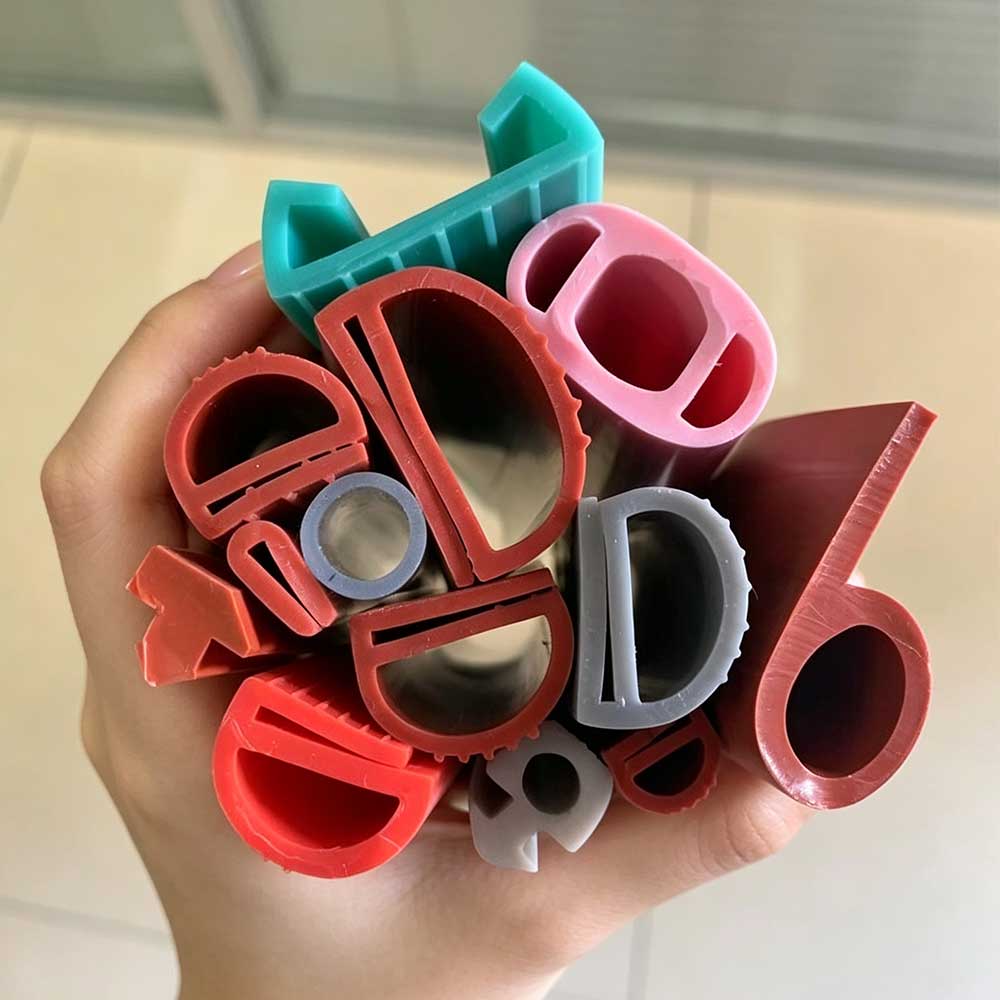
Silicone rubber extrusions can be much more complex than simple tubes, cords, or rectangular strips. A custom profile may combine hollow chambers, sealing lips, mounting channels, ribs, grooves, compression bulbs, and locating features within a single continuous cross-section.

The practical limit, however, is not determined by how complicated the CAD drawing looks. A profile must be able to pass through the extrusion die, maintain sufficiently uniform material flow, retain its shape before curing, accommodate die swell, and repeatedly meet the dimensions that matter to the application.

For this reason, the real question is not simply how complex silicone rubber extrusions can be, but whether the required geometry can be manufactured consistently.

How Complex Can Silicone Rubber Extrusions Be?

Complex silicone rubber extrusions can integrate several functions into one profile.

For example, one extrusion may contain:

  • A U-shaped mounting channel
  • One or more flexible sealing lips
  • A hollow compression bulb
  • Retaining ribs
  • Positioning grooves
  • Internal cavities or supporting webs

These features do not necessarily need to be produced as separate parts.

A door or enclosure seal, for example, can use one section of the profile to grip an edge while another section compresses against a mating surface. Multi-lip designs can create several sealing contact points within the same extrusion.

The main requirement is that the cross-sectional geometry remains continuous along the extrusion direction.

Complexity becomes difficult when the individual features interfere with stable material flow or cannot retain their intended geometry after leaving the die.

What Makes a Silicone Extrusion Design Complex?

The number of features alone does not determine whether a silicone extrusion is difficult to produce.

A profile containing several relatively thick, balanced sections may be easier to extrude than a simpler profile combining one heavy section with a very thin unsupported lip.

Important factors include:

  • Differences in wall thickness
  • Hollow or unsupported areas
  • Narrow grooves
  • Long flexible lips
  • Sharp internal corners
  • Asymmetric cross-sections
  • Tight dimensional tolerances
  • Large differences between adjacent features

During extrusion, silicone rubber is forced continuously through a die before being vulcanized. The die creates the cross-sectional shape, but the material must reach different regions of that opening at a sufficiently uniform flow rate.

WACKER specifically recommends avoiding sharp corners, dead areas, and sudden changes in flow direction and emphasizes the importance of uniform flow across the die cross-section.

This makes flow balance one of the most important considerations in complex silicone extrusion design.

Which Complex Features Can Be Extruded?

Multiple Grooves and Channels

Channels can provide mounting, gripping, alignment, or retention functions.

A single silicone extrusion can contain more than one groove, but very deep or narrow channels require greater attention because the surrounding walls must maintain their intended shape during extrusion and curing.

Sharp internal transitions can also make material flow less predictable, so radiused transitions are often preferable where the application allows them.

Hollow and Multi-Cavity Sections

Hollow sections are common in compression seals because they allow the profile to deform under relatively low force.

A silicone profile may contain one large bulb cavity, several smaller chambers, or internal ribs dividing the cavity.

The challenge is maintaining the geometry while the extrudate is still uncured. Thin walls around a large unsupported cavity may distort, while several small cavities increase the complexity of the die and material flow path.

Thin Sealing Lips

Thin lips are useful when a seal needs to make flexible contact with another surface.

However, a long thin lip has less support than the main body of the extrusion. If it is too flexible relative to the surrounding geometry, it can sag, bend, or vary in position before curing.

The relationship between the lip thickness, lip length, supporting base, compound hardness, and surrounding geometry must therefore be considered together.

Bulbs, Ribs, and Retaining Features

Bulb sections can provide compression while ribs and locking features can help position or retain the extrusion.

These features can often be combined successfully, but every additional change in cross-sectional mass affects the way silicone travels through the die.

The goal is not simply to fit as many functions as possible into one profile. It is to integrate them without creating unstable sections.

Why Uneven Wall Thickness Creates Problems

Wall thickness balance is one of the most important practical issues in complex silicone rubber extrusions.

Consider a profile with a thick mounting base connected immediately to a very thin sealing fin.

The thick and thin regions do not present the same flow conditions inside the die. If material distribution is not adequately balanced, the profile may leave the die with uneven dimensions, distortion, or an edge that does not remain straight.

WACKER’s extrusion guidance recommends keeping wall thickness similar across the die where possible and avoiding abrupt changes in flow direction.

This does not mean every wall must have exactly the same thickness.

Instead, designers should avoid extreme differences where they are not functionally required and use smoother transitions between heavy and thin sections.

In practice, modifying one transition can sometimes improve production stability more than simplifying the entire profile.

How Die Swell Affects Complex Silicone Profiles

A second major issue is die swell.

Silicone does not necessarily remain exactly the same size as the die opening after it exits the tool. The extrudate can expand as internal stresses are released.

According to WACKER, die swell is affected by factors including material viscosity, temperature, extrusion speed, and die dimensions.

This is especially important for complex profiles.

A finished profile containing a hollow bulb, mounting channel, thin lip, and thick base cannot be produced simply by machining the extrusion die as an exact 1:1 copy of the final drawing.

Tooling may need compensation so that the profile reaches the required dimensions after extrusion and curing.

This is one reason first-off samples and tooling corrections are a normal part of developing demanding custom silicone extrusions.

Why Hollow Sections and Thin Features Can Distort

The shape emerging from an extrusion die is not yet a rigid finished component.

The uncured extrusion still needs to travel through the curing process. During this stage, unsupported sections have to maintain their position sufficiently well to produce the intended final geometry.

A large hollow bulb with thin walls, for example, may flatten or lean if its structure is not adequately supported by its geometry.

Similarly, a long sealing flap can change position relative to the main body of the profile.

This is why a profile that looks perfectly acceptable in CAD may still need modifications before production.

Typical changes may include increasing local wall thickness, shortening an unsupported feature, strengthening its base, modifying a cavity, or altering the die design.

How Tolerances Affect Silicone Extrusion Complexity

Tolerance requirements can turn an otherwise manageable profile into a difficult extrusion.

Silicone is flexible, so it cannot always be dimensioned and measured in the same way as a machined metal component.

Cross-sectional tolerances for rubber extrusions are commonly specified using systems such as ISO 3302-1. The standard provides different tolerance classes, with tighter classes requiring greater manufacturing control.

Complex asymmetric profiles, thin sections, hollows, and soft compounds generally make dimensional consistency more challenging than simple symmetrical sections.

For that reason, one of the most useful DFM decisions is identifying critical dimensions.

If a mounting groove must fit over a 3 mm panel, that dimension may be critical.

If the overall width of a non-contact decorative section has little effect on assembly or sealing performance, applying the same tight tolerance may provide no practical benefit.

Tighter tolerances should therefore be concentrated on dimensions that control fit, compression, retention, or sealing.

silicone rubber extrusions

When Is a Silicone Extrusion Too Complex?

There is no universal number of cavities, lips, or grooves that makes a silicone extrusion impossible.

A design becomes problematic when the complete cross-section cannot be manufactured reliably.

Warning signs include:

  • Hollow sections that cannot retain their geometry
  • Thin features that deform excessively before curing
  • Extreme transitions between thick and thin areas
  • Material flow that cannot be adequately balanced
  • Very narrow or difficult internal features
  • Tolerance requirements that cannot be maintained consistently

Importantly, these conditions do not always mean extrusion must be abandoned.

Often, a relatively small DFM change can make the design much more practical.

How Complex Silicone Extrusion Designs Are Improved

A manufacturability review should focus first on the features that create the greatest production risk.

Common improvements include increasing the base thickness of a thin sealing lip, adding radii to abrupt transitions, simplifying unnecessary cavities, balancing neighboring wall sections, reducing very deep narrow grooves, or relaxing non-critical tolerances.

Tooling can then be developed to compensate for the actual material flow and die swell behavior of the profile.

For difficult profiles, sample extrusion and tool correction are therefore part of the engineering process rather than evidence that the original design has failed.

The objective is to preserve the function of the extrusion while making the cross-section stable enough for repeatable production.

Practical Examples of Complex Silicone Extrusion Profiles

Hollow Bulb With Mounting Channel

This design combines a rigidly located mounting section with a compressible hollow bulb.

The main engineering challenge is balancing the relatively heavy mounting section with the thinner walls around the bulb.

Multi-Lip Sealing Profile

Several thin lips can provide multiple contact points against a mating surface.

The critical issue is maintaining lip position and consistency while avoiding excessively weak unsupported sections.

Multi-Cavity Silicone Seal

Several hollow chambers can create different compression zones within one extrusion.

This requires careful control of internal wall thickness and cavity stability.

H-Shaped Joining Profile

An H-shaped extrusion can connect two panels or surfaces using channels on opposite sides.

Channel dimensions and central wall stability are usually more important than decorative external dimensions.

How to Evaluate Whether Your Profile Can Be Extruded

Before manufacturing a complex silicone extrusion, the supplier should ideally review the actual cross-sectional drawing rather than rely on a general description.

The drawing should clearly identify the dimensions that control installation and function.

Useful information includes the required silicone hardness, critical tolerances, mounting dimensions, compression requirements, operating environment, and any surfaces that must perform a sealing function.

This allows the manufacturer to determine whether the profile can be produced as drawn or whether a small DFM adjustment would improve repeatability.

Conclusion

Silicone rubber extrusions can combine multiple hollow chambers, mounting channels, grooves, sealing lips, ribs, compression sections, and retaining features in one continuous profile.

The true limit is not the visual complexity of the drawing.

It is whether silicone can flow through the die evenly enough, compensate for die swell, retain the required cross-sectional shape before and during curing, and consistently meet the dimensions that control the final application.

For complex silicone extrusion profiles, good DFM is therefore more important than simply reducing the number of features. A well-designed profile can remain highly functional and geometrically complex while still being practical for repeatable production.

EPDM Rubber Extrusion

EPDM Rubber Extrusion: How It Works and Where It Is Used

D Type EPDM Sponge Strip Seal (4)

EPDM rubber extrusion is a manufacturing process used to produce continuous rubber profiles for sealing, cushioning, insulation, weather protection, and edge protection. Because EPDM offers strong resistance to sunlight, ozone, water, and changing temperatures, it is widely used for both indoor and outdoor applications.

The extrusion process allows manufacturers to create profiles with consistent cross-sectional shapes, including channels, bulb seals, tubing, angle profiles, weatherstrips, and custom sections. Understanding how EPDM rubber extrusion works and where it is used can help engineers and buyers determine whether it is suitable for a specific sealing or protection requirement.

How Does EPDM Rubber Extrusion Work?

The EPDM extrusion process consists of several stages that transform raw rubber compounds into finished profiles with controlled dimensions and performance characteristics.

1. EPDM Compound Preparation

Production begins with the preparation of the rubber compound.

EPDM polymer is blended with selected additives such as fillers, curing agents, pigments, processing aids, and reinforcing materials. The formulation depends on the required properties of the final extrusion.

Manufacturers may adjust the compound to achieve different levels of:

  • Hardness
  • Flexibility
  • Compression resistance
  • Weather resistance
  • Temperature performance
  • Tensile strength
  • Color

For example, a soft compressible seal may require a different EPDM formulation from a solid rubber edge profile used for mechanical protection.

2. Feeding and Conditioning the Rubber

The prepared EPDM compound is fed into an extrusion machine.

Inside the extruder, a rotating screw moves the rubber through the barrel while applying pressure and controlled heat. This conditions the material and creates a consistent rubber flow before it reaches the extrusion die.

Maintaining stable temperature, pressure, and feed speed is important because variations can affect the dimensions and surface quality of the finished EPDM rubber extrusion.

3. Shaping Through the Extrusion Die

The conditioned rubber is then forced through a precision die.

The opening in the die determines the cross-sectional shape of the profile. This is what makes rubber extrusion particularly useful for producing continuous seals with complex geometries.

Typical EPDM extrusion profiles include:

  • D profiles
  • P profiles
  • U channels
  • L-shaped profiles
  • Rectangular strips
  • Hollow sections
  • Bulb seals
  • Tubular profiles
  • Custom cross sections

Custom dies can also be manufactured according to drawings, samples, installation grooves, or sealing requirements.

Because rubber can expand slightly after leaving the die, die design and process control must account for the material’s behavior during extrusion.

4. Vulcanization and Curing

The extruded EPDM profile is still relatively soft and uncured after leaving the die. It must therefore pass through a vulcanization process.

Curing creates cross-links within the rubber structure, helping the material develop its final elasticity, strength, dimensional stability, and resistance to permanent deformation.

Continuous curing methods may use hot air, microwave systems, salt baths, or other controlled heating processes depending on the production equipment and profile design.

Correct vulcanization is essential because insufficient or excessive curing can affect sealing performance and service life.

5. Cooling, Cutting, and Finishing

After curing, the EPDM rubber extrusion is cooled and stabilized.

The finished profile may then be supplied in continuous coils or cut to specific lengths. Additional finishing operations can also be performed according to the application.

These may include:

  • Adhesive backing
  • Drilling or punching
  • Splicing
  • Joining into frames
  • Surface treatment
  • Cutting to fixed lengths
  • Packaging in coils

Dimensions, surface condition, hardness, and other specifications are typically inspected before shipment.

Epdm Rubber Square Cord Strip extrusion (3)

Solid vs Sponge EPDM Rubber Extrusion

EPDM extrusion is commonly available in both solid and sponge constructions.

Solid EPDM Extrusion

Solid EPDM has a dense rubber structure. It generally provides higher mechanical strength and better resistance to abrasion and physical impact.

Typical uses include:

  • Edge protection
  • Structural seals
  • U channels
  • Rubber angles
  • Glazing profiles
  • Industrial equipment seals

Solid EPDM is commonly selected where the profile must maintain its shape while still providing flexibility.

Sponge EPDM Extrusion

Sponge EPDM contains a cellular structure that makes the material softer and more compressible.

When pressure is applied, the profile compresses easily and conforms to uneven surfaces. This makes sponge EPDM especially useful for sealing gaps.

Typical applications include:

  • Cabinet seals
  • Door seals
  • Enclosure gaskets
  • Weatherstripping
  • HVAC equipment
  • Access panels

Some products also combine solid and sponge EPDM in a single co-extruded profile to provide both structural strength and compression sealing.

Where Is EPDM Rubber Extrusion Used?

The combination of flexibility, weather resistance, and sealing performance allows EPDM extrusions to be used across many industries.

Automotive Sealing

EPDM rubber extrusions are widely used in automotive weather-sealing systems.

Common locations include vehicle doors, windows, trunks, hoods, and body panels. The profiles help reduce the entry of water, dust, air, and exterior noise.

EPDM is particularly suitable for vehicle exteriors because it can withstand prolonged exposure to sunlight, ozone, rain, and changing temperatures.

Windows and Doors

EPDM extrusion profiles are frequently installed around windows and doors to create a flexible barrier between moving or fixed components.

Applications include:

  • Window frame seals
  • Door perimeter seals
  • Glazing seals
  • Weatherstripping
  • Gap seals

The rubber compresses when the window or door closes, helping reduce air leakage, water penetration, and drafts.

Construction and Building Systems

EPDM’s outdoor durability makes it suitable for many construction sealing applications.

Extruded profiles can be used in:

  • Curtain wall systems
  • Façades
  • Architectural glazing
  • Expansion joints
  • Roofing systems
  • Exterior building joints

Resistance to UV radiation and ozone is particularly important in building applications where rubber profiles may remain exposed to outdoor conditions for extended periods.

Industrial Equipment

Industrial machinery and equipment often require rubber seals to protect internal components from environmental exposure.

EPDM extrusions are commonly installed on:

  • Machinery doors
  • Equipment housings
  • Electrical cabinets
  • Control enclosures
  • Access panels
  • Protective edges

Depending on the profile design, they can help prevent the entry of moisture and dust while also reducing vibration and impact.

HVAC and Appliance Applications

EPDM rubber profiles are also used in heating, ventilation, air-conditioning, refrigeration, and appliance systems.

Typical functions include sealing access panels, reducing air leakage, cushioning components, and minimizing vibration between contacting surfaces.

Sponge EPDM is especially useful in these applications because it can compress around irregular gaps and provide a reliable seal with relatively low closing force.

Why Is EPDM Commonly Used for Extruded Seals?

EPDM is particularly suitable for applications involving long-term exposure to outdoor environments.

Key properties include:

  • Excellent ozone resistance
  • Strong UV resistance
  • Good weather resistance
  • Good water and steam resistance
  • Flexible sealing performance
  • Good resistance to temperature changes
  • Availability in different hardness levels
  • Suitability for complex continuous profiles

These properties explain why EPDM rubber extrusion is commonly selected for automotive weatherstrips, building seals, industrial enclosures, and outdoor equipment.

However, EPDM is generally not the preferred material for continuous exposure to petroleum oils, gasoline, or many hydrocarbon fuels. For those environments, other elastomers such as nitrile rubber may be more appropriate.

Custom EPDM Rubber Extrusion Options

EPDM profiles can be customized to meet different installation and performance requirements.

Common customization options include:

  • Custom profile shapes
  • Solid or sponge construction
  • Different Shore A hardness levels
  • Profile dimensions
  • Colors
  • Cut lengths
  • Continuous coils
  • Adhesive backing
  • Co-extruded designs
  • Custom tolerances

When designing a custom EPDM rubber extrusion, factors such as sealing gap, compression level, installation groove, operating temperature, environmental exposure, and mechanical load should all be considered.

Selecting the correct profile geometry is just as important as choosing the right rubber compound because both directly affect sealing performance.

Conclusion

EPDM rubber extrusion converts specially formulated EPDM compounds into continuous profiles through material preparation, extrusion, die shaping, vulcanization, cooling, and finishing.

The process can produce a wide variety of solid and sponge profiles for automotive systems, windows and doors, construction, industrial machinery, HVAC equipment, and appliances.

Because EPDM combines flexibility with strong resistance to weather, UV radiation, ozone, and moisture, it is particularly well suited to long-term sealing applications. For projects requiring continuous, durable, and customizable rubber profiles, EPDM extrusion remains one of the most widely used solutions.

Rubber Extrusion Tolerances: Standards and Key Factors

Rubber Extrusion Tolerances: Standards and Key Factors

Extruded rubber D shape fender for marine (4)

Rubber extrusion tolerances describe the acceptable range of variation in the size and shape of extruded rubber parts. These tolerances matter because even small changes can affect sealing, product fit, and overall quality. Tolerance requirements change based on the rubber material, the profile design, the extrusion process, and industry standards.


Definition of Rubber Extrusion Tolerances

Rubber extrusion tolerances describe the limits for how much the size and shape of an extruded rubber part can vary from the intended design. These tolerances help manufacturers control quality and ensure that parts fit and perform as expected. When a rubber profile is made through extrusion, the material passes through a die to create a specific shape. The process can cause slight changes in dimensions. Tolerances set the acceptable range for these changes. If the variation is too large, the part may not seal properly or fit into its intended space.

Common Types of Rubber Extrusion Tolerances

Manufacturers use different types of extruded rubber tolerances to measure and control the quality of parts. Some common types include:

  • Dimensional tolerances: These measure the width, height, and thickness of the profile.
  • Shape tolerances: These check if the profile matches the intended shape.
  • Length tolerances: These control the overall length of the extruded part.
  • Angle tolerances: These ensure corners and bends are accurate.

Each type helps guarantee that the extruded rubber tolerances meet the needs of the application.

Common Measurements Used for Rubber Extrusion Tolerances

Manufacturers use several measurements to check tolerances during extrusion. The most common measurements include:

Measurement Type Description Example Unit
Width Distance across the profile Millimeters
Height Vertical size of the profile Millimeters
Thickness Depth of the profile Millimeters
Length End-to-end measurement Centimeters

These measurements help verify that extruded rubber tolerances stay within the specified limits. Accurate measurements reduce waste and improve product quality.

Why Rubber Extrusion Tolerances Matter

Ensure Proper Sealing Performance

Rubber manufacturing often requires parts that create a tight seal. If extruded rubber tolerances are not controlled, gaps or leaks can occur. This is especially important in industries like automotive and construction, where seals must keep out water, air, or dust. Tolerances help ensure that each rubber profile fits its mating surface. Even a small change in size can cause a seal to fail. Reliable extrusion helps maintain the correct dimensions, so the finished product performs as expected.

Improve Product Fit and Assembly

Good fit is essential in rubber manufacturing. When tolerances are too loose, parts may not fit together well. This can slow down assembly lines and increase the risk of defects. On the other hand, tight extruded rubber tolerances help parts snap or slide into place with less effort. This reduces the need for adjustments during assembly. Consistent extrusion also means that every part is nearly identical, which improves quality and speeds up production.

  • Proper fit reduces the chance of rework.
  • Consistent parts make automated assembly easier.
  • Fewer mistakes lead to higher customer satisfaction.

Reduce Production Costs and Material Waste

Rubber manufacturing costs can rise quickly if tolerances are not managed. When parts fall outside the acceptable range, they often become scrap. This wastes both material and labor. By controlling extruded rubber tolerances, manufacturers can reduce the number of rejected parts. Efficient extrusion also means less time spent on quality checks and fewer delays. Over time, better tolerances lead to lower costs and less waste.

Rubber Extrusion Tolerance Standards

RMA Rubber Extrusion Tolerance Classes

The Rubber Manufacturers Association (RMA) sets important standards for extruded rubber tolerances. These standards help manufacturers decide how much variation is allowed in the size and shape of rubber parts. RMA divides tolerances into different classes. Each class shows how tight or loose the measurements can be. For example, Class 1 has the tightest tolerances and is used for parts that need high precision. Class 4 allows more variation and is used for less critical parts. Manufacturers use these classes to choose the right level of control for each application.

ISO 3302-1 Rubber Extrusion Tolerance Standards

ISO 3302-1 is a global standard for rubber extrusion tolerances. This standard gives clear rules for measuring and checking extruded rubber parts. It divides tolerances into four grades: M1, M2, M3, and M4. M1 is the most precise, while M4 is the most flexible. Many industries use ISO 3302-1 to make sure their products meet international quality levels. Using these standards helps companies compare parts from different suppliers.

How to Read a Rubber Extrusion Tolerance Chart

Tolerance tables are tools that show the allowed variation for each measurement. These tables list the size range and the matching tolerance for each class or grade. To use a tolerance chart, first find the measurement you want to check, such as width or thickness. Next, look up the size range in the table. The chart will show the maximum and minimum values allowed. Tolerance tables make it easy to see if a part meets the required standards. They help engineers and quality teams check extruded rubber tolerances quickly and accurately.

Factors Affecting Rubber Extrusion Tolerances


Rubber Material Properties

The type of rubber materials used in extrusion plays a big role in how well parts hold their shape. Some rubbers are soft and flexible, while others are firm. Softer materials can stretch or shrink more during the process. This makes it harder to keep tight tolerances. Harder rubbers usually hold their dimensions better. The way rubber reacts to heat and pressure also affects the final size of the part.

Extrusion Die Design and Tooling Accuracy

The die shapes the rubber as it moves through the extrusion machine. If the die is not made with high accuracy, the finished part may not match the design. Small errors in the die can lead to big changes in the profile. Tooling that wears out or gets damaged can also cause problems with tolerances. Regular checks and maintenance help keep the die in good condition.

Manufacturing Process Control

Controlling the extrusion process is key to making parts with the right tolerances. Operators must watch the speed, temperature, and pressure during production. Even small changes in these settings can affect the size and shape of the rubber. Using sensors and automatic controls helps keep everything steady. Good process control means fewer mistakes and more consistent parts.

Rubber Profile Design and Complexity

Simple shapes are easier to make with tight tolerances. Complex profiles with many curves or thin sections can change shape more during extrusion. Designers must think about how the rubber will flow and cool. Sometimes, they need to adjust the design to make sure the part meets the required tolerances.

Environmental and Storage Conditions

Temperature and humidity in the factory can change how rubber behaves. If the air is too hot or too cold, the material might expand or shrink. Storing rubber parts in the wrong conditions can also change their size. Keeping the environment stable helps protect the quality of rubber extrusion tolerances.

How to Achieve Tight Rubber Extrusion Tolerances

Optimize Rubber Profile Design

Design plays a key role in achieving tight rubber extrusion tolerances. Simple shapes are easier to control during manufacturing. Complex profiles with thin walls or sharp corners can lead to more variation. Designers should avoid sudden changes in thickness and keep wall sections uniform. Rounded corners help the rubber flow smoothly through the die. Early collaboration between engineers and manufacturers can prevent design issues that affect tolerances.

Select Suitable Rubber Materials

Material choice affects how well a part holds its shape. Some rubber compounds shrink or expand more than others during extrusion and curing. Harder rubbers usually provide better dimensional stability. When selecting a material, consider the application’s temperature range, chemical exposure, and flexibility needs. Testing different compounds can help find the best fit for tight tolerances.

Use Precision Tooling and Process Control

High-quality tooling ensures the die produces consistent shapes. Precision-made dies reduce errors in the final profile. Regular maintenance keeps tools in top condition. Automated controls for temperature, pressure, and speed help maintain steady production. Sensors can detect small changes and alert operators to problems. Consistent process control leads to fewer defects and better rubber extrusion tolerances.

  • Calibrate equipment regularly
  • Monitor production variables closely
  • Replace worn tooling promptly

Perform Quality Inspection and Testing

Inspection is essential for maintaining tight tolerances. Use calipers, micrometers, and optical scanners to measure dimensions. Compare results to tolerance charts from RMA or ISO 3302-1 standards. Random sampling during production helps catch issues early. Documenting inspection results supports quality assurance and traceability.

Epdm Rubber Square Cord Strip extrusion (5)

Common Rubber Extrusion Tolerance Problems and Solutions

Profile Dimension Variation

Profile dimension variation is a frequent issue in rubber extrusion. This problem occurs when the width, height, or thickness of the extruded part does not match the intended design. Variations can result from inconsistent material flow, changes in temperature, or worn tooling. These errors may cause parts to fail quality checks or not fit properly during assembly.

Solutions:

  • Monitor extrusion speed and temperature closely.
  • Use precision tooling and maintain it regularly.
  • Inspect profiles during production with calipers or micrometers.

Rubber Shrinkage After Curing

Rubber shrinkage after curing affects the final size of extruded parts. During curing, rubber contracts as it cools and sets. This shrinkage can lead to parts that are smaller than specified, impacting rubber extrusion tolerances and causing fit issues.

Solutions:

  • Select rubber compounds with low shrinkage rates.
  • Adjust die dimensions to compensate for expected shrinkage.
  • Test samples before full production to verify final dimensions.
Shrinkage Factor Typical Range (%)
EPDM 1.0 – 2.5
Silicone 1.5 – 3.0
NBR 1.0 – 2.0

Uneven Profile Shape

Uneven profile shape can occur when the rubber does not flow evenly through the die. This issue may cause bulges, thin spots, or irregular corners. Uneven shapes affect sealing performance and product fit.

Solutions:

  • Design dies with smooth transitions and rounded corners.

  • Maintain consistent pressure and temperature during extrusion.

  • Inspect profiles visually and with measurement tools.

  • Consistent process control reduces shape variation.

  • Collaboration between designers and manufacturers improves profile accuracy.

How to Specify Rubber Extrusion Tolerances When Ordering

When ordering custom rubber extrusions, clear communication helps ensure the final product meets your needs. Specifying rubber extrusion tolerances correctly can prevent costly mistakes and delays. Here are three important steps to follow:

Provide Accurate Technical Drawings

Technical drawings give manufacturers the details they need to produce your part. These drawings should include all key dimensions, such as width, height, thickness, and length. Use clear labels and indicate which measurements are most important for your application. Adding cross-sectional views can help show the shape of the rubber profile. If possible, include a tolerance chart or table on the drawing.

Define Critical Dimensions and Performance Requirements

Not every dimension on a rubber extrusion is equally important. Some areas may need tighter tolerances to ensure proper sealing or fit. Identify these critical dimensions on your drawings. You can use symbols or notes to highlight them. Also, describe any performance requirements, such as resistance to temperature, chemicals, or pressure. This information helps the manufacturer select the right material and process.

  • Mark critical dimensions with a special symbol (such as a circle or triangle).
  • List performance requirements in a separate section on your order form.

Discuss Tolerance Requirements with Manufacturers

Open communication with your manufacturer is essential. Share your drawings and explain which tolerances are most important. Ask about the standard tolerance classes they use, such as those from RMA or ISO 3302-1. Manufacturers can suggest adjustments if your requested tolerances are difficult to achieve or may increase costs. Working together helps balance quality, performance, and budget.

Choose a Reliable Rubber Extrusion Manufacturer

Choosing the right manufacturer is a key step in achieving consistent rubber extrusion tolerances. A reliable partner helps ensure that every part meets your specifications and performs as expected. Not all manufacturers offer the same level of quality or expertise. Here are important factors to consider:

  • Experience with Rubber Extrusion
    Look for companies with a strong track record in producing extruded rubber profiles. Experienced teams understand how to control tolerances and solve common production problems.

  • Quality Control Systems
    Reliable manufacturers use strict inspection methods. They check dimensions at every stage and follow standards like ISO 3302-1 or Rubber Manufacturers Association guidelines.

  • Advanced Equipment and Technology
    Modern extrusion lines and precision tooling help maintain tight tolerances. Ask if the manufacturer uses automated controls and up-to-date measurement tools.

  • Material Selection Support
    The best partners help you choose the right rubber compound for your application. They explain how material properties affect extrusion tolerances and final part performance.

  • Clear Communication
    Good manufacturers listen to your needs. They review drawings, discuss critical dimensions, and suggest improvements for better results.

Factor Why It Matters
Experience Reduces risk of errors
Quality Control Ensures consistent tolerances
Technology Improves accuracy and repeatability
Material Support Matches material to application
Communication Prevents misunderstandings

Reliable rubber extrusion manufacturer protects your investment. It leads to fewer defects, less waste, and better performance in your finished products. Rubber extrusion tolerances depend on both design and production skill. Work with a trusted partner to achieve the best results.

How to Choose Rubber Hardness for Extruded Rubber Seals

How to Choose Rubber Hardness for Extruded Rubber Seals

rubber gate seal

Choosing the correct rubber hardness is essential to the performance of extruded rubber seals. If the material is too soft, the seal may deform excessively, wear quickly, or fail to remain securely in place. If it is too hard, it may not compress enough to fill gaps or irregular surfaces.

For most extruded rubber seals, hardness is measured using the Shore A scale. The appropriate value depends on the seal design, compression requirements, operating environment, material type, and expected mechanical stress. Understanding these factors helps manufacturers and buyers select a seal that balances flexibility, durability, and long-term sealing performance.

Why Rubber Hardness Matters for Extruded Seals

Rubber hardness describes how resistant a material is to indentation. It affects how easily an extruded profile bends, compresses, stretches, and returns to its original shape.

Hardness does not indicate overall rubber quality. A harder rubber is not automatically better than a softer one. The correct hardness is the value that matches the application and profile design.

Flexibility and Sealing Performance

Soft rubber conforms more easily to uneven surfaces. It can fill small gaps, accommodate installation tolerances, and create contact across irregular mating surfaces.

This makes softer compounds suitable for applications such as:

  • Door and window seals
  • Glazing profiles
  • Weatherstripping
  • Cabinet seals
  • Low-pressure enclosures

However, very soft rubber may not provide enough structural support for demanding installations.

Harder rubber offers greater resistance to deformation. It is often selected when the seal must maintain its profile under pressure, mechanical loading, or repeated movement.

Compression and Surface Contact

An effective compression seal must generate enough contact pressure to block water, dust, air, noise, or other contaminants.

Soft rubber requires less force to compress, making it useful for lightweight doors, thin panels, and applications with limited closing pressure. Harder rubber requires greater compression force but can provide a firmer sealing surface.

The ideal hardness should allow the seal to compress within the designed range without becoming permanently flattened.

Durability and Wear Resistance

Harder rubber generally performs better under abrasion, friction, and mechanical impact. It may also resist cutting, tearing, and extrusion under pressure more effectively.

Softer rubber is usually more flexible but may wear faster when exposed to sliding contact or rough surfaces. Therefore, applications involving frequent movement often require a balance between flexibility and abrasion resistance.

Understanding Rubber Hardness and Durometer Scales

Rubber hardness is commonly measured with a durometer. The device presses an indenter into the rubber surface and displays a numerical hardness value.

Higher readings indicate harder rubber, while lower readings indicate softer rubber.

What Is Rubber Durometer?

Durometer can refer to both the testing instrument and the hardness measurement itself. A typical reading may be expressed as 60 Shore A, 70 Shore A, or another value depending on the selected scale.

The test should be performed on a suitable sample thickness and under controlled conditions. Thin or curved extruded profiles can produce inconsistent readings, so manufacturers may test a standard molded sample made from the same compound.

Shore A vs. Shore D

Shore A is the most widely used scale for flexible rubber materials. It covers soft sealing compounds through relatively firm rubber products.

Shore D is intended for harder materials, including rigid rubber, plastics, and thermoplastic products. Most conventional EPDM, silicone, neoprene, and NBR extruded seals are specified in Shore A rather than Shore D.

For general rubber sealing products, Shore A is usually the most relevant scale.

IRHD Testing

IRHD stands for International Rubber Hardness Degrees. It is another method used to evaluate rubber hardness.

IRHD testing is often used in technical laboratories and for smaller rubber components. Although IRHD and Shore A values may appear similar within certain ranges, they are not always directly interchangeable.

Buyers should confirm which testing method is stated on drawings, specifications, and quality documents.

Common Shore A Hardness Ranges for Extruded Seals

Extruded rubber seals are available in many hardness levels. However, several ranges are commonly used across automotive, construction, glazing, industrial, and equipment applications.

Hardness Range General Characteristics Typical Applications
30–40 Shore A Very soft and highly flexible Delicate sealing, low closing force, irregular surfaces
50–60 Shore A Flexible with moderate strength Weatherstripping, doors, windows, general sealing
65–70 Shore A Firm and durable Industrial seals, machinery profiles, automotive components
75–80 Shore A Hard and wear resistant Guide strips, protective profiles, high-load applications

These ranges provide general guidance only. The final selection should consider the complete profile structure and operating conditions.

30–40 Shore A: Soft and Flexible Seals

Rubber in this range compresses easily and conforms well to uneven surfaces. It can provide effective sealing where only limited force is available.

Typical applications include lightweight enclosure seals, soft glazing strips, flexible silicone profiles, and seals for delicate surfaces.

The main disadvantages are lower structural stability and reduced resistance to abrasion or mechanical loading.

50–60 Shore A: General-Purpose Seals

This is one of the most widely used hardness ranges for extruded rubber seals. It offers a practical balance between flexibility, compression, recovery, and durability.

Profiles in this range are commonly used for:

  • Automotive weatherstripping
  • EPDM door and window seals
  • Construction joints
  • Industrial enclosure seals
  • Glazing profiles
  • Equipment covers

A hardness of approximately 60 Shore A is often suitable for general-purpose sealing, but it should not be treated as a universal standard.

65–70 Shore A: Firm and Durable Seals

Rubber in this range provides improved resistance to deformation, abrasion, and mechanical stress. It is useful when the extrusion must maintain its shape under pressure or repeated movement.

Typical applications include machinery seals, industrial edge protection, automotive profiles, equipment components, and firmer retaining strips.

More closing or installation force may be required compared with softer grades.

75–80 Shore A: Hard and Wear-Resistant Profiles

These materials are relatively firm and may feel closer to flexible plastic than soft rubber.

They are suitable for guide rails, support strips, heavy-duty bumpers, protective profiles, and components exposed to substantial friction or load. However, they may not conform well to wide tolerances or irregular surfaces.

Key Factors When Choosing Rubber Hardness

Selecting hardness based only on a standard value can lead to poor sealing performance. The complete application must be evaluated.

Application and Sealing Pressure

Determine what the seal must block and how much pressure it will experience.

Low-pressure dust and air seals may use softer compounds. Water-resistant or mechanically loaded seals may require greater firmness and stability.

For higher-pressure applications, hardness must be considered together with profile geometry, contact area, groove design, and reinforcement.

Compression and Gap Size

The available gap and expected compression directly influence hardness selection.

A softer rubber is often more forgiving when gap dimensions vary. A harder rubber may work well when the installation dimensions are controlled precisely.

The seal should not be compressed excessively. Over-compression can increase closing force, accelerate compression set, and reduce service life.

The ideal compression percentage depends on the rubber material and profile shape. Sponge rubber and solid rubber also behave differently and should not be evaluated using the same assumptions.

Surface Shape and Fit

Flat, smooth surfaces are easier to seal than rough, curved, or uneven surfaces.

Softer rubber can adapt to irregular contact areas, while harder rubber may leave small leakage paths if the surface is not uniform.

Profile design is equally important. Hollow bulb seals, lip seals, D-shaped profiles, U-channels, and solid strips distribute force in different ways. A hollow profile made from firmer rubber may compress more easily than a solid profile made from a softer compound.

Temperature and Weather Exposure

Operating temperature can change rubber hardness.

Cold conditions generally make rubber firmer and less flexible. High temperatures may soften the material temporarily and accelerate aging over time.

Outdoor seals must also withstand ozone, UV exposure, rain, and changing weather conditions. EPDM is commonly selected for outdoor applications because of its weather resistance, while silicone remains flexible across a wide temperature range.

The hardness value should be evaluated under actual service conditions rather than only at room temperature.

Chemical and Oil Exposure

Chemical exposure affects both material selection and long-term hardness.

For example, NBR is frequently used where resistance to oil and fuel is required. EPDM is generally suitable for water, steam, weather, and many diluted chemicals, but it is not normally recommended for petroleum oils.

If an incompatible rubber is exposed to a chemical, it may swell, harden, soften, crack, or lose strength. Selecting the correct hardness cannot compensate for choosing the wrong rubber material.

Abrasion and Mechanical Wear

Seals exposed to sliding contact, repeated movement, vibration, or rough surfaces need sufficient wear resistance.

A harder grade may improve abrasion resistance, but excessive hardness can reduce flexibility and sealing contact. In these cases, manufacturers may adjust the rubber formulation to improve tear strength and wear resistance without increasing hardness too much.

china rubber profile manufacturer

Recommended Hardness for Different Seal Applications

There is no single hardness suitable for every industry. The following ranges are common starting points.

Door and Window Seals

EPDM door and window seals are frequently produced between 50 and 70 Shore A.

Softer grades are suitable for easy compression and uneven gaps. Firmer grades may be selected for retaining profiles, frame inserts, or sections that need greater dimensional stability.

Automotive Rubber Seals

Automotive weatherstripping often combines different materials or hardness levels within one profile.

A dense rubber section may provide secure mounting, while a softer sponge section creates the sealing surface. This co-extruded design balances installation strength with low compression force.

Solid automotive rubber profiles are commonly found around 60–70 Shore A, although the exact requirement varies significantly by component.

Industrial Equipment Seals

Industrial enclosure and machinery seals often use hardness values between 55 and 75 Shore A.

Applications involving vibration, frequent opening, abrasion, or mechanical pressure may require firmer compounds. Sensitive panels or low-force access doors may perform better with softer materials.

Glazing and Construction Seals

Glazing gaskets must hold glass securely while absorbing movement and avoiding excessive stress.

Many solid EPDM glazing profiles use medium hardness ranges, often around 60–70 Shore A. The selected value must support the glass, maintain weather resistance, and permit practical installation.

High-Wear Applications

Protective strips, guide profiles, and seals exposed to friction may require 70 Shore A or above.

However, harder materials should only be used when the profile can still maintain sufficient contact with the mating surface.

How Rubber Material Affects Hardness Selection

Different rubber materials with the same Shore A reading may not perform identically.

EPDM Rubber

EPDM provides excellent resistance to weather, ozone, UV radiation, and moisture. It is widely used for outdoor sealing, construction, glazing, and automotive weatherstripping.

Typical hardness values range from approximately 40 to 80 Shore A.

Silicone Rubber

Silicone remains flexible at both high and low temperatures. It is suitable for food equipment, lighting, electronics, ovens, and temperature-sensitive applications.

Silicone may feel softer and more elastic than some other materials at the same nominal hardness.

Neoprene Rubber

Neoprene offers balanced resistance to weathering, moderate oils, flame, and mechanical stress. It is used in industrial, marine, construction, and equipment applications.

Common extruded grades are available across medium hardness ranges.

NBR Rubber

NBR is mainly selected for oil, grease, and fuel resistance. It is frequently used in machinery, engines, hydraulic equipment, and industrial systems.

NBR extrusions may use medium to firm hardness levels depending on pressure and wear requirements.

How to Test and Confirm the Right Hardness

Technical data can help narrow the selection, but physical testing is the most reliable way to confirm performance.

Begin by reviewing the gap size, compression force, temperature, chemical exposure, movement, and expected service life. Select an initial hardness range based on these conditions.

Next, request extrusion samples made with the intended material and profile dimensions. Test the samples in the actual groove, frame, panel, or assembly.

Evaluate:

  • Installation difficulty
  • Closing or clamping force
  • Contact across the full sealing surface
  • Recovery after compression
  • Leakage resistance
  • Movement under load
  • Wear after repeated operation

For custom extruded rubber seals, prototype testing should be completed before bulk production. Even a small change in wall thickness, hollow chamber size, or lip angle can affect compression more than a minor change in Shore A hardness.

Frequently Asked Questions

What is the most common hardness for rubber seals?

Many general-purpose solid rubber seals use approximately 60–70 Shore A. However, softer or harder grades may be required depending on compression force, profile design, and operating conditions.

Is 60 Shore A hard or soft?

A hardness of 60 Shore A is considered medium hardness for rubber. It provides a useful balance of flexibility, strength, and durability for many sealing applications.

Does harder rubber provide better sealing?

Not necessarily. Harder rubber offers greater resistance to deformation, but it may not conform well to irregular surfaces. Effective sealing depends on achieving the right contact pressure and compression.

Can rubber hardness change over time?

Yes. Heat, cold, ozone, UV exposure, chemicals, and aging can cause rubber to harden or soften. A compatible compound should be selected for the intended environment.

How much hardness tolerance is acceptable?

Manufacturers commonly specify a hardness tolerance around the target value, such as 60 ±5 Shore A. The acceptable tolerance depends on the application, material formulation, and quality requirements.

Conclusion

Choosing rubber hardness for extruded rubber seals requires more than selecting a standard Shore A value. Buyers should consider compression, surface fit, operating temperature, chemical exposure, wear, profile geometry, and rubber material.

Soft compounds provide easier compression and better conformity, while harder compounds offer improved stability and wear resistance. For many general sealing applications, 50–70 Shore A provides a useful starting range. However, sample testing under actual operating conditions remains the best way to confirm the final material and hardness before bulk production.

Rubber Seal Profile Shapes: D, U, T, E and P Shapes Explained

Rubber Seal Profile Shapes: D, U, T, E and P Shapes Explained

A rubber seal profile creates a barrier that blocks air, water, or dust from passing through gaps. Many industries rely on rubber seal profile designs to improve safety and efficiency. The rubber sealing industry uses rubber seal profile solutions to make products like gaskets for machines and vehicles.

  • A rubber seal profile comes in different shapes to fit specific needs.
  • Each rubber seal profile serves a unique function in doors, windows, and other enclosures.
  • A rubber seal manufacturer often provides high-quality custom rubber extrusions for specialized projects.


D Shape Fender EPDM Rubber

D Shape Rubber Seal Profile

Design Features

The D shape rubber seal profile has a half-moon bulb on top and a flat bottom. This design allows the rubber extrusion profiles to compress easily when installed. Manufacturers often use sponge rubber for these extrusion profiles because it provides flexibility and softness. The bulb shape creates a tight seal against surfaces, blocking air and moisture. The flat base helps the extrusion stay in place during installation. These profiles can be made in different sizes to fit various gaps.

Rubber extrusion profiles with a D shape offer excellent weather resistance. The material resists UV rays, ozone, and temperature changes. This durability makes the extrusion suitable for both indoor and outdoor applications. The D shape also helps absorb vibrations, which protects equipment and structures. Many extruded rubber seals use this profile for its reliable sealing performance.

Common Uses

D shape rubber extrusion profiles are popular in doors, windows, and enclosures. Homeowners use these profiles to seal gaps around doors and windows, improving energy efficiency. Industrial settings rely on rubber extrusion profiles to protect machines from dust and moisture. The D shape is also common in automotive applications, where it seals car doors and trunks.

Extruded rubber seals with a D profile can be found in electrical enclosures. These profiles prevent water and debris from entering sensitive equipment. The weather resistance and durability of rubber extrusion profiles make them ideal for harsh environments. Many industries choose D shape profiles for their versatility and long-lasting performance.

U Shape Rubber Extrusion Profiles

Structure and Function

U shape rubber extrusion profiles have a channel that looks like the letter “U.” This design allows the extrusion to slide over edges and create a secure fit. The channel grips the edge and holds the rubber in place. These profiles use flexible rubber materials that can bend without breaking. The extrusion provides a cushion that absorbs impact and reduces damage. Many industries use these profiles for edge protection on metal, glass, or plastic surfaces.

Rubber extrusion profiles with a U shape offer strong protection against wear and tear. The rubber material resists chemicals, sunlight, and temperature changes. The extrusion also helps prevent sharp edges from causing injuries. U shape profiles come in different sizes to fit various thicknesses. The rubber can be soft or firm, depending on the level of protection needed. Some profiles include extra features like gripping fins or adhesive strips for better hold.

Applications

U shape rubber extrusion profiles are common in automotive manufacturing. Car doors and windows use these profiles for edge protection and sealing. The extrusion keeps out dust, water, and wind. Industrial machines also use U shape profiles to protect workers from sharp edges. The rubber extrusion profiles reduce the risk of cuts and scrapes.

Many construction projects use these profiles for window frames and panels. The extrusion provides a neat finish and extra protection. U shape rubber extrusion profiles are also found in cabinets, lockers, and equipment enclosures. The rubber helps prevent damage during transport and use. These profiles are a simple way to add long-lasting protection to many surfaces.

A summary of typical uses for U shape rubber extrusion profiles:

  • Automotive door and window edge protection
  • Industrial machine guards
  • Construction panel edges
  • Cabinet and locker doors
  • Equipment enclosures

U shape rubber extrusion profiles offer reliable protection in many settings. The combination of rubber material and extrusion design makes these profiles a top choice for edge protection.

T Shape Rubber Seal Profile

Profile Design

The T shape rubber seal profile features a cross-section that resembles the letter “T.” This design allows the rubber extrusion profiles to fit into grooves or slots with ease. The vertical stem of the extrusion slides into a channel, while the horizontal top forms a barrier for sealing. Many manufacturers use rubber materials that offer flexibility and durability. The extrusion can withstand repeated compression without losing its shape. T shape profiles often integrate with O-ring grooves, providing a secure fit for sealing applications.

Rubber extrusion profiles with a T shape are engineered for bi-directional sealing. The design helps block air, water, and dust from both sides of the barrier. The extrusion creates a tight seal when compressed, making it ideal for environments that require reliable sealing. The rubber material resists chemicals and temperature changes, which increases the lifespan of the profiles. T shape extrusion profiles are available in various sizes to match different groove dimensions.

Use Cases

T shape rubber seal profiles are used in many industries. These profiles are common in doors, windows, and panels that need strong sealing. The extrusion prevents leaks and protects equipment from moisture and debris. Rubber extrusion profiles with a T shape are also found in automotive and marine applications. The profiles help maintain compression sealing in areas exposed to vibration and movement.

Many industrial machines use T shape extrusion profiles for sealing joints and connections. The rubber material absorbs shocks and reduces noise. T shape profiles are suitable for environments where bi-directional pressure accommodation is important. The extrusion ensures that sealing remains effective even under repeated compression. Some profiles are designed for custom groove sizes, allowing for specialized sealing solutions.

A table summarizing typical uses for T shape rubber seal profiles:

Application Area Sealing Function
Doors and windows Air and moisture barrier
Panels and enclosures Dust and debris protection
Automotive Compression sealing
Marine equipment Bi-directional sealing
Industrial machines Joint and groove sealing

T shape rubber extrusion profiles offer versatility and reliable sealing performance. The combination of rubber material and extrusion design makes these profiles a preferred choice for many sealing needs.

E Shape Rubber Seal Profile

Hollow Seal Design

The E shape rubber seal profile uses a hollow seal structure. This design features a main body with a groove and a flexible bulb. The groove allows the extrusion to fit tightly onto an edge. The hollow section compresses when pressed, creating a strong sealing effect. Rubber extrusion profiles with this shape can block air, fluids, and dust. The rubber material gives the extrusion flexibility and durability. Many profiles use rubber for its chemical resistance and oil resistance. The hollow design also helps the extrusion absorb vibrations. This makes the profiles useful for machines and enclosures.

Rubber extrusion profiles with an E shape are popular for their waterproof qualities. The hollow bulb forms a barrier that keeps out water and other liquids. The groove holds the extrusion in place, even under pressure. The rubber material resists damage from chemicals and oils. This increases the lifespan of the profiles. The hollow seal design also reduces noise and protects equipment from impact.

Moisture and Debris Protection

E shape rubber extrusion profiles provide excellent protection against moisture and debris. The groove structure makes installation easy on edges of doors, panels, and windows. The extrusion forms a tight seal that blocks water, dust, and dirt. Rubber gives the profiles flexibility, so they fit many surfaces. The sealing effect remains strong even after repeated use. The profiles also offer chemical resistance and oil resistance, which is important in harsh environments.

Many industries use E shape rubber extrusion profiles for waterproof sealing. These profiles protect electrical enclosures, cabinets, and vehicles. The extrusion prevents leaks and keeps sensitive equipment safe. The rubber material also adds extra protection against weather and impact. E shape profiles are a reliable choice for sealing and protection in many settings.

P Shape Rubber Seal Profile

Bulb and Stem Structure

The P shape rubber seal profile has a rounded bulb on top and a flat stem at the base. This design allows the extrusion to compress easily when pressed between surfaces. The bulb creates a strong sealing effect by filling gaps and blocking air, water, and dust. The stem provides a stable base for the rubber extrusion profiles, making installation simple and secure. Many industries use this shape because the extrusion can handle repeated compression without losing its form.

Rubber extrusion profiles with a P shape offer excellent flexibility. The rubber material absorbs vibration and reduces noise. The extrusion also resists weather, chemicals, and temperature changes. These profiles work well for sealing doors, windows, and enclosures. The bulb and stem structure ensures a reliable seal in many environments.

Customization and Uses

Manufacturers can customize P shape rubber extrusion profiles to meet different needs. The shape, size, and hardness of the rubber can change based on the application. Some profiles use softer rubber for better compression, while others use firmer rubber for extra durability. The extrusion can be made in various lengths and colors to match specific projects.

P shape rubber extrusion profiles are common in automotive, marine, and construction industries. These profiles seal car doors, boat hatches, and building panels. The extrusion protects equipment from moisture, dust, and impact. Many profiles also help with soundproofing and insulation. The ability to customize the rubber extrusion profiles makes them a popular choice for many sealing tasks.

A summary of P shape rubber seal profile benefits:

  • Strong sealing under compression
  • Flexible bulb and stable stem design
  • Customizable for different applications
  • Suitable for harsh environments

Rubber extrusion profiles with a P shape provide reliable sealing and protection. Their design and customization options make them valuable in many industries.

Seal Shape Comparison: Different Shapes of Seals

Design Differences

Rubber seal profiles come in several shapes. Each shape has a unique cross-section and function. The D shape has a half-moon bulb and a flat base. This design allows for easy compression and a tight seal. The U shape forms a channel that fits over edges. It protects surfaces and absorbs impact.

The T shape has a vertical stem and a horizontal top. This profile fits into grooves and creates a barrier. The E shape uses a hollow bulb and a groove. It seals out moisture and debris from edges. The P shape features a rounded bulb and a flat stem. This design compresses well and fills gaps.

The table below summarizes the main design features:

Shape Cross-Section Key Feature Main Function
D Half-moon Compressible bulb Sealing flat surfaces
U Channel Edge grip Edge protection
T T-bar Groove fit Bi-directional seal
E Hollow bulb Groove and bulb Moisture barrier
P Bulb & stem Compression seal Gap filling

These different shapes of seals help solve many sealing challenges. The choice depends on the surface, gap size, and type of protection needed.

Best-Use Scenarios

Selecting the right rubber seal profile depends on the application. The D shape works best for doors, windows, and enclosures. It blocks air and water and absorbs vibration. The U shape is ideal for protecting sharp edges on metal, glass, or plastic. It prevents injuries and reduces wear.

The T shape fits into grooves in panels and machinery. It provides a strong seal from both sides. The E shape is useful for sealing out moisture and debris. It works well on cabinet doors, electrical boxes, and vehicle edges. The P shape is a good choice for areas that need a flexible, compressible seal. It is common in automotive, marine, and construction projects.

Choosing the Right Rubber Seal Profile

D Shape Fender EPDM Rubber (1)

Selection Factors

Selecting the right rubber seal profile is important for effective sealing. Start by considering the environment where the profile will be used. Some profiles must handle outdoor weather, while others work best indoors.

Check the compression requirements for your application. The profile should compress enough to seal the gap but not too much to cause damage. Different profiles offer different levels of compression.

Installation is another key factor. Some profiles allow for easy installation, while others may need special tools. Make sure the profile fits the space and matches the groove or edge.

Material choice affects performance. Rubber extrusion profile materials include EPDM, silicone, and neoprene. Each material has its own strengths, such as resistance to heat, chemicals, or UV rays.

Review the rubber extrusion profiles design considerations. Think about the shape, size, and how the profile will interact with other parts. Custom rubber extrusion profiles can be made to fit unique needs.

Quality matters. Look for rubber extrusion profiles quality standards that match your industry. High-quality profiles last longer and provide better sealing.

The table below summarizes the main selection factors:

Factor What to Check
Environment Indoor, outdoor, temperature, UV
Compression Gap size, compression requirements
Installation Groove fit, easy installation
Material Rubber extrusion profile materials
Design Rubber extrusion profiles design considerations
Quality Rubber extrusion profiles quality standards

Practical Tips

Here are some practical tips for choosing rubber extrusion profiles:

  1. Measure the gap or edge before selecting a profile. Accurate measurements help you find the best fit.
  2. Match the profile shape to the application. D, U, T, E, and P shapes each serve different purposes.
  3. Consider custom rubber extrusion profiles if standard options do not fit. Custom rubber extrusions can solve unique sealing problems.
  4. Ask about rubber extrusion profiles quality standards. Profiles that meet these standards perform better and last longer.
  5. Choose rubber extrusion profile materials that suit the environment. For example, EPDM resists weather, while silicone handles high temperatures.
  6. Review the compression requirements for your project. The right profile will seal well without wearing out quickly.
  7. Look for profiles that offer easy installation. This saves time and reduces errors during setup.
  8. Discuss rubber extrusion profiles design considerations with your supplier. Custom rubber extrusion shapes can improve performance in special applications.
  9. Test the profile in a small area before full installation. This helps confirm the fit and sealing ability.
  10. Maintain profiles by cleaning and checking them regularly. Good care extends the life of the rubber.

Choosing the right rubber seal profile improves sealing, protects equipment, and saves money over time.

Conclusion

Rubber seal profiles come in D, U, T, E, and P shapes. Each rubber shape serves a different purpose, from sealing gaps to protecting edges. Choosing the right rubber profile helps block air, water, and dust.

Use this checklist for selecting a rubber seal:

  • Measure the gap or edge.
  • Match the rubber shape to the application.
  • Pick rubber material for the environment.
Solid Rubber vs Sponge Rubber Extrusions

Solid Rubber vs Sponge Rubber Extrusions: Key Differences

Solid rubber and sponge rubber extrusions have important differences. Solid rubber has a dense, firm structure that gives it high strength. Sponge rubber contains many tiny air pockets, making it softer and easier to compress. These differences affect how each rubber type performs in different environments. Choosing the right rubber helps ensure a good fit for sealing, cushioning, or protection.

rubber extrusion profiles


What Are Solid and Sponge Rubber Extrusions

Solid Rubber Extrusion

Solid rubber extrusion is a process that shapes rubber into continuous lengths with a dense, firm structure. This type of rubber does not contain air pockets or gaps. The material feels strong and heavy when touched.

Manufacturers use solid rubber for parts that need to resist pressure and wear. The extrusion process pushes the rubber through a shaped die. This creates items like seals, gaskets, and bumpers.

Solid rubber can handle repeated stress. It keeps its shape even when squeezed or stretched. This makes it a good choice for heavy-duty applications.

Sponge Rubber Extrusion

Sponge rubber extrusion creates rubber parts with a soft, cushion-like feel. The process adds gas or chemicals to the rubber, forming many tiny sponge cells inside. These cells trap air and make the rubber light and flexible.

Sponge rubber extrusions are easy to compress. They return to their original shape after being pressed. This property helps them seal out air, water, or dust in doors and windows.

Key features of sponge rubber extrusions:

  • Soft and flexible texture
  • Good for cushioning and sealing
  • Lightweight compared to solid rubber

Sponge rubber is not as strong as solid rubber. It works best where gentle contact or a tight seal is needed. The sponge structure also helps absorb shock and reduce noise.

Sponge rubber extrusions come in many shapes and sizes. They are common in automotive, construction, and appliance industries.

Composition and Structure

Solid Rubber Structure

Solid rubber has a dense and uniform structure. The material contains very few air pockets or gaps. This gives the rubber a firm and heavy feel.

The molecules in solid rubber are packed closely together. This arrangement helps the rubber resist pressure and stretching. It also makes the material strong and durable.

Solid rubber can handle repeated bending and squeezing. It does not lose its shape easily. This makes it a good choice for seals, gaskets, and bumpers.

Sponge Rubber Structure

Sponge rubber has a very different structure. The material contains many tiny air cells or pockets. These air pockets make the rubber soft and flexible.

There are two main types of sponge rubber: open-cell and closed-cell. Open-cell sponge rubber has connected air pockets. This allows air and water to pass through. Closed-cell sponge rubber has sealed air pockets. This type blocks air and water from moving through the material.

Type of Sponge Rubber Air Pocket Structure Water Resistance
Open-cell Connected Low
Closed-cell Sealed High

Sponge rubber is lightweight because of its air-filled structure. It can compress easily and return to its original shape. This makes it useful for cushioning, sealing, and absorbing shock.

The unique structure of sponge rubber helps it perform well in many applications. It is common in weatherstripping, padding, and insulation.

Manufacturing Differences

Solid Rubber Manufacturing

Solid rubber manufacturing starts with raw rubber materials. Workers mix these materials to create a dense compound. The compound is then heated and pushed through a die to form the desired shape.

The extrusion process uses high pressure. This helps the rubber keep its solid structure. The finished product is strong and heavy. It works well for seals that need to resist force and wear.

Solid rubber extrusions often go through additional steps. These steps include cutting, curing, and sometimes adding coatings. Each step improves the durability and performance of the seals.

Sponge Rubber Manufacturing

Sponge rubber manufacturing uses a different method. The process starts with mixing rubber and special chemicals. These chemicals create gas bubbles inside the rubber.

The mixture is heated to expand the bubbles. This forms a sponge-like structure with many air pockets. The rubber becomes soft and flexible. It is easy to compress and returns to its shape after pressure.

Sponge rubber extrusions are shaped using lower pressure. The air pockets make the material lighter. These seals are ideal for applications that need cushioning or a tight fit.

Key steps in sponge rubber manufacturing:

  1. Mixing rubber with chemicals
  2. Heating to expand bubbles
  3. Extruding into shapes for seals

Manufacturing differences affect how each rubber type performs. Solid rubber seals offer strength. Sponge rubber seals provide flexibility and comfort.

Properties Comparison

Strength and Durability

Solid rubber shows high strength because of its dense structure. The material resists tearing and stretching under force. This gives solid rubber greater levels of performance in demanding environments.

Durability is a key property for solid rubber. It withstands repeated impacts and pressure without losing shape. Many industries rely on solid rubber for seals and gaskets that must last.

Sponge rubber has lower strength compared to solid rubber. The air pockets inside sponge rubber reduce its durability. Sponge rubber works best in applications where heavy loads are not present.

Compressibility and Cushioning

Sponge rubber excels in compressibility. The sponge structure allows the material to compress easily and return to its original shape. This property makes sponge rubber ideal for cushioning and filling gaps.

Solid rubber offers less compressibility. Its dense structure limits how much it can be squeezed. Solid rubber provides firm support but does not absorb shock as well as sponge rubber.

Elasticity is important for both types. Sponge rubber shows high elasticity because of its air pockets. Solid rubber also has elasticity, but it is less flexible than sponge rubber.

Property Solid Rubber Sponge Rubber
Compressibility Low High
Cushioning Firm Soft
Elasticity Moderate High

Resistance to Wear

Solid rubber resists abrasion and indentation. Its dense structure protects against scratches and dents. This property helps solid rubber maintain performance over time.

Sponge rubber is more prone to wear. The air pockets make the material softer and less resistant to abrasion. Sponge rubber may show signs of wear faster in high-traffic areas.

Density affects resistance to wear. Solid rubber has higher density, which increases its strength and durability. Sponge rubber has lower density, making it lighter but less tough.

Performance properties depend on the environment. Solid rubber performs well in harsh conditions. Sponge rubber offers comfort and flexibility but may not last as long.

Environmental Resistance

Temperature and Chemical Resistance

Rubber materials face many challenges in different environments. Temperature changes can affect how rubber performs. Solid rubber handles high and low temperatures well. It keeps its shape and strength even when exposed to heat or cold.

Sponge rubber reacts differently. The air pockets inside sponge make it more sensitive to temperature swings. Extreme heat can cause sponge to lose flexibility. Cold temperatures may make sponge stiff or brittle.

Chemical resistance is also important. Solid rubber resists many chemicals, oils, and fuels. This makes it a good choice for industrial settings. Sponge rubber can resist some chemicals, but the open structure of sponge may let liquids seep in. Closed-cell sponge offers better protection against chemicals than open-cell sponge.

Water and Air Permeability

Water and air permeability describe how easily these elements pass through rubber. Solid rubber blocks water and air very well. It forms a tight seal that keeps out moisture and drafts.

Sponge rubber shows different results. Open-cell sponge allows water and air to move through the material. This type of sponge is not waterproof. Closed-cell sponge has sealed air pockets. It blocks water and air much better than open-cell sponge.

Material Type Water Resistance Air Resistance
Solid Rubber Excellent Excellent
Open-Cell Sponge Poor Poor
Closed-Cell Sponge Good Good

Sponge rubber is often used for seals that need some airflow or cushioning. Solid rubber works best when a complete barrier is needed. Always match the type of rubber to the demands of your project.

Applications of Solid and Sponge Rubber

Solid Rubber Uses

Solid rubber is used in many industrial and commercial applications. The dense structure makes it ideal for parts that need strength and durability. Factories often use solid rubber for machine mounts and vibration pads. These parts help reduce noise and protect equipment.

Automotive industries rely on solid rubber for gaskets and bumpers. The material resists wear and holds its shape under pressure. Construction sites use solid rubber for flooring and protective edging. These products last a long time and withstand heavy loads.

Solid rubber is also common in custom seals. Engineers design these seals for doors, windows, and machinery. The seals block water, air, and dust. They provide a tight barrier in harsh environments.

Sponge Rubber Uses

Sponge rubber is popular in applications that need softness and flexibility. The sponge structure allows the material to compress and bounce back. Many doors and windows use sponge rubber for weatherstripping. This helps keep out drafts and moisture.

Appliance manufacturers use sponge rubber for padding and insulation. The sponge absorbs shock and reduces noise. Automotive industries install sponge rubber in seals and gaskets. These parts fill gaps and cushion moving parts.

Closed-cell sponge rubber is used for waterproof seals. Open-cell sponge rubber is found in filters and soundproofing panels. The sponge material adapts to different shapes and surfaces.

Sponge Rubber Application Benefit
Weatherstripping Blocks drafts
Padding Absorbs shock
Insulation Reduces noise
Filters Allows airflow

Sponge rubber is lightweight and easy to install. It fits well in places where gentle contact is needed. The sponge structure makes it suitable for many everyday products.

How to Choose Between Solid and Sponge Rubber

D Shape Fender EPDM Rubber

Key Selection Factors

Choosing the right rubber depends on several important factors. Start by thinking about the main job the material must do. Consider if the part needs to be strong, flexible, or soft.

Check the level of durability required. Solid rubber works well in places where strength and long life are important. Sponge rubber is better for gentle contact and comfort.

Think about the environment where the material will be used. High temperatures, chemicals, or water can affect performance. Solid rubber resists harsh conditions better than sponge rubber.

Look at how much compression or cushioning is needed. Sponge rubber compresses easily and fills gaps. Solid rubber stays firm and does not compress much.

Use this table to help compare key factors:

Selection Factor Solid Rubber Sponge Rubber
Strength High Moderate
Flexibility Moderate High
Cushioning Firm Soft
Water Resistance Excellent Good (closed-cell)
Chemical Resistance High Moderate
Durability Excellent Good

Application Recommendations

Different applications require different types of rubber. Use solid rubber for seals, gaskets, and bumpers that face heavy use. It is also a good choice for machine mounts and protective edging.

Choose sponge rubber for weatherstripping, padding, and insulation. It works well in doors, windows, and places that need a soft seal. Closed-cell sponge rubber is best for blocking water and air.

If the project needs both strength and flexibility, test both materials before making a final choice. Always consider the environment, the amount of pressure, and the need for comfort or protection.

Conclusion

Solid and sponge rubber extrusions have different strengths. Solid rubber offers durability and strength, while sponge rubber provides flexibility and cushioning. Always match the material to your project needs.

Checklist for choosing the right rubber:

  • Check if you need strength or softness.
  • Think about exposure to water or chemicals.
  • Decide if compressibility or firmness is more important.